


You finish a round of meal prep, stack lentil soup, chopped fruit, rice, and roasted vegetables into containers, and slide them into the fridge. It feels organized and satisfying right up until you look at the counter and see a row of plastic lids and tubs you've collected over time. They're convenient, but they also make a lot of home cooks pause.
That's usually where interest in biodegradable containers for food starts. Not from a grand lifestyle overhaul, but from a practical kitchen moment. You want something that stores food well, doesn't leak all over the shelf, and feels like a better choice than another disposable plastic clamshell.
There's also a health side to the conversation. If you're trying to be more intentional about what touches your food, these tips for avoiding microplastics give helpful everyday ideas without making kitchen life complicated.
This topic gets confusing fast because packaging labels can sound greener than they really are. Some containers are meant for cold salads, some can handle hot leftovers, and some only make environmental sense if your area accepts them in a compost stream. The useful question isn't “Is this eco-friendly?” It's “Will this work for my food, and can I dispose of it the right way?”
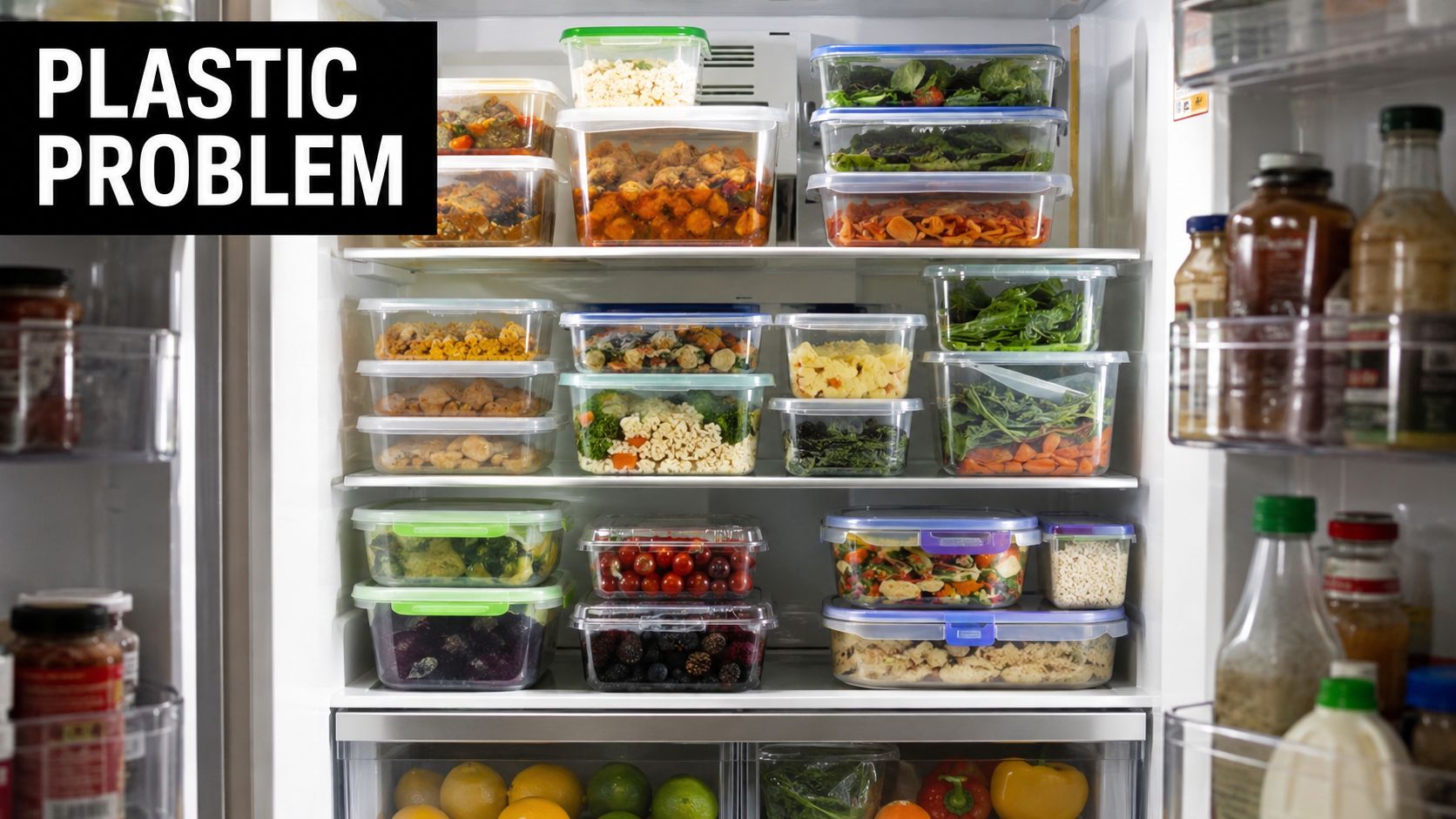
Table of Contents
- The Eco-Friendly Kitchen Dilemma
- What Makes a Food Container Biodegradable
- Decoding Labels and Certifications
- Common Materials for Biodegradable Containers
- Matching Containers to Your Meals
- Proper Disposal for True Sustainability
- Making Sustainable Choices in Your Kitchen
The Eco-Friendly Kitchen Dilemma
You portion out leftover lentil soup for lunch, stack a few containers in the fridge, and toss one in the freezer for next week. By morning, the lid has warped, the broth has seeped into your bag, or the container that looked green on the label turns out to be hard to dispose of in real life.
That is the kitchen dilemma.
Biodegradable containers for food sound like a simple upgrade, especially if you want less plastic in your routine. But home cooks do not need vague promises. You need to know whether a container can hold oily curry without softening, survive the freezer without cracking, and end its life somewhere better than the trash. If you are also trying to reduce plastic exposure in food storage, these tips for avoiding microplastics can help you sort through the day-to-day choices.
Everyday concerns start with the food itself
A container is only useful if it works with the meal in front of you. Salad greens ask for something different than hot stew. A slice of cake is easy. Tomato sauce, broth, and freezer meals are harder.
That is why practical questions matter more than marketing language at first:
- Will it leak if I pack soup, beans, or a saucy pasta?
- Will it handle heat from freshly cooked food or reheating later?
- Can it freeze well without turning brittle or losing its seal?
- How do I dispose of it if my city composts yard waste but not food packaging?
Those questions save money and frustration.
Kitchen truth: A container is only a greener choice if it works for your food and fits your disposal options.
Some products are great for dry snacks, sandwiches, baked goods, and short-term leftovers. Others can manage a grain bowl or salad but struggle with heat or oil. A few are designed for tougher jobs, though they may cost more or need commercial composting to break down as intended.
The easiest way to approach biodegradable containers is the same way you would choose cookware. You would not use a paper muffin liner to simmer soup, and you would not choose a stockpot to pack cookies for a picnic. Storage containers work the same way. Match the material to the task.
For many households, the most realistic approach is a mixed kitchen. Keep reusable containers for regular fridge and freezer use. Use biodegradable options where they make practical sense, such as parties, school lunches, meal trains, picnics, or sending leftovers home with friends. That approach cuts waste without asking one type of container to do every job.
What Makes a Food Container Biodegradable
You scrape leftover curry into a container, tuck it into the fridge, and later wonder what that container will do after you throw it away. Will it break down like food scraps, or sit around much longer than the label suggests? That question gets to the heart of what “biodegradable” really means.
A food container is biodegradable if microorganisms such as bacteria and fungi can break the material down over time. The important part is the setting. Moisture, heat, oxygen, and time all affect what happens. A container may break down in one disposal system and barely change in another.
An apple core breaks down fast in the right compost pile. A wooden spoon also breaks down, but much more slowly. Food containers follow the same logic. Two items can both be called biodegradable and still behave very differently in a home compost bin, a commercial compost facility, or a landfill.
Biodegradable and compostable aren't the same
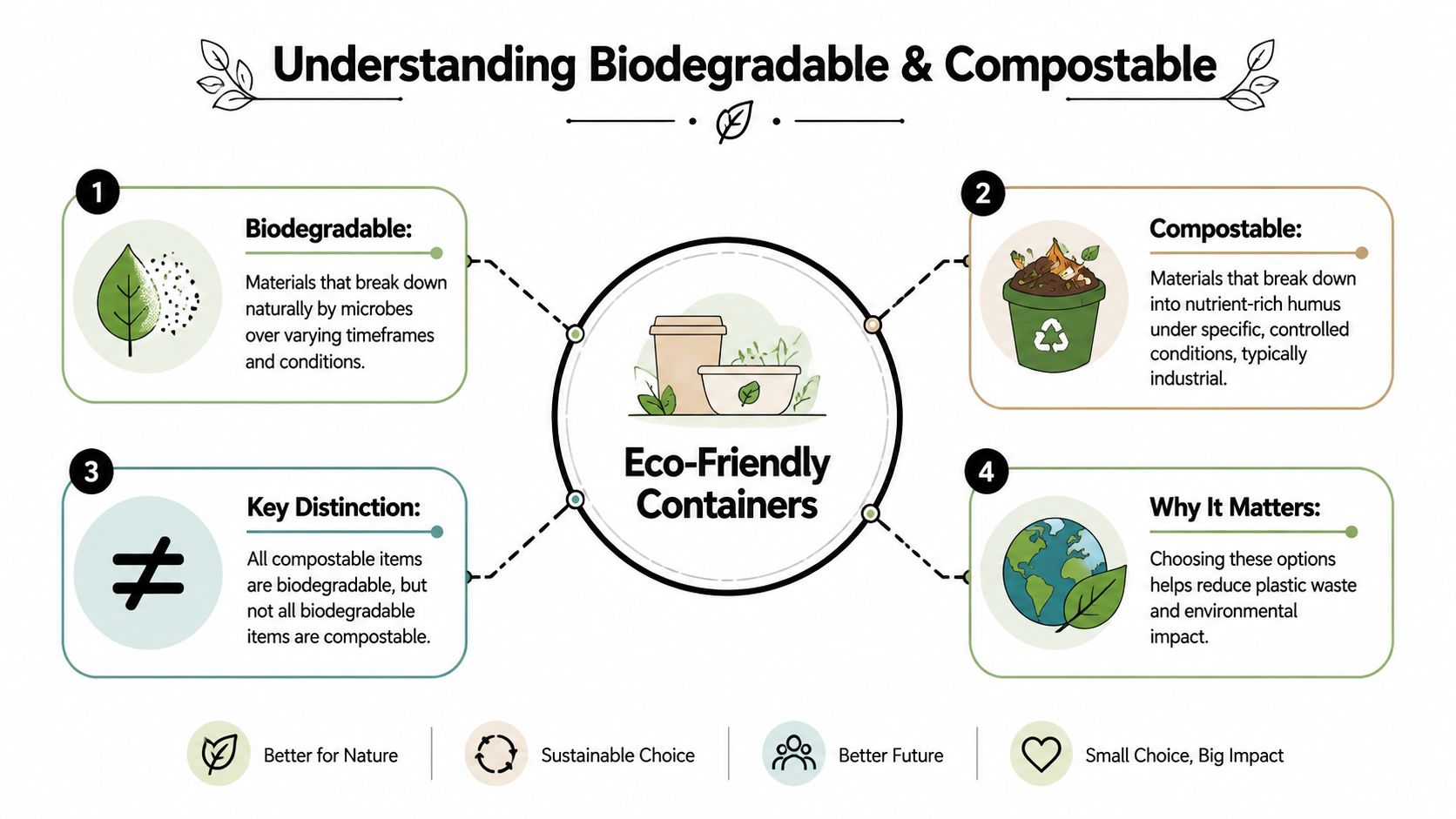
The distinction often confuses many shoppers. “Biodegradable” is a broad term. “Compostable” is narrower and more useful if you are deciding how to handle real leftovers in a real kitchen.
Here is the plain-English difference:
- Biodegradable means the material can break down through natural biological processes.
- Compostable means the material is designed to break down under composting conditions, usually within a more predictable system.
In other words, every compostable container is meant to biodegrade, but not every biodegradable container belongs in compost. If you want a business-focused explanation that still helps shoppers sort out the wording, this guide can clarify compostable and biodegradable for your business.
Why that difference matters at home
For a home cook, the label only matters if it connects to use and disposal. A fiber bowl that handled a cold salad nicely may soften with hot soup. A plant-based clamshell may seem like a good freezer option, then crack after a week below freezing. A “biodegradable” container may sound compost-friendly, yet still need the higher heat of a commercial facility.
That is why ingredients alone do not tell the full story. Cornstarch, molded fiber, paperboard, or bagasse can all sound reassuring, but performance depends on coatings, thickness, and what food goes inside. Oily noodles, frozen chili, and a dry muffin put very different demands on the same container.
A useful way to judge a biodegradable container is to ask two questions at once. First, what kind of food will it hold? Second, what disposal option do you have access to?
A biodegradable container is only a practical choice if its end-of-life path matches your kitchen reality.
What biodegradable does not guarantee
“Biodegradable” does not automatically mean backyard compostable. It does not guarantee a leakproof seal. It does not promise freezer durability. It also does not mean the container will disappear quickly if it ends up in the trash.
That can feel frustrating, but it helps to treat the word as a starting point rather than a verdict. The label tells you the material has the potential to break down biologically. It does not tell you how fast, where, or whether it will hold up to tomato sauce, steam, or a stack of freezer meals.
For home use, that distinction saves disappointment. If you send guests home with brownies, sandwiches, or cut fruit, many biodegradable options work well. If you are packing broth, storing greasy leftovers, or freezing batch-cooked beans, you need to check the material details much more closely.
Decoding Labels and Certifications
Packaging labels work a bit like nutrition labels. The front may say something broad and friendly, but the details matter more. With biodegradable containers for food, the useful details usually show up in the certification marks and standards.
What a certification actually tells you
Third-party certification matters because not every product labeled biodegradable meets accepted composting standards. The EcoCenter guide explains that BPI certification tied to ASTM D6400 or ASTM D6868 is commonly used for food-service containers intended for municipal or commercial composting, and that these standards verify the product is designed to break down into carbon-rich biomass under controlled composting conditions in a commercial facility. You can read that in the EcoCenter food service containers guide.
Here's the plain-English version of the labels you'll most often notice:
- BPI certified means the item has been evaluated against compostability standards commonly used in commercial composting systems.
- ASTM D6400 usually applies to compostable plastics.
- ASTM D6868 covers biodegradable plastic coatings on paper and other compostable substrates.
- EN 13432 and OK Compost are other third-party references you may see on some products.
If a container has one of these, that's more meaningful than a vague green leaf graphic or a claim like “earth friendly.”
Labels that deserve a second look
Some words sound reassuring but don't tell you enough to act:
- Eco-friendly doesn't tell you whether the container can compost, recycle, or neither.
- Plant-based only tells you something about what it's made from, not how to dispose of it.
- Biodegradable by itself doesn't tell you whether it's suitable for home compost, commercial compost, or something else.
A better shopping habit is to flip the package over and look for two things:
- A recognized certification
- A disposal instruction you can follow locally
Shopping shortcut: If the package gives a strong sustainability claim but no clear disposal path, treat it cautiously.
Many home cooks get tripped up on this aspect. A product may be legitimately compostable, but only in a commercial facility. If your area doesn't collect compostable packaging, that label is still real, but it won't be very useful in your kitchen.
A good label should answer three practical questions quickly. What is it made for, what conditions does it need, and where should it go after use. If the package can't answer those, keep your expectations modest.
Common Materials for Biodegradable Containers
Walk through a store or browse food packaging online and you'll start seeing the same few materials repeated. They may look similar at first glance, but they don't behave the same way once food is inside.
This category has become large enough that market analysts treat it as a major packaging segment. One projection values the biodegradable food packaging market at USD 252.17 billion in 2026 and expects a 5.60% CAGR through 2036, while a May 2019 Canadian survey found 30.8% of respondents preferred biodegradable or compostable packaging, according to Future Market Insights. For home cooks, that growth mostly means you'll keep seeing more options, more materials, and more label variety.
The materials you'll see most often
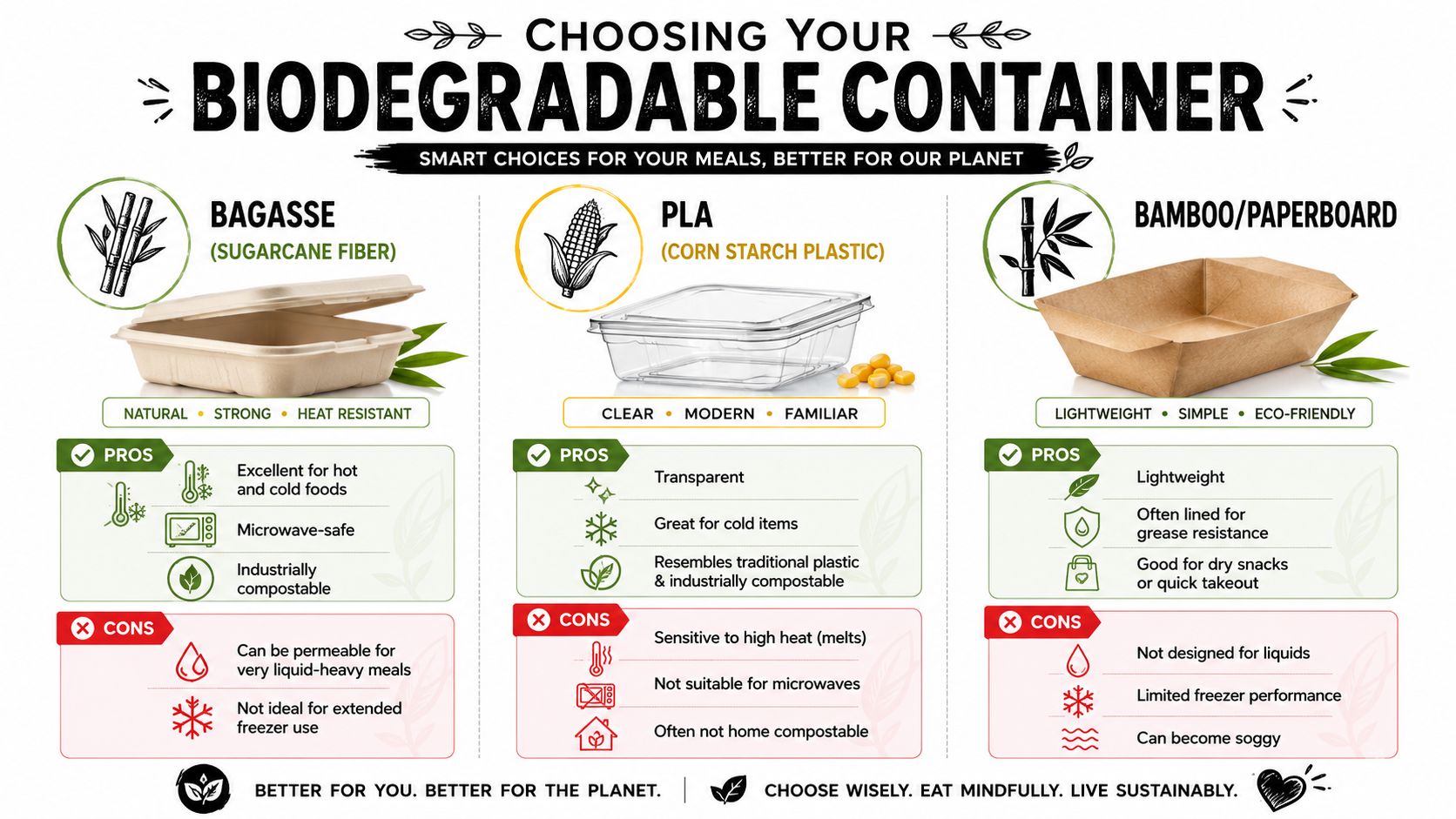
Bagasse is made from sugarcane fiber. It usually feels sturdy and slightly matte, like a denser paper pulp. It's commonly used for plates, clamshells, bowls, and takeout-style meal containers. In practice, it's one of the better-known choices for hot foods.
PLA is a plant-based plastic often associated with cornstarch. It tends to look clear and familiar, which is why it often shows up in cold-food containers, deli lids, fruit cups, and salad packaging. It can feel reassuringly “plastic-like,” but that also leads people to sort it incorrectly.
Molded fiber is a broader category that can include paper or plant fibers formed into trays, bowls, and hinged containers. It often looks rustic or natural and works well for many dry or moderately moist foods.
Bamboo containers and paperboard formats are also common. These can be useful for lighter-duty needs, especially dry items, baked goods, or short-term transport.
You may also run into blends and coated products. That's where reading the disposal details matters, because a fiber-looking container may still include a lining or coating that changes how it should be handled.
For households comparing longer-lasting storage options, this look at plastic vs stainless steel food storage key differences can help frame where disposables fit and where reusables make more sense.
Biodegradable container materials at a glance
| Material | Made From | Best For (Food Type) | Microwave Safe? | Freezer Safe? |
|---|---|---|---|---|
| Bagasse | Sugarcane fiber | Hot meals, many leftovers, some saucy foods | Often suitable for reheating, but check product label | Limited for longer freezer storage |
| PLA | Plant-based plastic, often cornstarch | Cold salads, fruit, desserts, chilled meal prep | No, generally not for microwaving | Better for cold storage than heat exposure |
| Molded fiber | Paper or plant fibers | Dry foods, sandwiches, bakery items, some prepared meals | Sometimes, depending on product | Mixed performance |
| Bamboo | Bamboo fiber | Dry snacks, light meals, short-term serving | Varies by product | Usually limited |
| Paperboard | Paper-based board, sometimes with lining | Dry foods, baked goods, quick takeout | Varies by lining and label | Usually limited |
The table gives you a shopping map, not a guarantee. Two containers made from the same material can still perform differently based on thickness, shape, lid design, and coatings. In daily use, that's why the material name is only your first clue.
Matching Containers to Your Meals
The fastest way to get biodegradable containers for food wrong is to choose by label alone. The better way is to start with the meal. Temperature, grease, moisture, and storage time matter more than the marketing on the box.
Hot soup, cold salad, oily leftovers
Material choice affects whether the container holds up or fails halfway through the day. One practical source notes that PLA works best for cold or room-temperature foods and isn't ideal for hot soup or greasy food, while bagasse is better suited for hot meals and can handle higher temperatures. That guidance comes from this overview of biodegradable food container performance.
That lines up with what many home cooks notice right away. A clear PLA container looks neat for cut fruit, pasta salad, or a slice of cake. Put something piping hot and oily into the wrong one, and you may get softening, warping, or an unpleasant surprise when you lift it later.
Bagasse usually makes more sense for:
- Hot lunches like rice bowls, roasted vegetables, and curries
- Greasy foods such as sautéed dishes or leftovers with oil-based sauces
- Short reheating cycles when the product label allows it
PLA usually makes more sense for:
- Cold salads
- Fruit, snacks, and desserts
- Chilled meal prep you won't microwave in the same container
Bamboo or paperboard styles often fit:
- Sandwiches and wraps
- Muffins, cookies, and pastries
- Dry snack packing for outings or lunchboxes
If a container can't safely hold the food you cooked, it may create more waste by forcing double packaging or by letting food spoil.
A simple kitchen decision framework
When you're deciding what to buy or what to use from the cupboard, run through these four checks:
Start with temperature
If the food is hot now or will be reheated later, lean away from PLA unless the product clearly says otherwise.Think about moisture
Soup, stew, overnight oats, and saucy beans put more pressure on seams and lids than dry pasta or crackers do.Factor in fat and oil
Greasy leftovers are harder on lightweight containers. A material that looks sturdy for a salad may not stay reliable with curry or roast chicken juices.Decide how long it will sit
A container that's fine for carrying lunch today may be a poor choice for freezer storage next week.
Here's a practical cheat sheet for home use:
- Leftover soup calls for a sturdy, tightly sealed option. If you're using a biodegradable format, choose one clearly suited to hot liquids, and test it before relying on it for transport.
- Freezer chili usually does better in a durable reusable container. Many biodegradable options aren't ideal for extended freezer use.
- Cold grain bowls are a comfortable fit for PLA or similar cold-food containers.
- Dry snacks and sandwiches are the easiest category. Many fiber-based options work well here.
The greenest choice isn't always the lightest-looking one or the one with the nicest label. In a home kitchen, the best choice is the one that protects the food, suits your storage plan, and won't confuse disposal later.
Proper Disposal for True Sustainability
A compostable or biodegradable container only does what it's supposed to do if it goes into the right stream. Tossing the wrong item into recycling can create problems for the whole batch, and putting a compostable item in trash may mean it never reaches the conditions it was designed for.
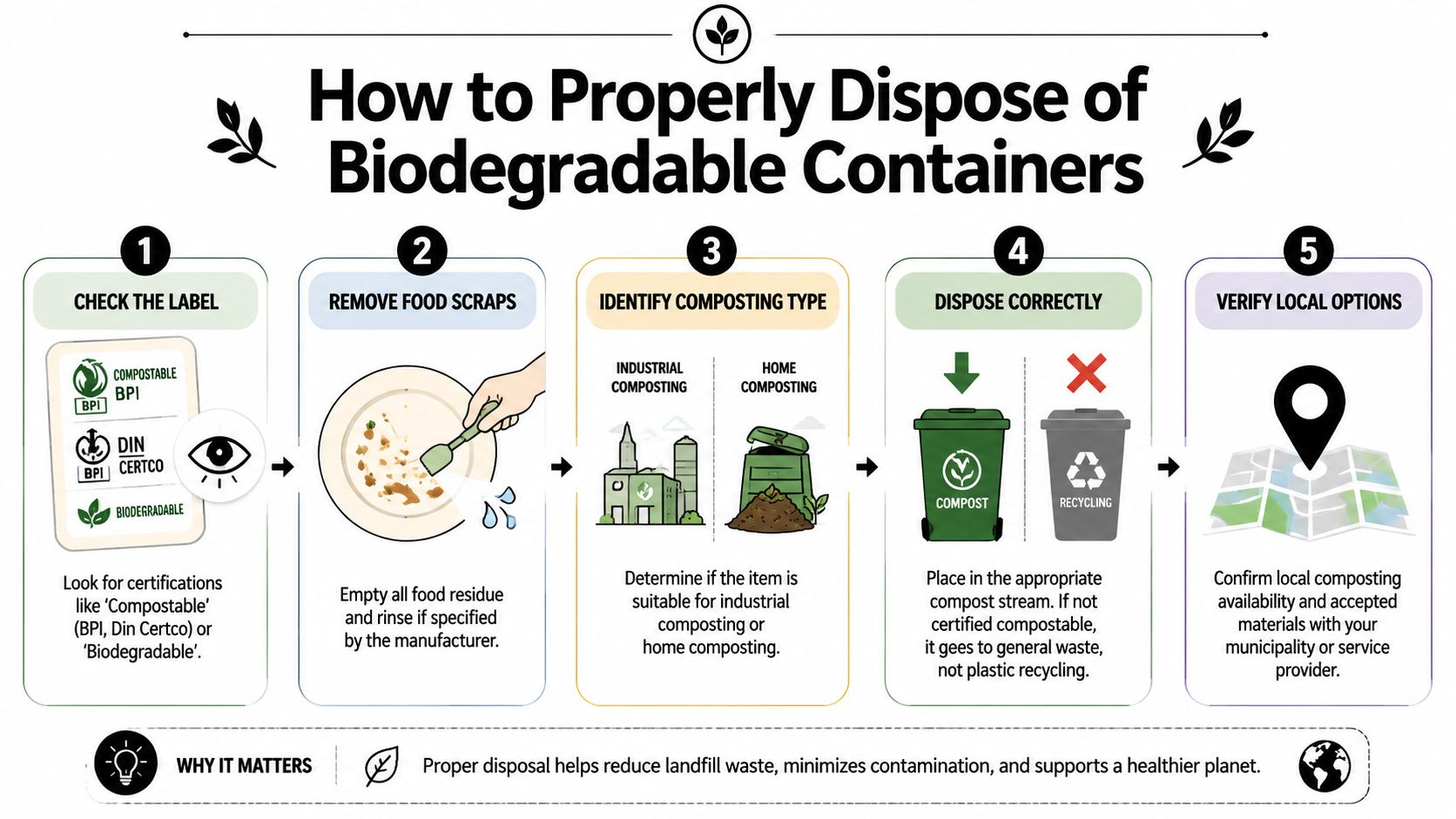
To make the sorting process easier, keep this visual guide handy.
The safest way to sort each container
One of the biggest disposal mistakes involves PLA. PLA-based containers are typically commercially compostable rather than recyclable, and putting them in a recycling bin can contaminate recycling output. That practical warning comes from this guide on matching packaging claims to local infrastructure.
A simple sorting routine helps:
- Check the label first for compostability language and certification marks.
- Remove food scraps before disposal. Heavily soiled packaging may not be accepted even where composting exists.
- Match the item to your local system. Commercial compostable only works if your area collects it.
- Keep it out of recycling unless the item is clearly part of your local recycling stream.
If you're also working on reducing spoiled leftovers, these articles about food waste can help you cut waste before disposal becomes an issue at all.
Here's a short explainer that's useful if you want to see the disposal logic in action:
When in doubt, avoid wish-cycling
People often toss uncertain items into recycling because it feels more responsible than using the trash. But with compostable plastics and mixed-material containers, that habit can backfire.
When you're unsure and can't verify local acceptance, the safer default is often trash, not recycling.
That answer doesn't feel satisfying, but it prevents contamination. A good kitchen system is less about optimistic guessing and more about clear rules everyone in the household can follow.
Try a small habit shift. Keep a note near the bins that says: “BPI or commercial compostable? Green bin only if accepted locally. Never plastic recycling.” That one reminder can prevent a lot of accidental mis-sorting.
Making Sustainable Choices in Your Kitchen
A more sustainable kitchen doesn't require perfect packaging choices every time. It usually comes from a few steady habits. Read the label. Match the material to the food. Know whether your area can compost the item. If not, choose something else or use a reusable container you already trust.
That mindset also travels beyond your home. If you pack lunches for kids, send snacks to activities, or care about broader habits around waste, this piece on creating sustainable school environments offers useful ideas for how small daily choices can add up in shared spaces.
The most practical version of sustainability is the one you'll keep doing. For many cooks, that means using reusable glass or steel for freezer meals and everyday leftovers, then keeping biodegradable containers for food on hand for gatherings, meal sharing, packed lunches, and situations where you probably won't get the container back.
You also don't have to figure it all out while standing in the store aisle. Planning meals and shopping with intention helps you buy fewer one-off storage products in the first place. These grocery shopping tips can make that part easier.
Choose containers the same way you choose cookware. Based on what you make, how you store it, and what your kitchen can support. That approach is calmer, more realistic, and usually more sustainable than chasing every product that uses green language on the label.
If you want your kitchen to feel more organized from shopping through leftovers, OrganizEat can help you keep recipes, meal plans, and grocery lists in one place so you buy more intentionally, waste less food, and cook with a little less friction every day.