


You're standing at the stove with a skillet heating, a recipe open on your phone, and two options in front of you: butter in the fridge, ghee in the pantry. One promises that classic buttery flavor. The other feels like the “better” choice because people keep calling it cleaner, higher-heat, or somehow smarter.
That's where most of the confusion starts.
For everyday cooking, the question usually isn't “Which one is healthier?” It's “Which one fits this dish, this cooking method, and the way I eat?” Calories in ghee vs butter matter, but they matter differently in toast, cookies, fried eggs, roasted vegetables, and a family curry that uses several spoonfuls. A tiny swipe on bread isn't the same decision as using fat as the cooking foundation of an entire meal.
Practical kitchen judgment beats nutrition headlines. Ghee and butter are related, but they don't behave the same in the pan, and they don't land the same in your recipe notes when you're trying to track what you made accurately.
Table of Contents
- Ghee vs Butter The Great Kitchen Debate
- The Calorie and Nutrition Showdown A Direct Comparison
- Why Ghee is More Calorie Dense The Clarification Process
- How Ghee and Butter Perform Differently in the Kitchen
- A Practical Guide to Substituting Ghee and Butter
- Tracking Ghee and Butter Accurately in Your Recipe Organizer
Ghee vs Butter The Great Kitchen Debate
A lot of home cooks ask about calories in ghee vs butter when they're not really chasing a nutrition label. They're trying to solve a dinner problem. The vegetables are ready, the pan is hot, and they want to know whether to use the fat that tastes best or the one that seems more functional.
That's a real kitchen decision.
Butter has familiarity on its side. It makes scrambled eggs taste rounder, turns toast into comfort food, and gives baked goods that soft, rich finish many people expect. Ghee earns its place for different reasons. It's easy to keep in the pantry, it works beautifully when the heat gets high, and it brings a toasted, nutty note that can make simple food taste more intentional.
The decision usually depends on the dish
If I'm making a delicate pan sauce or finishing warm green beans, butter often wins because its flavor is the point. If I'm searing, roasting, or making a quick weeknight skillet dinner, ghee often feels easier to manage.
That's why the debate gets muddled. People talk about these fats as if one has to defeat the other. In a real kitchen, they fill different jobs.
Butter shines when you want tenderness and classic flavor. Ghee shines when you want control over heat and a cleaner, more concentrated fat.
There's also the planning side of it. A lot of families cook from memory, save clipped recipes, or rewrite old favorites with little notes like “use ghee if pan is very hot” or “better with butter for cookies.” Those notes matter more than broad claims because they reflect what worked.
What usually doesn't work
Two habits cause the most confusion:
- Treating them as identical: They aren't. Even when they come from the same starting ingredient, they behave differently in cooking.
- Looking only at calories: Calories matter, but flavor, heat tolerance, and texture often matter just as much in the final dish.
- Swapping by instinct in every recipe: That works in some savory cooking. It can disappoint you in certain baked goods.
The useful answer isn't “always choose ghee” or “always choose butter.” It's knowing why each one works, when the calorie difference matters, and when it barely changes the outcome you care about.
The Calorie and Nutrition Showdown A Direct Comparison
A cook reaches for a spoonful of fat and expects it to do one job. In practice, that spoonful also changes the calorie count of the whole dish. That difference is small in some recipes and worth tracking in others.
According to GoodRx's comparison of ghee and butter nutrition, 1 tablespoon of ghee contains 123 calories versus 102 calories in 1 tablespoon of butter, and 1 teaspoon of ghee has 45 calories compared with 34 calories for butter. The same source notes that ghee is about 99.5% fat, while butter is about 80% fat.
Quick comparison table
| Nutrient | Ghee (1 Tbsp / ~13g) | Butter (1 Tbsp / ~14g) |
|---|---|---|
| Calories | 123 | 102 |
| Fat content | About 99.5% fat | About 80% fat |
| Saturated fat | More concentrated | Less concentrated |
| Water content | Very little | Contains water |
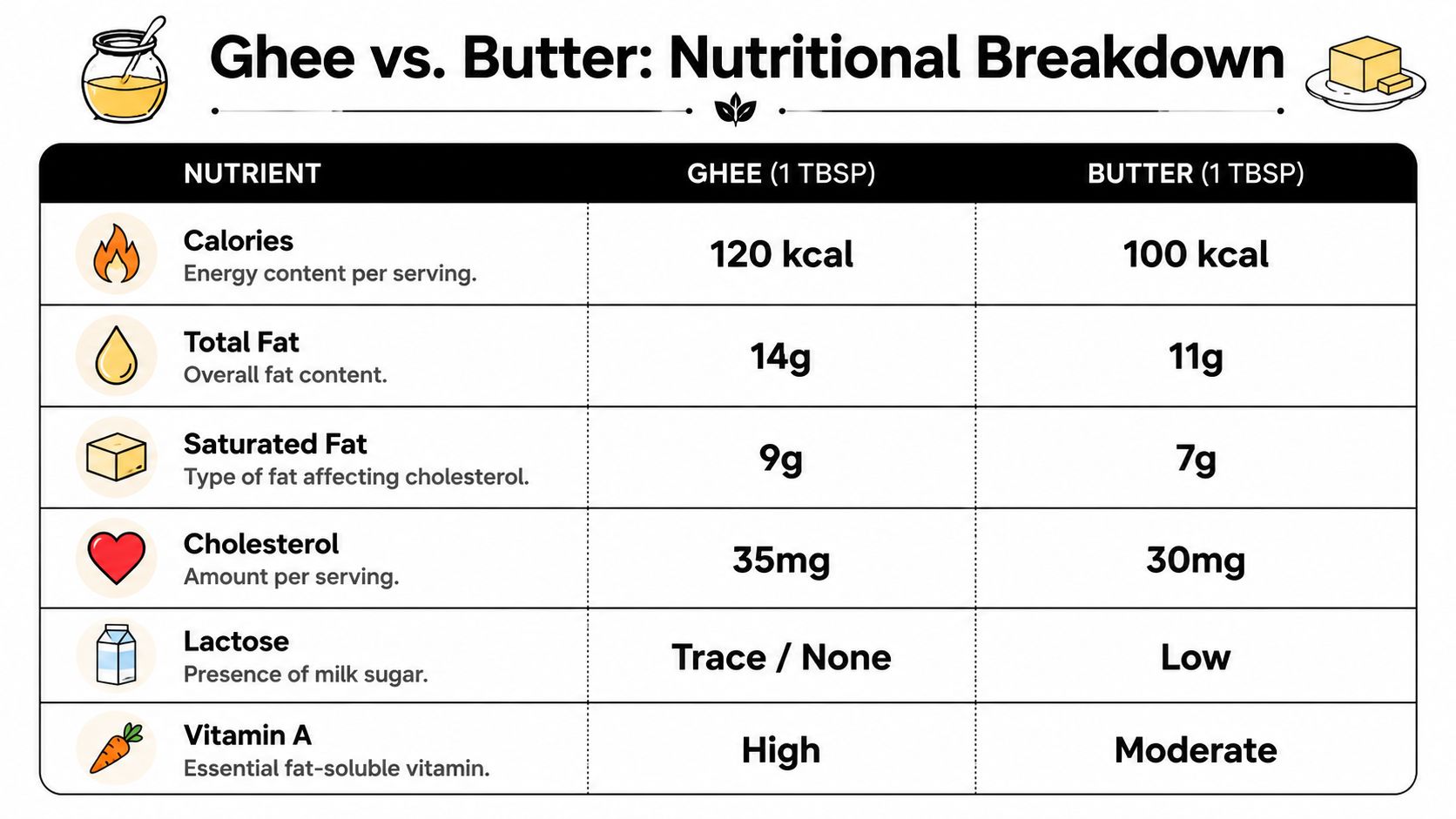
Those numbers matter most when the fat is doing real volume in the recipe. In a fried egg or a swipe on toast, the gap is modest. In a pot of rice pilaf, roasted vegetables, or a batch-cooked skillet meal that uses several spoonfuls, the difference becomes easier to notice on your weekly totals.
I handle this as a meal-planning question, not a purity test. If the recipe uses one teaspoon, I usually choose the fat that gives the better result in the pan. If it uses three or four tablespoons across multiple servings, I log it accurately and decide whether the extra richness is worth it.
What the calorie gap looks like in everyday cooking
Using the same visible amount of ghee and butter does not produce the same calorie total. Ghee is the denser ingredient, so repeated scoops add up faster.
A practical way to look at it:
- Small finishing amounts: The calorie difference is usually minor.
- Recipes built on cooking fat: The difference matters more because you are using multiple measured spoonfuls.
- Repeated weekly meals: Tiny gaps become meaningful if you make the same rice dish, scramble, or sheet-pan dinner every week.
This is also where a recipe organizer earns its keep. If you save one version of a dish with butter and another with ghee, you can track the difference by ingredient instead of relying on memory. That makes it easier to make a smarter choice between cooking fats based on how you cook, not just on a label comparison.
The useful takeaway is simple. If calories are your top concern, butter usually comes in a little lower per spoonful. If performance in a hotter pan matters more, that calorie bump from ghee may be an acceptable trade.
Why Ghee is More Calorie Dense The Clarification Process
You notice this difference fastest in a real recipe, not on a label. Melt a tablespoon of butter for vegetables and part of that spoonful is water and milk solids. Use a tablespoon of ghee instead, and nearly all of that spoonful is cooking fat.
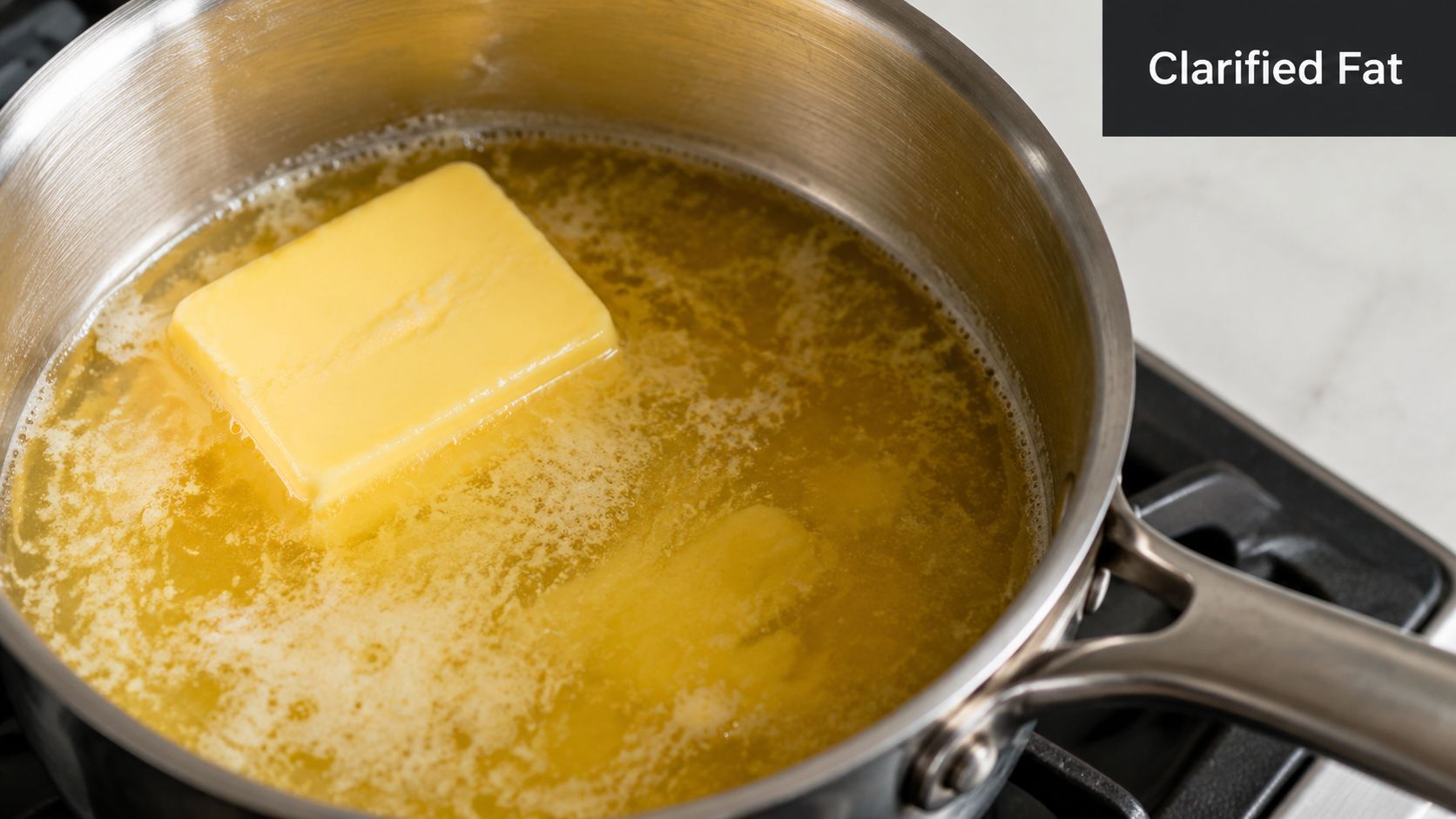
That is the whole reason ghee is more calorie dense. Clarifying butter removes the parts that are not pure fat, so the finished ingredient is more concentrated per tablespoon.
What gets removed
Butter contains three parts that matter in the kitchen: butterfat, water, and milk solids. Ghee starts as butter, then gentle heat cooks off the water and separates the milk solids. What stays behind is mostly butterfat.
In practical terms, you are measuring a denser ingredient. That affects calories, but it also affects how the fat behaves once it hits the pan, how much moisture it adds to a dish, and how rich the final result tastes.
I find this matters most in recipes built around fat as an ingredient, not just as a light coating. In toast, eggs, or a quick vegetable sauté, the difference may be small enough that flavor and heat tolerance decide it. In rice dishes, pan sauces, roasted vegetables, or batch-cooked meals where you use several tablespoons, the concentration matters more.
Why this changes the ingredient you are actually cooking with
Ghee is not just butter with a different label. It is butter with the water and milk solids removed, which changes the math of each spoonful.
- More fat in the same measure: A tablespoon of ghee gives you a more concentrated fat source than a tablespoon of butter.
- Less moisture in the recipe: Butter can soften, spread, and contribute a little water. Ghee cannot do that in the same way.
- Better fit for certain high-heat jobs: The removal of milk solids helps ghee stay comfortable in hotter cooking situations, which is one reason cooks compare it with other high-heat fats using guides like this grapeseed oil smoke point chart and cooking breakdown.
That last point matters in meal planning. If a recipe was developed with butter, swapping in ghee can slightly change texture and richness even before you count calories. Cookies, some baked goods, and delicate sauces often rely on butter’s water and milk solids. Roasted vegetables, fried eggs, and skillet meals usually adapt more easily.
If you want to see the process in action, this quick walkthrough is useful:
Ghee has more calories per spoonful because clarification removes the non-fat parts of butter and leaves a more concentrated cooking fat.
That is the practical takeaway. The calorie difference starts with concentration, and concentration is what changes both your nutrition totals and your recipe results.
How Ghee and Butter Perform Differently in the Kitchen
Dinner is on the stove, the pan got hotter than planned, and the fat you chose suddenly matters. In this situation, the ghee versus butter decision stops being a nutrition label question and becomes a cooking one.
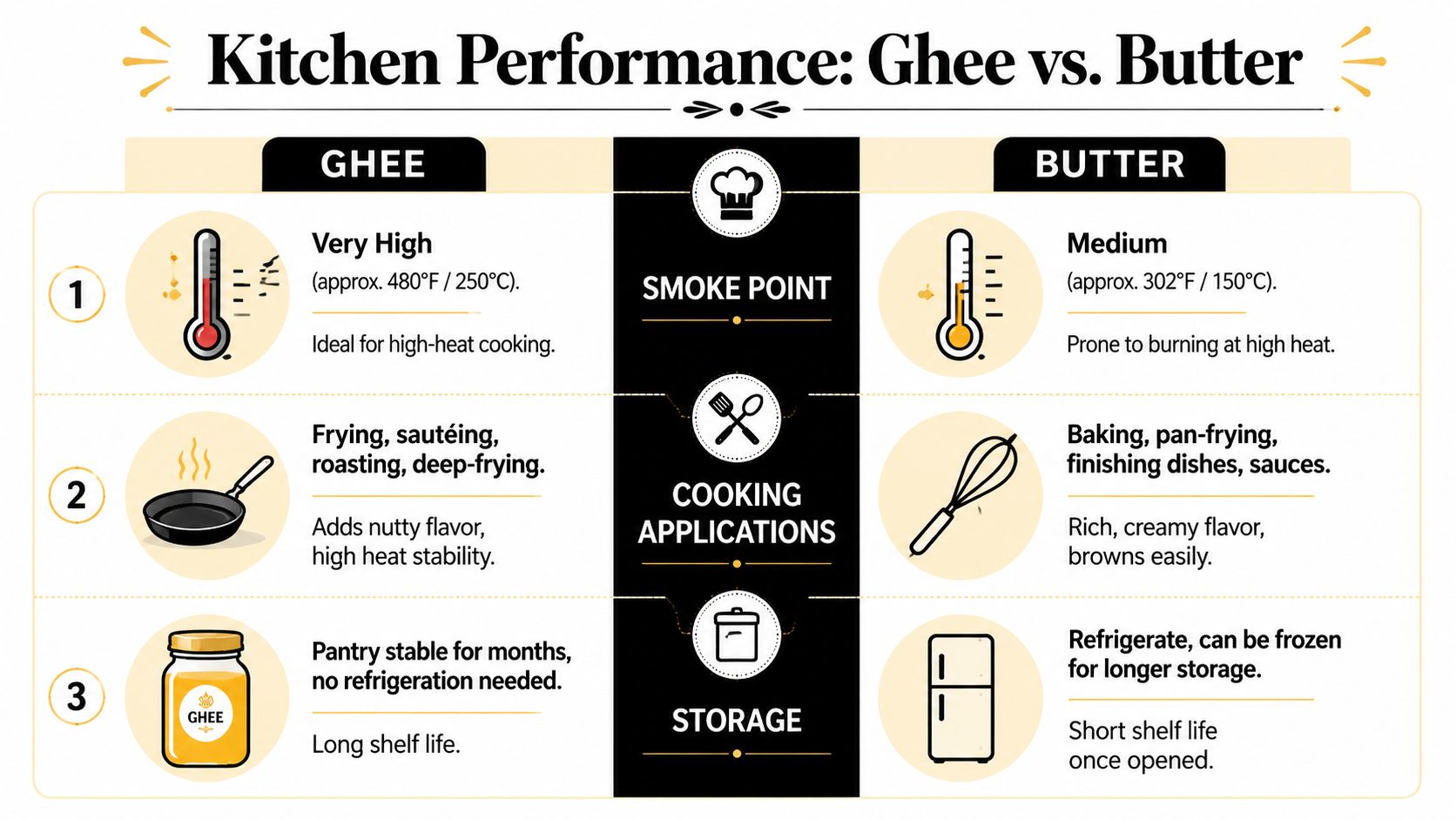
Ghee usually gives a cook more room for error over high heat. Butter brings better flavor in some dishes, but it burns faster because of the milk solids. In real kitchens, that difference shows up fast with roasted potatoes, stovetop searing, weeknight fried eggs, and any skillet you forgot about for 30 seconds.
If you like comparing fats by how they behave in hotter pans, this guide to grapeseed oil smoke point and cooking uses helps put ghee and butter in context.
Here is the practical split I use:
- Choose ghee for: roasting vegetables at higher heat, browning onions, pan-frying proteins, crisping leftovers, and cooking in a skillet that runs hot.
- Choose butter for: pancakes, gentle sautéing, soft eggs, pan sauces, toast, and baking where flavor is part of the final result.
- Use both together: cook with ghee for control, then stir in butter at the end for aroma and a rounder finish.
Flavor changes the decision as much as heat does.
Butter tastes creamy and familiar. Ghee tastes nuttier and more concentrated. That works beautifully in rice, lentils, roasted carrots, or spiced vegetables. It can feel out of place in shortbread, butter cookies, or a delicate sauce where that classic dairy note is the whole point.
Texture matters too, especially if you save and adapt recipes often. Butter carries water along with fat, so it affects spread, tenderness, and the way a batter or dough comes together. Ghee acts more like pure cooking fat. It adds richness, but not the same softness or moisture.
That is why I do not treat them as interchangeable by default. In a tray of roasted cauliflower, the swap is usually easy. In cookies or a butter-forward sauce, the same swap can change more than calories. It can change how the recipe behaves, which is exactly the kind of detail worth noting in your recipe organizer before you make the dish again.
A Practical Guide to Substituting Ghee and Butter
Most savory recipes tolerate a swap between ghee and butter pretty well. Most delicate baking recipes need more caution.
That’s the simple version.
When a straight swap works
A 1:1 swap by volume is usually fine in everyday stovetop cooking and roasting. If you’re sautéing mushrooms, cooking eggs, reheating leftovers in a skillet, or roasting carrots, you can often substitute one for the other and still get a good result.
These are the easiest situations for swapping:
- Skillet meals: chicken pieces, vegetables, fried rice, quick beans
- Roasting: sheet-pan dinners, potatoes, squash, cauliflower
- Finishing warm foods: spooned over rice, stirred into lentils, brushed over cooked vegetables
In these dishes, the fat mostly acts as a cooking medium and flavor carrier. You may notice a flavor difference, but the recipe structure usually survives.
If you keep a lot of saved recipes and adapt them often, a tool like this ingredient substitution finder for any recipe is useful because it pushes you to think about function, not just ingredient name.
When to pause before swapping
Baking is where people get overconfident.
Butter brings moisture and milk solids along with fat. Ghee doesn’t. In cookies, cakes, pastry, and some frostings, that can affect texture, spread, browning, and tenderness. A direct swap can still work in some recipes, but it can also nudge the result away from what the original formula intended.
Here’s where I’d be careful:
-
Cookies that rely on butter flavor
If butter is the soul of the recipe, swapping to ghee changes more than the calorie count. -
Cakes and tender bakes
The missing water in ghee can change the crumb. Sometimes slightly, sometimes noticeably. -
Pastry and laminated doughs
These are not good places for casual swaps. Structure matters too much.
If the recipe is sentimental, bake it as written the first time. Experiment only after you know what the original version is supposed to taste and feel like.
For practical home cooking, this rule holds up well: use ghee freely in hot savory cooking, use butter where texture and traditional flavor matter, and test swaps in small batches before rewriting your go-to family recipes.
Tracking Ghee and Butter Accurately in Your Recipe Organizer
The hardest part of calories in ghee vs butter isn’t the label. It’s the way people prepare food.
Few home cooks say, “I added precisely one tablespoon.” They say, “I used a knob of butter,” or “I poured a little ghee into the pan.” That’s where tracking gets sloppy, especially in family recipes that get copied and reused without exact measurements.
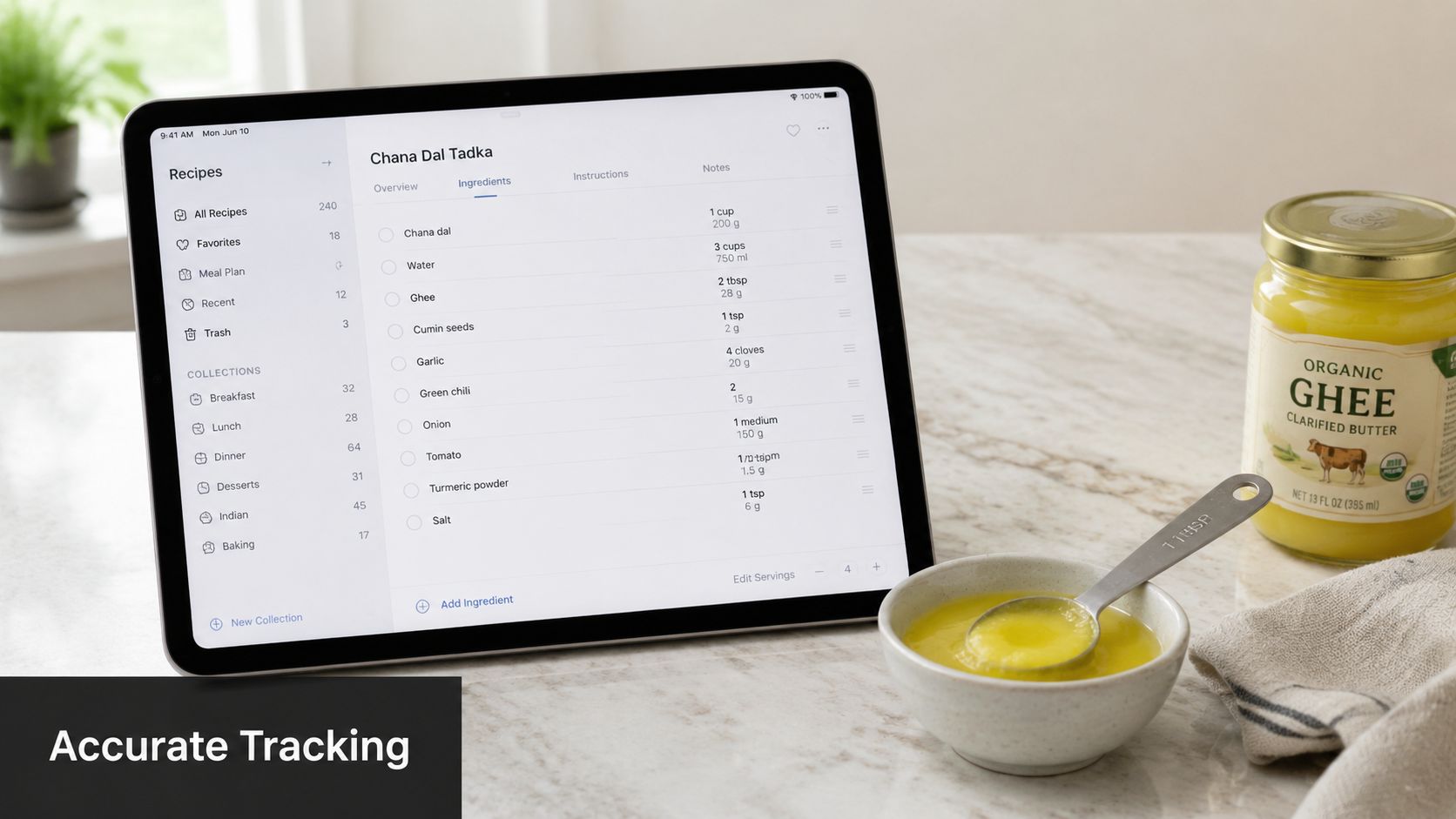
The serving size trap at home
The most useful practical reminder comes from BODi’s discussion of ghee vs butter serving sizes. It points out the real serving-size trap. Many articles compare tablespoon amounts, where ghee is about 120 to 130 calories and butter is about 102 calories, but home cooks often use smaller, less precise amounts. At the teaspoon level, ghee is about 41 to 45 calories, while butter is about 34 calories.
That doesn’t mean the difference disappears. It means measurement style changes how important the difference becomes.
A few patterns create errors fast:
- Eyeballing melted fat: Easy to overpour.
- Using vague recipe language: “knob,” “pat,” and “little bit” aren’t useful later.
- Switching fats without updating saved recipes: The old note says butter, the pan got ghee, and the logged result is no longer accurate.
If you’re already trying to understand body composition alongside food habits, this guide to a body fat scale adds helpful context on why consistent tracking methods matter more than random one-off estimates.
How to log them more accurately
You don’t need perfect precision. You need repeatable habits.
Try this:
- Write the measure you used: If it was teaspoons, log teaspoons. Don’t convert everything into tablespoons unless that’s how you cook.
- Note melted versus solid use: In your own recipe notes, this helps you remember how you measured and how you poured.
- Update substitutions immediately: If you changed butter to ghee in a saved recipe, edit the ingredient line right then.
- Add context in your nutrition workflow: A recipe calorie checker for healthy cooking is most useful when the ingredient entry reflects what really went into the pan.
The most accurate recipe log isn’t the fanciest one. It’s the one that captures your real habits before memory smooths over the details.
That’s especially true for calorie-dense fats. A tiny inaccuracy repeated across breakfast eggs, weeknight vegetables, and meal-prep grains becomes a pattern. Better logging fixes the pattern, not just one meal.
If you want one place to save family recipes, rewrite ingredient swaps, snap handwritten cards, and keep your cooking notes usable across phone, tablet, and web, OrganizEat makes that process much easier. It’s built for home cooks who want their recipes organized, searchable, and ready when it’s time to cook.