


You heat a skillet, add oil, turn to grab chopped onions, and suddenly the pan smells sharp and unpleasant. A thin haze rises. Dinner isn't ruined yet, but the flavor has already started heading in the wrong direction. Most home cooks have had that moment, and it usually feels like a heat problem when it's really an oil-choice problem.
That's where smoke point becomes useful. Once you understand it, a lot of kitchen confusion starts to clear up. You stop treating every bottle of oil as interchangeable, and you start matching each oil to the job it does best. That means better flavor, less guesswork, and fewer smoky surprises.
Low smoke point oils are especially misunderstood. People often avoid them as if they're “bad for cooking,” when the fact is simpler: they're great for the right kinds of cooking. Some shine in dressings, some are excellent for gentle heat, and some belong nowhere near a ripping-hot pan. If you're also thinking about how oil fits into everyday eating habits, Nutrition Geeks' olive oil weight loss insights are a useful companion read because they look at olive oil from a practical diet perspective rather than treating it like magic.
Table of Contents
- Why Your Choice of Cooking Oil Matters
- What Is a Smoke Point and Why Is It Important
- Common Low Smoke Point Oils and Their Best Uses
- Why Smoke Points Are Not Always Fixed
- Smart Cooking Swaps and Recipe Organization
- Frequently Asked Questions About Cooking Oils
Why Your Choice of Cooking Oil Matters
A lot of cooking frustration comes from using a good ingredient in the wrong way. Walnut oil can be wonderful. Flaxseed oil can be wonderful. Extra virgin olive oil can be wonderful. But if you use a delicate oil the way you'd use a sturdier frying oil, the pan tells you immediately.
The first sign is usually smell. Not rich, toasty aroma. More like bitterness in the air. Then the oil starts smoking, the food picks up harsh notes, and you wonder why the same recipe looked easy in someone else's kitchen.
A small change that affects the whole dish
Oil isn't just a background ingredient. It carries flavor, helps transfer heat, and shapes the final taste of your food. Choosing the right one affects whether roasted vegetables taste clean and sweet or slightly acrid, whether a vinaigrette tastes fresh or flat, and whether your sauté feels controlled or chaotic.
Practical rule: Match the oil to the heat, not just to the recipe name.
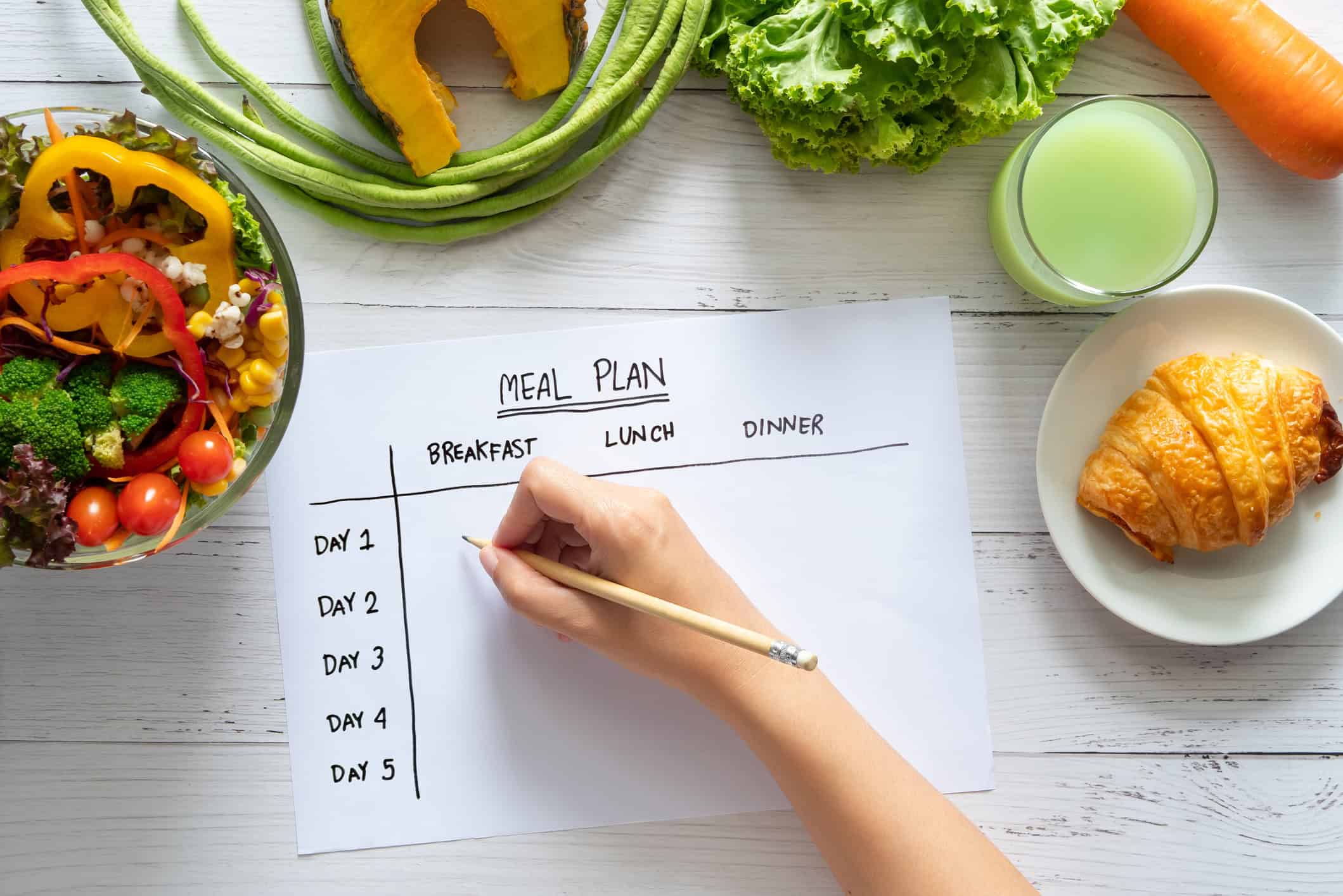
This matters even more if your recipe collection mixes sources. A handwritten family recipe might say “olive oil.” A social video might say “any oil.” A cookbook might assume you already know the heat level. Without a little smoke-point knowledge, those instructions can be too vague to help.
Confidence starts with one useful question
Before you cook, ask: Is this oil meant for high heat, gentle heat, or no heat?
That one question can save a dish. It also helps you organize recipes better. When you note that a salad dressing uses flaxseed oil for flavor, or that a skillet dinner works better with a more heat-stable oil, you turn random kitchen trial and error into repeatable results.
What Is a Smoke Point and Why Is It Important
The simplest way to think about smoke point
Smoke point is the temperature at which an oil starts to visibly smoke and break down. Consider water boiling as an analogy. Water has a point where it changes behavior in a way you can see. Oil does too, except instead of bubbling into steam, it starts giving off smoke.
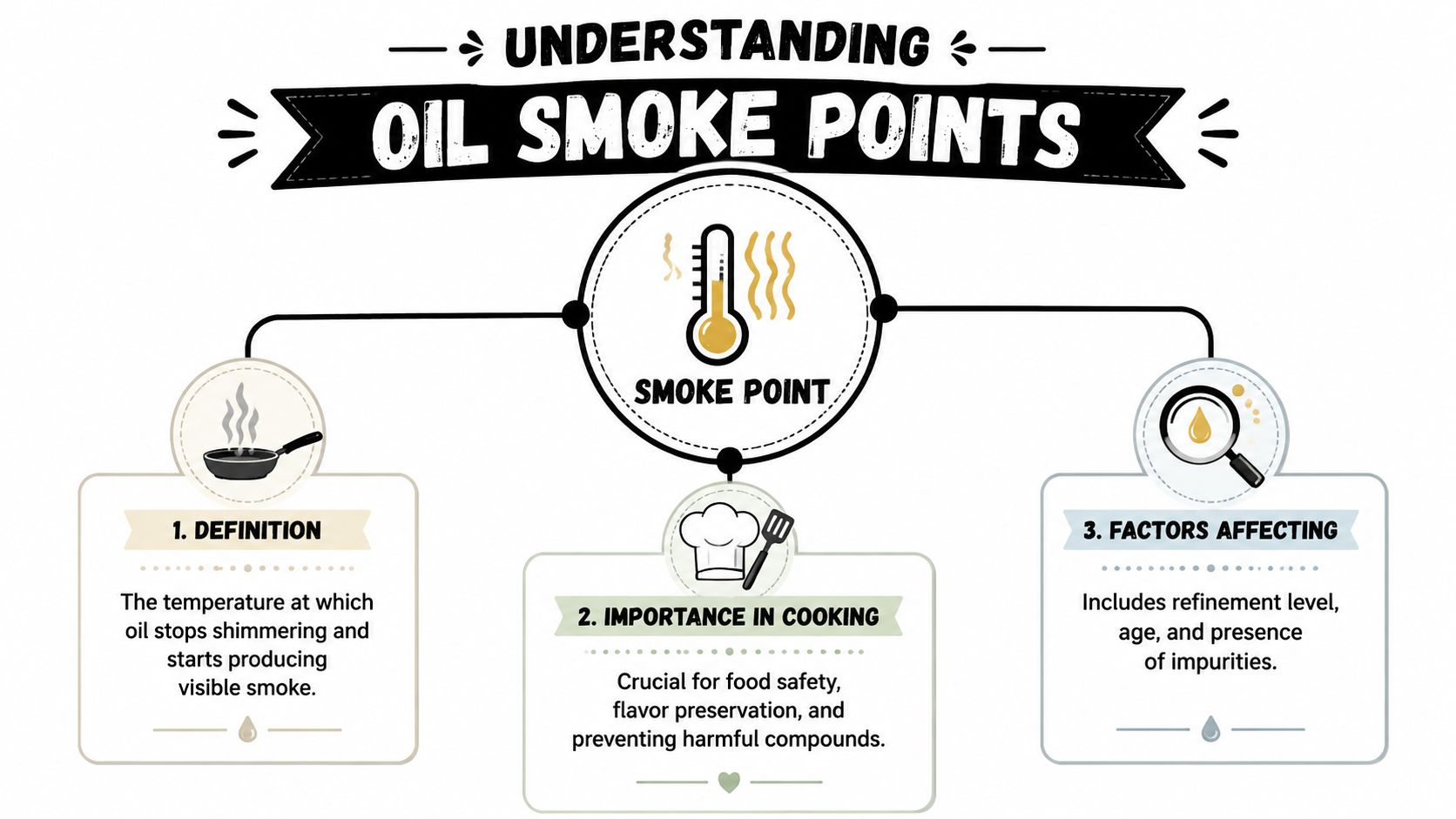
A practical kitchen definition treats oils with smoke points below 400°F (204°C) as low-smoke-point oils, with many oils in the 300 to 400°F range used for lower-heat cooking, and oils around 225°F (107°C) suited mainly to cold uses such as dressings or drizzling, according to this smoke point guide from Zero Acre.
That's why the phrase low smoke point oil doesn't mean “bad oil.” It means “use with care.”
For a related look at pan behavior and heat control, especially if you cook in heavy skillets, Smokey Rebel's UK cast iron guide helps explain why pan material and oil choice work together.
What happens when oil gets too hot
Once oil passes its smoke point, a few things happen at the same time.
- Flavor falls apart. The oil develops bitter, burnt notes that spread into the whole dish.
- Useful qualities break down. Delicate compounds don't hold up well under excessive heat.
- Unpleasant byproducts form. One compound associated with smoking oil is acrolein, which contributes to the irritating smell and harshness.
If you want a comparison point, this guide to cooking oil with high smoke point is helpful for the opposite end of the spectrum, when you're searing, frying, or otherwise cooking hotter.
Here's a quick visual explainer that reinforces the idea:
Smoke point is less about food rules and more about respecting the limits of an ingredient.
Once you start viewing oils this way, they become easier to use. You stop asking, “Which oil is healthiest?” in the abstract and start asking, “Which oil fits this pan, this temperature, and this recipe?”
Common Low Smoke Point Oils and Their Best Uses
A quick kitchen guide
Many low smoke point oils are unrefined, which is part of why they taste so distinctive. They keep more of their natural character, but that delicacy also makes them less suitable for aggressive heat.
Practical benchmark data commonly place extra virgin olive oil around 325 to 410°F (163 to 210°C), unrefined sesame and unrefined sunflower oil around 320 to 350°F (160 to 177°C), and flaxseed oil around 225°F (107°C), while refined versions often tolerate more heat because refining removes free fatty acids, proteins, and other volatile impurities. That range-based view is summarized in this overview of oil smoke points from Vom Fass USA.
| Oil | Approximate smoke point | Best use in a home kitchen |
|---|---|---|
| Flaxseed oil | About 225°F (107°C) | Dressings, dips, drizzling on finished food |
| Unrefined almond oil | About 225°F | Cold sauces, finishing, light spoon-over use |
| Unrefined walnut oil | About 320°F | Vinaigrettes, grain bowls, gentle finishing |
| Extra virgin olive oil | About 325 to 410°F (163 to 210°C) | Dressings, roasting at moderate heat, gentle sauté depending on the oil |
| Unrefined sesame oil | About 320 to 350°F (160 to 177°C) | Finishing, marinades, low-heat flavoring |
| Unrefined sunflower oil | About 320 to 350°F (160 to 177°C) | Light sauté, baking, moderate-heat use |
How to think about these oils
The easiest way to organize them mentally is to stop calling them “cooking oils” as one big category. Split them into roles.
- Finishing oils: Flaxseed and walnut fit here. Add them after cooking, not at the beginning.
- Gentle-heat oils: Some extra virgin olive oils and unrefined sesame oils can work over moderate heat, but they're not your best choice for hard searing.
- Flavor-first oils: These bring aroma and character. You use them the way you use herbs or a squeeze of lemon. They're part ingredient, part seasoning.
A good walnut oil in a salad acts more like a flavoring layer than a neutral fat.
That mindset helps with substitutions too. If a recipe calls for walnut oil in a dressing, replacing it with a neutral frying oil may change the dish more than you expect. If you're comparing other fats for everyday cooking decisions, this look at calories in ghee vs butter can be useful when you're sorting out which fat belongs in which recipe.
A simple home example: if you make roasted carrots, you might roast them with a sturdier oil and then finish them with a teaspoon of walnut oil at the table. That gives you clean cooking performance and delicate flavor where it will survive.
Why Smoke Points Are Not Always Fixed
Why one chart says one thing and another chart says something else
One of the most confusing parts of this topic is seeing different smoke point numbers for the same oil. You're not imagining that. Different sources really do list different values.
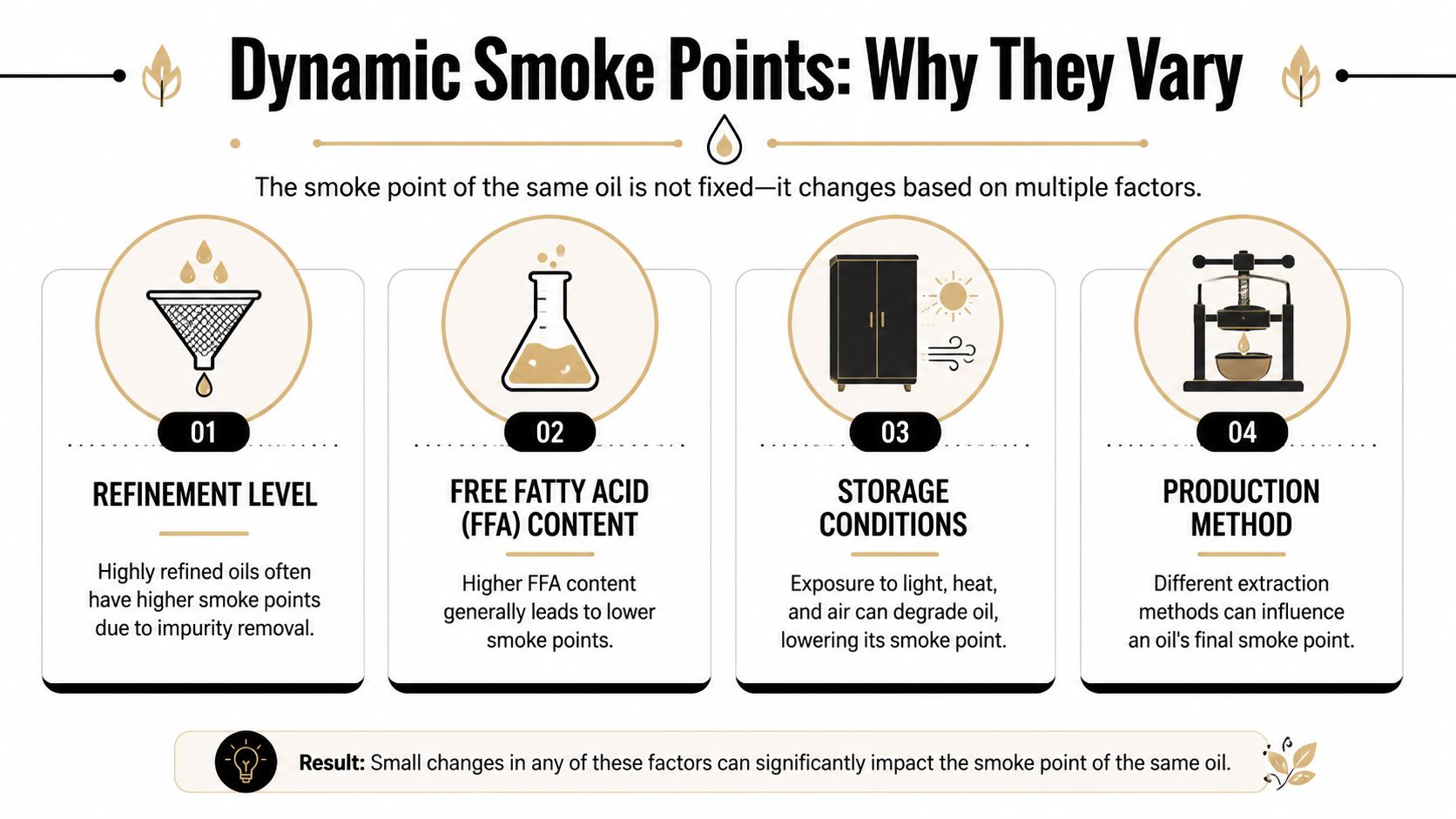
Current references show wide ranges for familiar oils. For example, extra virgin olive oil is often listed from about 320°F to 410°F, refined avocado oil from about 480°F to 520°F, and coconut oil from about 350°F to 450°F depending on refinement and quality, as summarized in this 8fit guide to oil smoke point ranges. That's why a single neat number on a chart can be misleading.
The three biggest factors
The first factor is refinement. Refined oils usually handle more heat because processing removes components that smoke earlier. Unrefined oils keep more flavor and character, but that often comes with lower heat tolerance.
The second factor is quality and freshness. Smoke point isn't fixed. It drops as oil quality declines, especially when free fatty acids, often shortened to FFAs, rise through aging or reuse. A peer-reviewed analysis of virgin olive oils found a strong negative relationship between FFA content and smoke point, and even simple predictive models using FFAs performed well, which shows how much acidity affects heat tolerance in real oils. That finding comes from this peer-reviewed study on smoke point and oil composition.
The third factor is reuse. The more often you reheat oil, the less dependable it becomes. Home cooks notice this as “why is this oil smoking earlier than last time?” The answer is usually breakdown.
Here's a practical way to think about those variables:
- Refined vs unrefined: Same oil family, different heat behavior.
- Fresh bottle vs old bottle: Time and storage change performance.
- First use vs reused oil: Reheating lowers your margin for error.
Treat smoke point like produce quality. A fresh peach and a bruised peach are both peaches, but they won't behave the same in the kitchen.
This is why charts should be treated as guides, not guarantees.
Smart Cooking Swaps and Recipe Organization
You heat a pan for stir-fry, pour in a fragrant finishing oil, and a minute later the kitchen smells sharp instead of delicious. That kind of mistake is easy to repeat because many recipes only say “oil” and leave the decision to you.
A better system is to treat oil choice as part of the recipe, not a last-second guess. Once you know the heat level, you can match the oil the same way you match the pan size or oven temperature.
Simple if then swaps in the kitchen
Oil works like cookware. You would not bake a cake in a stockpot or sear a steak in a paper-thin pan. Oils also have jobs they do well.
Here are a few practical swaps:
- If you're searing steak: Choose a more heat-tolerant oil for the pan. Save extra virgin olive oil or walnut oil for the plate, where their flavor stays clear and fresh.
- If you're making salad dressing: Use a flavorful low smoke point oil on purpose. No high heat means you get the taste without stressing the oil.
- If you're roasting vegetables: Coat with a sturdier oil first, then finish with a delicate oil after roasting if you want more aroma.
- If a recipe says “oil”: Add a note about the actual oil that worked well at your usual heat level and with your cookware.
That last habit matters more than it sounds. “Oil” is not a complete instruction. For your own recipe collection, “1 tablespoon refined avocado oil for searing” is much more useful than “1 tablespoon oil.”
How to save this knowledge inside your recipes
Good recipe organization turns scattered kitchen lessons into repeatable results. Instead of remembering that sesame oil burned last time, you store that note where it belongs, right beside the recipe.
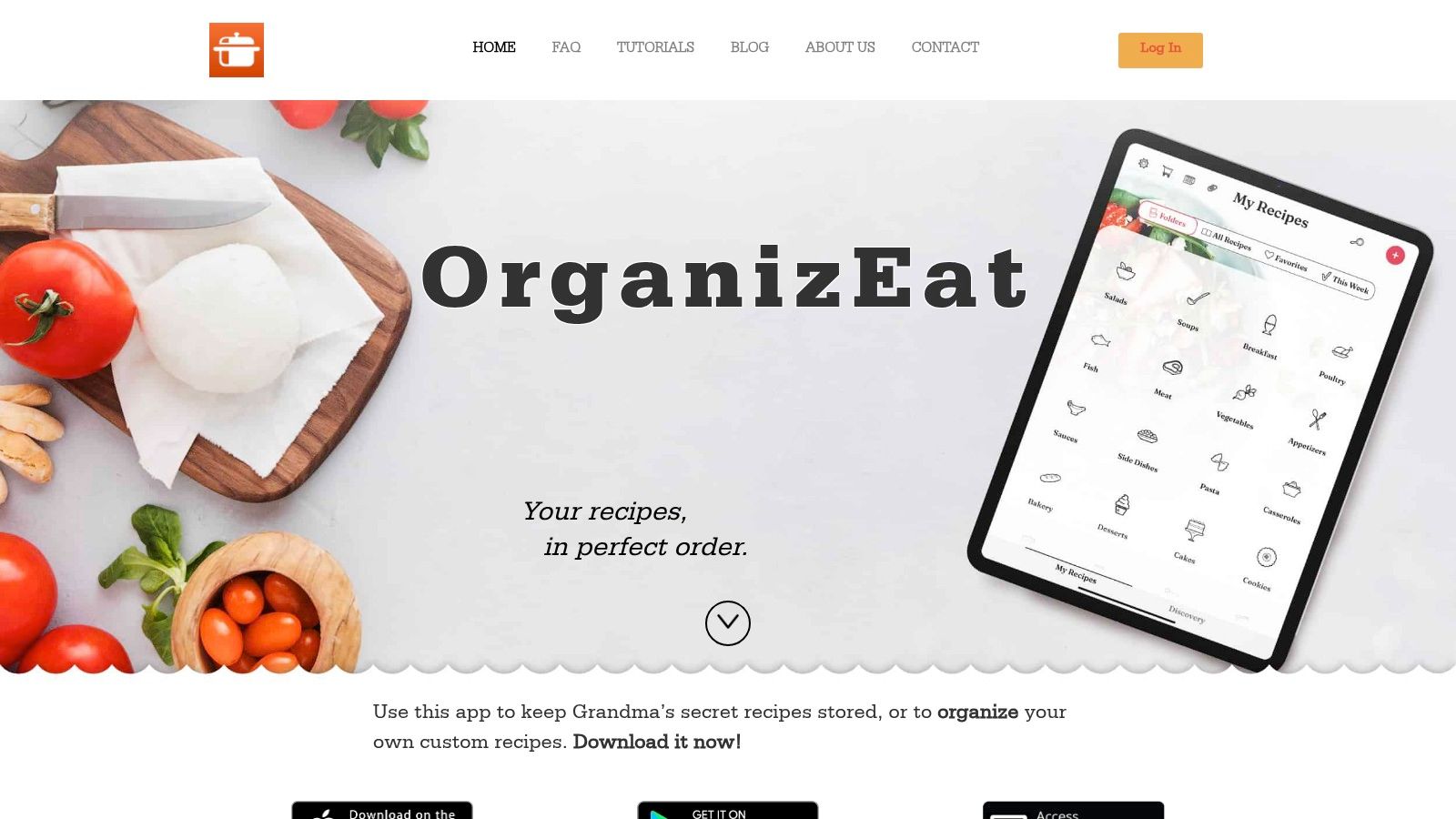
In a recipe app such as OrganizEat, you can save recipes from websites and social media, photograph handwritten cards, and add your own tags or notes. That makes smoke point knowledge easier to use during real cooking, especially when you are tired, in a hurry, or working from a recipe you found months ago.
Useful note ideas include:
- Tag by heat level: “low heat,” “medium heat,” “high heat,” or “finish at the end”
- Add pan-specific reminders: “Use medium heat only with EVOO in stainless steel”
- Record swaps that worked: “For browning, replace walnut oil with a neutral high-heat oil”
- Flag delicate ingredients: “Add toasted sesame oil after cooking”
If you often swap ingredients based on what is in your pantry, this guide to an ingredient substitution finder for any recipe pairs well with the same habit. Your recipe collection should do some of the remembering for you.
The most useful cookbook is the one that includes your real cooking notes, not just the original ingredient list.
Frequently Asked Questions About Cooking Oils
Is it unhealthy to cook past the smoke point
It's not a good habit. Once oil starts smoking, flavor deteriorates and breakdown products increase. If it happens briefly, the dish may still be salvageable, but if the kitchen smells harsh and the oil is visibly smoking, it's usually better to start over.
How should I store delicate oils
Keep them in a cool, dark place and close the bottle well. Light, air, and warmth all work against freshness. Delicate oils are more like nuts than like canned goods. They don't improve with neglect.
What's the difference between unrefined and cold pressed
They're related ideas, but not always identical labels in everyday shopping. In general, people use both terms to signal less processing and more retained flavor. In practical cooking terms, that usually means more character and less tolerance for very high heat.
Can I mix oils to create a medium smoke point
You can mix oils for flavor, but don't count on a homemade blend to behave like a precisely engineered cooking fat. In daily cooking, it's simpler to choose one oil based on the heat level you need.
Does extra virgin olive oil always count as a low smoke point oil
Not always in exactly the same way, which is part of the confusion. Some extra virgin olive oils behave better than others, and quality matters. For most home cooks, the safer habit is to use it for dressings, finishing, and moderate-heat cooking unless you know the specific oil handles more.
What's the easiest rule to remember
Use delicate, flavorful oils where you want their flavor to be noticed and preserved. Use more heat-tolerant oils where the pan is doing heavy work.
If you want your recipes to remember these decisions for you, OrganizEat gives you a place to save recipes, add notes like “use walnut oil only for finishing,” tag dishes by heat level, and keep those details available when you're standing at the stove.