


You turn on a burner, set a skillet over high heat, add oil, and within seconds the kitchen smells sharp and burnt. The steak still looks gray, the pan spits, and the smoke alarm starts doing its thing. Most home cooks blame the pan, the stove, or their timing.
Usually, the problem is simpler. The oil gave up before the food had a chance to cook properly.
That's why choosing the right high-heat oil matters so much. If you want a deep sear on a steak, crisp-edged vegetables, or a batch of fries without a hazy kitchen, the fat in the pan has to handle the temperature you're asking from it. Once you know which oils stay stable at high heat and which ones are better saved for lower-heat cooking or finishing, a lot of kitchen frustration disappears.
Table of Contents
- Your Guide to High Heat Cooking Without the Smoke
- Understanding Smoke Point and Why It Matters
- A Practical Guide to the Best High Smoke Point Oils
- Matching the Right Oil to Your Cooking Method
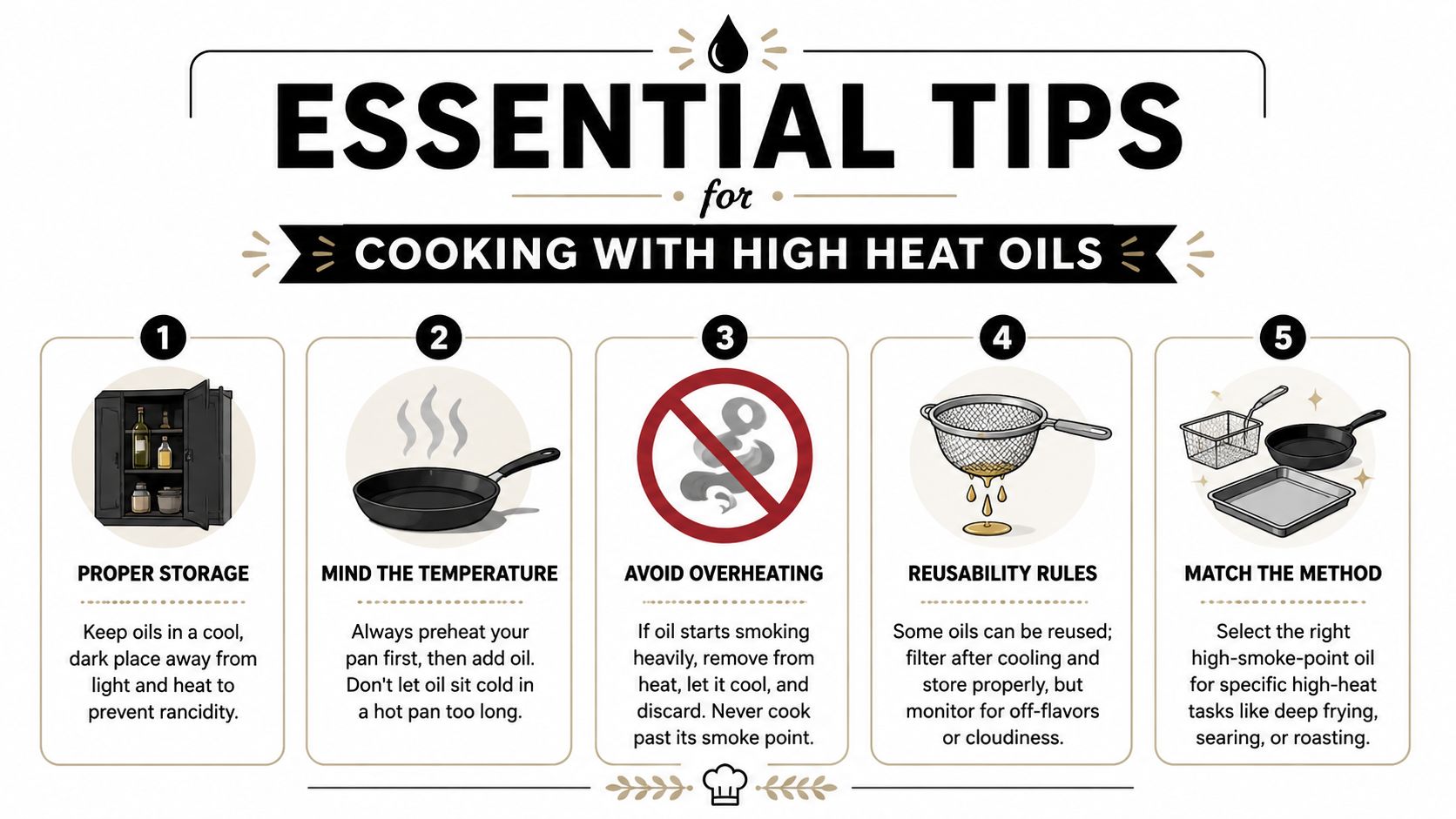
- Essential Tips for Cooking With High Heat Oils
- Cook with Confidence at Any Temperature
Your Guide to High Heat Cooking Without the Smoke
A friend once asked me why her vegetables kept tasting bitter when she roasted them hot enough to get color. She was doing almost everything right. Big sheet pan, plenty of space, oven well heated. The issue was the oil she used out of habit, not the method.
That's a common kitchen story. You reach for whatever bottle is closest, assuming oil is oil, then wonder why the pan smokes before the food browns. High-heat cooking asks a lot from fat. Searing, stir-frying, and frying need an oil that can stay calm when the pan gets seriously hot.
Practical rule: If your oil starts smoking before your food starts browning, you picked the wrong oil for that job.
The good news is this isn't hard to fix. Once you understand smoke point and the difference between refined and unrefined oils, choosing the best high smoke point oil becomes much more practical. You stop guessing and start matching the oil to the task.
That matters in everyday cooking. A neutral oil with good heat tolerance helps a steak crust properly, keeps stir-fried vegetables tasting clean, and lets fried food crisp up without leaving a burnt aftertaste. A more flavorful oil can still absolutely have a place in your kitchen, just not always in your hottest pan.
Some cooks want one dependable bottle for everything. Others want one oil for hard searing and another for lower-heat cooking and finishing. Both approaches work. What matters is knowing what each oil does well, and where it starts to struggle.
Understanding Smoke Point and Why It Matters
Smoke point is the temperature where an oil stops looking glossy and starts smoking. Once that happens, the flavor can turn bitter fast, and the oil is no longer doing your food any favors.
Think of oils like different kinds of paper. Thin tissue paper scorches quickly. Heavy cardstock holds up longer. Oils behave in a similar way under heat. Some are delicate and better for gentle cooking or drizzling. Others are built for a ripping-hot skillet.
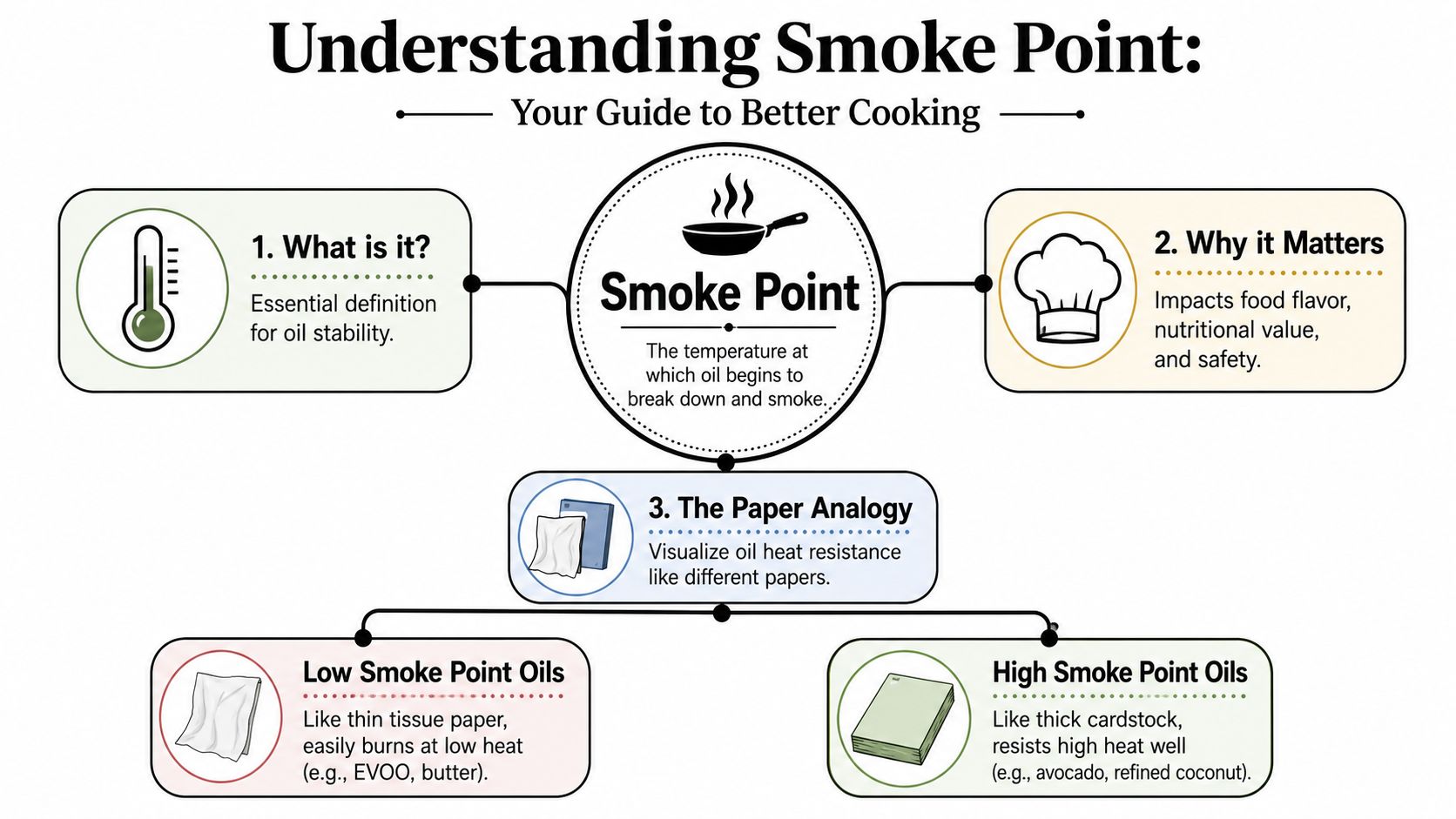
A simple way to think about smoke point
If you're heating oil for eggs, you can get away with a lower threshold. If you're trying to sear a pork chop or build color on mushrooms in a cast-iron pan, you need more room before the oil starts to break down.
Modern culinary guidance treats 480°F (249°C) or higher as the practical cutoff for a high smoke point, and in that top tier refined avocado oil is listed up to 482°F, while standard olive oil is described around 406°F in the same framework of heat use and stability, as explained in Zero Acre's smoke point guide.
That helps explain why some oils feel easy and forgiving at high heat, while others seem fussy. It's not about one oil being “good” and another being “bad.” It's about whether the oil fits the temperature of the cooking method.
Why refined oils usually go higher
Refining removes free fatty acids and suspended particles that make an oil smoke sooner. That's why refined oils usually tolerate more heat than virgin, extra virgin, or cold-pressed versions of the same oil family. If you've ever wondered why refined avocado oil behaves so differently from unrefined avocado oil, that's the reason.
A lot of confusion starts here because “refined” sounds negative to some home cooks. In practice, refining often makes an oil more useful for searing and frying. You're trading some flavor and character for heat tolerance and a cleaner performance in the pan.
For a good side-by-side look at a lower-heat category, this guide to low smoke point oil options helps show why certain oils shine outside high-heat cooking. And if olive oil is the one that confuses you most, this primer on understanding EVOO's smoke point is a useful read because it clears up the idea that every olive oil belongs in the same heat category.
Where home cooks get tripped up
The most common mix-ups are simple:
- Using flavor-first oils for heat-first jobs. Extra-virgin olive oil, toasted sesame oil, and some cold-pressed oils bring wonderful flavor, but they aren't always the first choice for a screaming-hot skillet.
- Assuming “natural” means “better for every use”. An unrefined oil can be excellent and still be the wrong pick for deep frying.
- Judging by label language alone. “Pure,” “light,” “virgin,” and “cold-pressed” tell you different things, but not all of them mean “best for high heat.”
Smoke point is a quick kitchen shortcut, not the whole story. Heat stability matters too.
That last point matters because home cooking is messy and real. Pans preheat unevenly. Food drops the temperature. You move things around. The best high smoke point oil is the one that gives you a little margin for error and still tastes good in the finished dish.
A Practical Guide to the Best High Smoke Point Oils
You preheat a skillet for dinner, add oil, and a thin haze starts creeping up before the food even hits the pan. That moment usually sends people looking for one simple answer: the best high smoke point oil. Real kitchens are a little messier than that. The better question is which oil gives you enough heat room for the job, while still matching the flavor and nutrition priorities you care about.
Some oils are built mainly for heat. Others bring more flavor or less processing, but ask for a little more care. That trade-off matters if you want food that tastes good and a cooking fat you feel good about using often.
High smoke point oil comparison
| Cooking Oil | Smoke Point (Approx.) | Flavor Profile | Best For |
|---|---|---|---|
| Refined avocado oil | 480–520°F | Mild, buttery, mostly neutral | Searing, stir-frying, deep frying |
| Refined safflower oil | 475–510°F | Very neutral | Frying, searing, large-batch cooking |
| Ghee | 450–485°F | Rich, nutty, buttery | Searing, sautéing, roasted dishes |
| Light or refined olive oil | Up to 468°F | Mild, neutral | Pan frying, roasting, everyday high-heat cooking |
If you want a useful comparison point just below the top tier, this look at grapeseed oil's smoke point in everyday cooking helps show why it works well in some pans and feels less forgiving in others.
Refined avocado oil
Refined avocado oil is the easy answer for cooks who want one dependable bottle for very hot cooking. It has a high ceiling, a mild flavor, and very little drama in the pan.
That combination is what makes it so popular. It gives you breathing room during cast-iron searing, quick stir-fries, and frying projects where the pan temperature may climb faster than you expected. If your style of cooking is more practical than precious, this oil fits nicely.
What it does well
- Hard searing for steak, burgers, chops, and sturdy vegetables
- Fast stir-frying where garlic, ginger, and sauce should stand out
- Deep frying when you want a neutral result
What to watch
- It often costs more than standard neutral oils.
- Flavor can vary a little by brand. Some bottles taste almost invisible, while others have a faint buttery finish.
If your pantry has room for only one high-heat specialist, refined avocado oil is usually the safest pick.
Safflower oil
Refined safflower oil plays a similar role, but in a quieter way. It is one of the most neutral options on the shelf, which can be a real advantage.
That matters more than people expect. A neutral oil works like a plain background in a photo. It lets the subject stand out. Fried chicken seasoning, a pepper crust on steak, or a bold stir-fry sauce gets more attention because the oil stays out of the way.
Where it shines
- Frying foods with delicate batters
- Searing when you want no extra buttery note
- Large-batch cooking where price and neutrality both matter
The trade-off is personality. Safflower oil is useful, but it does not bring much flavor or a strong identity outside high-heat jobs. For some home cooks, that makes it a pantry helper rather than a favorite.
Ghee
Ghee solves a common kitchen problem. You want butter flavor, but butter burns too quickly in a hot pan.
Because the milk solids are removed, ghee handles heat better and still gives food that rich, nutty taste many cooks want. Chicken cutlets, roasted carrots, and seared scallops all benefit from that extra layer of flavor.
Ghee earns its place when you want the cooking fat to contribute to the final taste, not just keep food from sticking.
Pros
- More flavor than neutral oils
- Strong enough for serious stovetop cooking
- Especially good in dishes where buttery notes make sense
Cons
- Not neutral
- Often pricey for bigger frying jobs
- Less practical if you need a lot of oil at once
For cooks who keep burning butter, ghee is the more forgiving cousin.
Light or refined olive oil
Light olive oil confuses plenty of shoppers because the word "light" sounds like a nutrition claim. In practice, it usually means lighter flavor and more refining.
That makes it a good middle option. You still stay in the olive oil family, but with a version that handles higher heat more comfortably than extra-virgin olive oil. For roasting, pan frying, and weeknight skillet meals, it is often easier to live with than the smoke-point rankings alone suggest.
A good fit for
- Roasted vegetables and sheet-pan dinners
- Skillet cooking on busy weeknights
- Cooks who already keep several olive oils in rotation
It is not the strongest choice for the hottest sear, but it is familiar, useful, and easy to work into everyday meals.
The new middle ground with cold-pressed high-heat oils
This part of the conversation deserves more attention. Older oil advice often splits the world into two camps: refined oils for high heat, unrefined oils for lower heat. Home cooks now have more nuance than that.
Some newer cold-pressed oils are marketed for higher-heat cooking, which gives health-conscious cooks another option to examine. The appeal is easy to understand. You may be able to get better heat performance than you would expect from a less processed oil, while still keeping more of the character that makes cold-pressed oils attractive in the first place.
That does not mean every cold-pressed bottle belongs in a ripping-hot skillet or a deep fryer. Labels, processing methods, and actual performance still vary a lot. A good rule is to treat these oils like a promising middle ground, not a guaranteed upgrade. Start with roasting or medium-high pan work, pay attention to how the oil smells and behaves, and decide from there.
This is also the trade-off at the heart of choosing a high-heat oil. Refined oils usually offer the biggest safety margin. Newer cold-pressed high-heat oils may offer a better balance of heat tolerance and nutritional appeal, but they ask you to be a little more selective and observant.
And if you also cook with animal fats from time to time, some home cooks like to support independent producers with quality tallow for roasting and frying when they want a more savory result.
Matching the Right Oil to Your Cooking Method
Choosing the best high smoke point oil gets easier when you stop asking, “What's the single best oil?” and start asking, “What am I making tonight?”
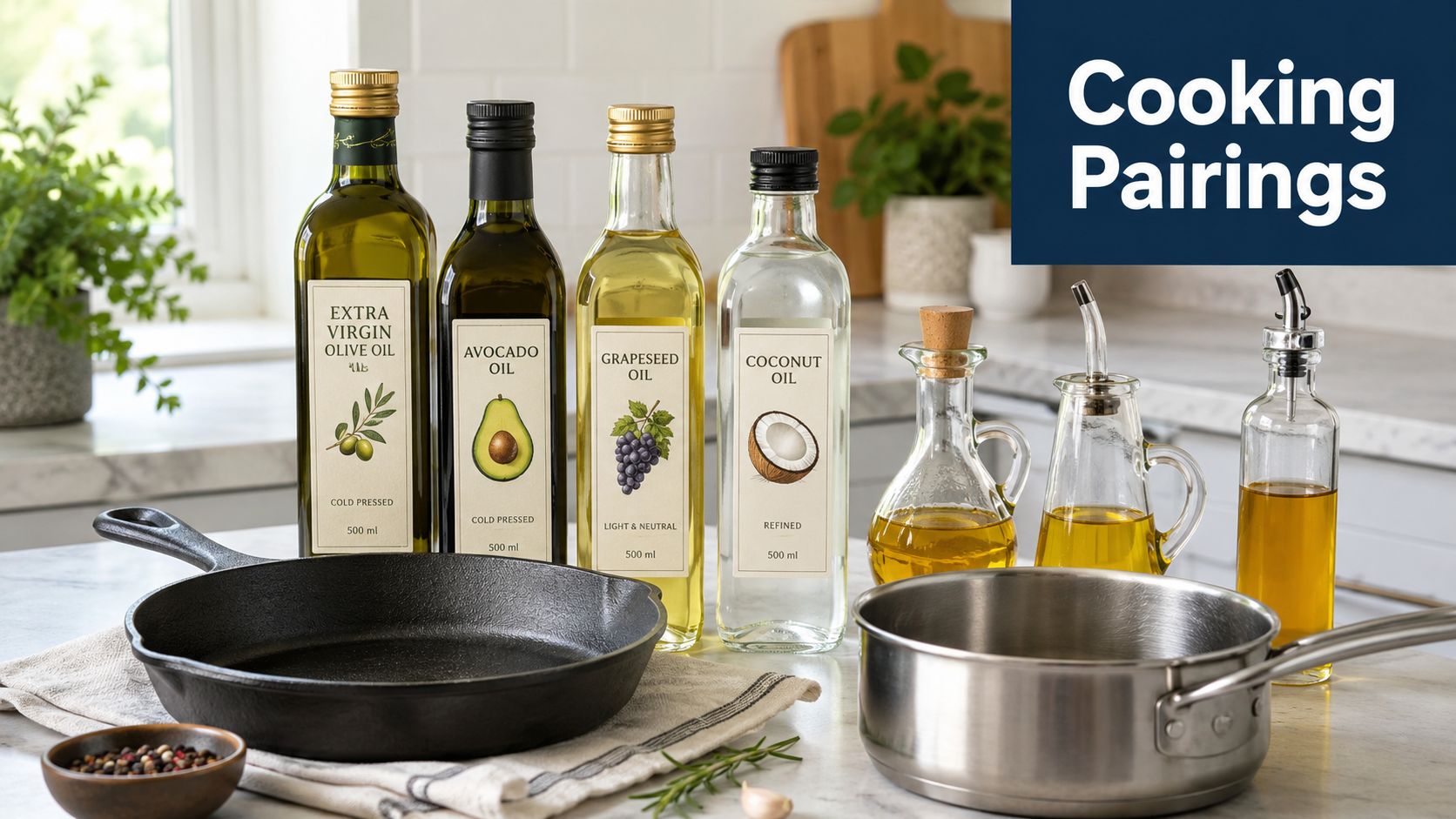
A steak in cast iron, a wok full of vegetables, and a tray of oven fries don't all ask the same thing from the oil. Temperature matters, but so do flavor, cost, and how much oil you need in the pan.
For pan searing
For a hard sear, refined avocado oil is the easy favorite. It's neutral, dependable, and built for very hot pans. If you want more flavor in the crust, ghee is excellent.
A simple rule helps here. If you want the meat itself to taste front and center, go neutral. If you want the fat to add a buttery note, use ghee. If you enjoy technique details, these professional cooking techniques for home chefs offer helpful general guidance on handling heat, timing, and pan work.
For stir-frying
Stir-frying uses intense heat, but it happens quickly. Refined avocado oil works beautifully because it won't get in the way. Safflower oil is also a sensible choice when you want a blank canvas for garlic, ginger, soy sauce, or chili paste.
What you usually don't want is a strongly flavored finishing oil as your main cooking fat. Toasted oils are better saved for the end.
If you've ever wondered whether butter belongs in this kind of high-heat cooking, this comparison of butter vs ghee makes the distinction much clearer in practical kitchen terms.
A quick visual can help if you want to see these methods in action.
For deep frying
Deep frying changes the equation because you need a lot more oil. Cost starts to matter. For many home cooks, refined avocado oil performs beautifully but feels pricey for a full pot.
That's where safflower oil can make sense if you want a neutral, high-heat option. Ghee usually isn't practical here because of cost and flavor intensity. If you fry only once in a while and want the most forgiving route, refined avocado oil is still a very safe choice.
Use your most expensive oil where you need precision. Use your most practical oil where you need volume.
For roasting
Roasting is a little more flexible because the heat is less direct than a burner under a skillet. Light or refined olive oil works nicely here, especially for vegetables and sheet-pan dinners. Ghee can be wonderful on potatoes, carrots, or cauliflower when you want more richness.
For oven cooking, flavor plays a bigger role. A high smoke point still matters, but it allows you to lean into taste a bit more without inviting instant smoke.
Essential Tips for Cooking With High Heat Oils
Picking the right oil is only half the story. The way you store it and heat it makes a real difference in how it behaves.
Store oil like an ingredient, not a pantry afterthought
Keep oil in a cool, dark spot away from the stove. Heat, light, and air slowly work against it. Even a good high-heat oil won't stay at its best if it lives beside a hot burner day after day.
Refined oils gain much of their higher smoke-point performance from processing that removes free fatty acids and suspended particles that would otherwise cause earlier smoking, as explained in Mountain Rose Herbs' smoke point overview. That doesn't mean they're indestructible. Poor storage still hurts quality.
Use the shimmer test
You don't need a thermometer for every meal. In many cases, a visual cue works well. Heat the pan first, then add the oil. When the oil loosens, moves easily, and looks glossy or lightly shimmery, it's usually ready for food.
If you add oil to a cold pan and leave it there while the pan heats for too long, you lose some control. It can tip from perfect to smoking before you've added anything.
A few habits help:
- Preheat the pan first. Then add the oil.
- Watch for shimmer, not smoke. Shimmer says go. Smoke says you've gone too far.
- Have food ready nearby. Don't heat oil, then start prepping garlic.
Know what to do when oil smokes
If the oil starts smoking heavily, take the pan off the heat. Let it cool. Don't try to push through and hope for the best. Burnt oil leaves burnt flavor behind.
Don't reuse oil that has clearly gone too far. Once it smells acrid and harsh, fresh oil is the smarter move. Your food will taste better, and the cooking experience will be easier too.
If the pan smells bitter before dinner even starts, reset. Fresh oil is cheaper than a ruined meal.
Cook with Confidence at Any Temperature
Dinner gets a lot easier once you stop asking, “What is the single best oil?” and start asking, “What am I cooking tonight?”
A fast steak sear, a sheet pan of vegetables, and a weekend batch of fried chicken do not ask the same thing from your oil. Some oils are built for pure heat tolerance. Others bring more flavor or a less processed profile, but still hold up well enough for real cooking. That is the trade-off that matters in an everyday kitchen.
Refined avocado oil is still a reliable pick when your main goal is clean, neutral high-heat performance. Ghee works well when you want browning power and a richer taste. Safflower oil is useful when you do not want the oil to show up in the final flavor. Light or refined olive oil sits in a practical middle spot for roasting, sautéing, and many weeknight pan meals.
Cold-pressed high-heat oils deserve a place in the conversation too. As noted earlier, some newer oils are closing the gap between heat performance and nutrition, which used to feel like an either-or choice. Refined oils still tend to give you the widest margin for very high heat. Cold-pressed options can be a smart fit for cooks who want less processing and still need an oil that can handle a hot pan without falling apart right away.
That is why the best high smoke point oil is not one winner. It is more like choosing the right pan. Cast iron, stainless steel, and nonstick all have their place, and oils work the same way.
Keep one neutral workhorse oil on hand. Add a second option for flavor or for the kind of cooking you do most often. With that simple setup, high-heat cooking feels steady instead of stressful.
If you want to keep notes on which oils worked best for steak night, roasting trays, or your favorite stir-fry recipes, OrganizEat gives you one place to save recipes, cooking notes, and grocery lists so your kitchen decisions get easier every time you cook.