


When choosing between plastic and stainless steel for food storage, stainless steel emerges as the safer, longer-lasting, and more environmentally friendly option. Here’s why:
- Durability: Plastic is prone to warping, cracking, and absorbing odors, lasting about 1 year on average. Stainless steel lasts 5–10+ years, resisting damage and staying odor-free.
- Health Concerns: Plastic may leach harmful chemicals like BPA and microplastics, especially when heated. Stainless steel is non-toxic and safe for acidic or hot foods.
- Cost: Plastic is cheaper upfront (~$5 per container) but requires frequent replacements. Stainless steel costs more initially (~$17.50–$20 per container) but saves money over time.
- Recyclability: Less than 10% of plastic is recycled, while stainless steel is 100% recyclable and often made from recycled materials.
Quick Comparison
| Feature | Plastic Containers | Stainless Steel Containers |
|---|---|---|
| Lifespan | ~1 year | 5–10+ years |
| Health Risks | BPA, microplastics | Non-toxic |
| Upfront Cost | ~$5.00 | ~$17.50–$20.00 |
| Recyclability | <10% recycled | 100% recyclable |
| Odor/Stain Resistance | Absorbs odors/stains | Resists odors/stains |
Bottom line: While plastic is cheaper upfront, stainless steel provides better value, safety, and environmental benefits in the long run.
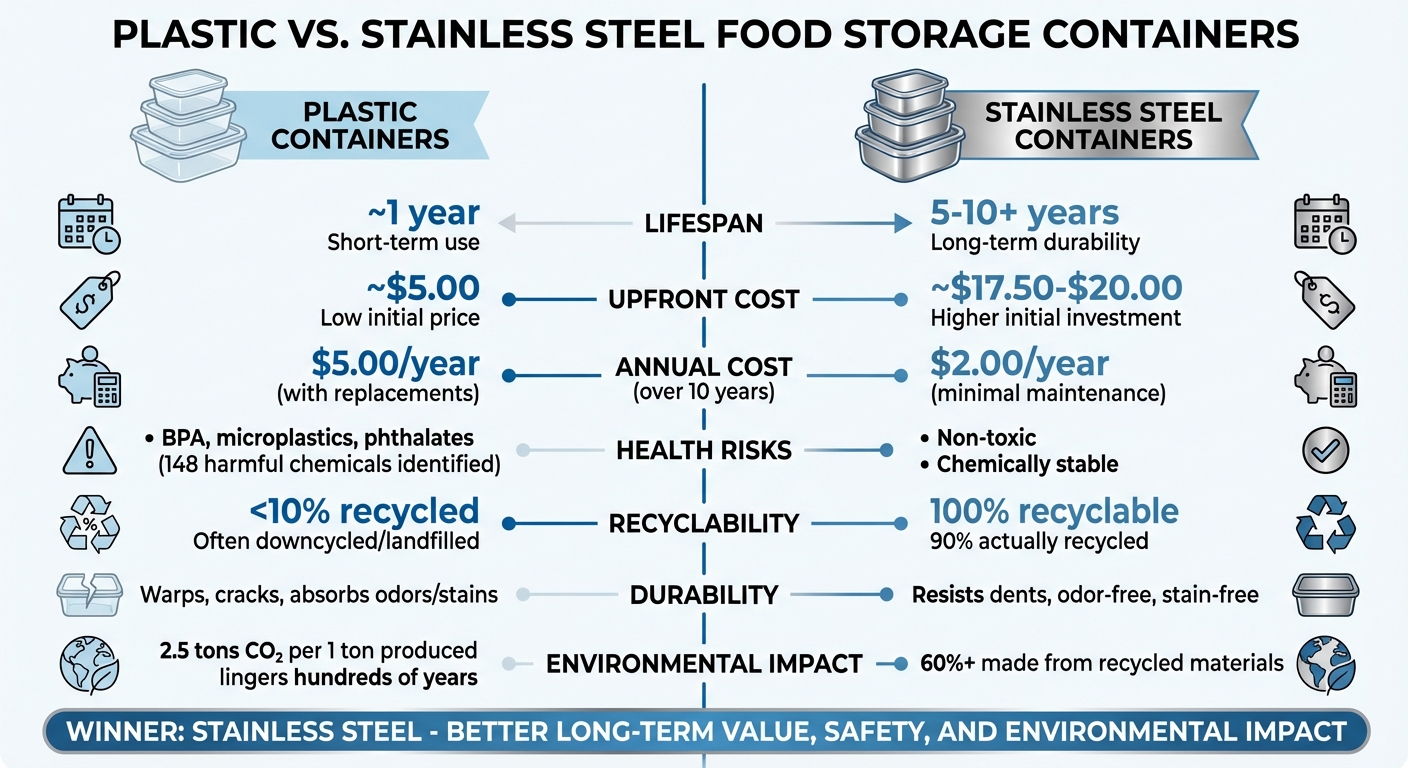
Plastic vs Stainless Steel Food Storage Containers Comparison
Durability Comparison
When choosing between plastic and stainless steel, it’s important to understand how each material performs over time. This knowledge can help you make a choice that not only suits your needs but also saves money in the long run.
How Plastic Holds Up
Plastic containers often show signs of wear and tear relatively quickly. High temperatures – whether from dishwashers or microwaves – can cause them to warp, crack, or weaken. They also have a tendency to absorb odors and stains, especially from foods like tomato sauce or curry. According to SpoonLogiq, a $5 plastic lunch box typically lasts about a year before it starts breaking down. Over time, plastic can become brittle, with visible cracks or discoloration signaling that it’s no longer reliable. Compared to stainless steel, plastic falls short in terms of durability and longevity.
How Stainless Steel Holds Up
Stainless steel, on the other hand, is built to last. It can handle drops, dents, and daily use without losing its shape or functionality. High-quality stainless steel – like 304 food-grade or 18/8 – offers strong resistance to rust and chemical reactions. A well-made stainless steel lunch box can last anywhere from 5 to 10 years, or even decades, making it a reliable companion for your meal planner. For instance, NASA uses stainless steel in spacecraft due to its exceptional durability and resistance to corrosion. While it might develop minor cosmetic scratches over time, these don’t impact its performance or safety. Additionally, stainless steel doesn’t absorb odors or stains, making it ideal for storing foods with strong flavors or high acidity.
Here’s a quick comparison of the durability features:
| Feature | Plastic Containers | Stainless Steel Containers |
|---|---|---|
| Typical Lifespan | 1–10 years (varies by quality) | 5–10+ years (often decades) |
| Heat Resistance | Susceptible to warping | Retains structural integrity |
| Physical Damage | Prone to cracks and breaks | Resistant to dents and drops |
| Odor/Stain Retention | Tends to absorb smells and colors | Remains odor-resistant and stain-free |
Safety and Health Factors
When it comes to food storage, the material you choose plays a bigger role in your health than you might realize. Plastic and stainless steel interact with food in very different ways, and understanding these differences can help you make safer choices.
Plastic Health Risks
Plastic containers often contain chemicals like BPA, phthalates, and PVC, which can leach into food. A study on plastic packaging identified 906 chemicals, with 148 found to pose serious risks to human health. Phthalates, in particular, can make up 10%–60% of some plastic containers.
Heat makes the problem worse, especially when plastic is used to store fatty or acidic foods. As Joseph Pizzorno, ND, Editor in Chief of IMCJ, points out:
“If these storage containers are so safe, why do we see the chemicals found in these containers in humans at high-enough levels to cause chronic disease?”
Even “BPA-free” labels don’t guarantee safety. According to Meals in Steel:
“BPA-free labels can give a sense of reassurance, but they do not always mean a product is risk-free. Research has shown that some BPA-free plastics contain alternative chemicals that may behave in similar ways.”
Plastic containers also tend to develop scratches and grooves over time, which can trap bacteria and release microplastics into food. In one study, polyethylene – a type of plastic – was found in the carotid artery plaque of 58.4% of participants. Those with microplastics in their plaque had a 4.54 times higher risk of heart attack, stroke, or death. These findings underline the potential dangers of plastic for food storage.
Stainless Steel Health Benefits
High-grade stainless steel, on the other hand, provides a safer, non-toxic alternative. Types like 304 food-grade stainless steel (also known as 18/8 or 18/10) are chemically stable, even when used with acidic or hot foods. This means you can store items like tomatoes, citrus, or hot curries without worrying about harmful chemicals leaching into your meals.
Stainless steel’s smooth, non-porous surface resists bacterial growth and avoids the scratches that are common with plastic. It also doesn’t absorb odors, stains, or flavors, ensuring that your food tastes fresh every time. Whether you’re storing cold leftovers or hot soup, stainless steel maintains its integrity and doesn’t break down into microplastics or release hormone-disrupting compounds – even after repeated use.
Cost Analysis: Upfront vs. Long-Term
Purchase Price
When comparing plastic and stainless steel containers, the price difference is clear right from the start. A basic plastic lunch box usually costs about $5.00. In contrast, stainless steel containers come with a higher price tag – individual food-grade options range between $17.49 and $19.99, making them about three to four times more expensive than plastic.
The gap becomes even more pronounced with larger sets. A 4-piece stainless steel set is priced around $18.00, while a 12-piece set can climb to $86.00. But focusing only on upfront costs doesn’t tell the full story – long-term use shifts the value equation significantly.
Long-Term Value
Plastic containers may seem like a bargain initially, but their shorter lifespan leads to higher cumulative costs. For example, a $5.00 plastic container typically lasts about a year before it needs replacing. On the other hand, a $20.00 stainless steel container can serve you for 5–10 years or even longer, breaking down to about $2.00 per year over a decade. As Vinod Steel explains:
“Initial cost of Stainless Steel Containers may be higher compared to Plastic Containers, but they are more durable and long-lasting, so you may save money in the long run.”
Professional kitchen assessments echo this sentiment. Stainless steel, despite its higher initial cost, often pays for itself within five years due to its durability and lower replacement needs. Its resistance to rust and odors further reduces the chance of needing frequent replacements.
Here’s a quick breakdown of the cost differences:
| Feature | Plastic Containers | Stainless Steel Containers |
|---|---|---|
| Typical Price (Single) | ~$5.00 | ~$17.50 – $20.00 |
| Expected Lifespan | ~1 year | 5–10+ years |
| Annual Cost | $5.00/year (with replacements) | $2.00/year (over 10 years) |
| Replacement Frequency | High (annual or more) | Very low (once per decade) |
| Long-Term Value | Low (cumulative costs add up) | High (one-time investment) |
This comparison highlights how stainless steel containers, despite their upfront expense, offer a more economical choice over time.
Environmental Impact
Beyond cost and durability, it’s essential to consider how your food storage choices affect the planet.
Plastic Waste Problems
Plastic food storage containers come with a heavy environmental cost. Producing just 1 ton of plastic releases about 2.5 tons of CO₂, adding considerably to greenhouse gas emissions. And the issues don’t end there – disposal is where the real trouble begins.
Less than 10% of plastic worldwide is effectively recycled. The majority ends up in landfills, incinerators, or worse, polluting our oceans. As SpoonLogiq points out, “Plastic waste lingers in landfills for hundreds of years”. During this time, it doesn’t decompose but instead breaks into microplastics, which enter the food chain and pose risks to both marine life and human health. Millions of plastic straws alone make their way into the ocean every year, wreaking havoc on marine ecosystems.
Adding to the problem is the short lifespan of plastic containers. They warp, crack, and stain easily, meaning frequent replacements. Each discarded container contributes to the growing waste crisis, perpetuating a cycle that’s tough to break.
Stainless Steel Recyclability
Stainless steel offers a much greener alternative. Around 90% of stainless steel products are eventually recycled, and what’s even better? Stainless steel is 100% recyclable without losing any of its quality or performance. It can be melted down and reused indefinitely.
Over 60% of new stainless steel products are already made from recycled materials. So, when you purchase a stainless steel container, there’s a good chance it’s partly made from recycled content. As Chloe Zhang from Shunpoly highlights, “Stainless steel is 100% recyclable and long-lasting, making it more environmentally friendly than plastic”.
While producing stainless steel requires more energy upfront, its overall environmental footprint is smaller than plastic due to its incredible durability and high reuse rates. A single stainless steel water cup, for instance, can replace hundreds – or even thousands – of disposable plastic cups over its lifetime. Unlike plastic, stainless steel doesn’t break down into harmful particles or leach chemicals, reducing its environmental toll significantly over time.
Daily Use and Cleaning
When it comes to food storage, the convenience of daily use and ease of cleaning play a big role in shaping your overall experience. How well a material handles cleaning and temperature changes can make or break your meal prep routine. Using a digital recipe organizer can help you plan these meals more efficiently.
Cleaning Requirements
One of the standout features of stainless steel is its non-porous surface, which resists both odors and stains from strong flavors like curry or tomato sauce. In contrast, plastic often absorbs these smells and colors over time.
“Stainless steel containers do not retain flavors or odors, making them a great choice for storing different types of food without transferring taste or smell.” – Vinod Steel
This non-porous nature also makes stainless steel less likely to harbor bacteria, unlike plastic, which can develop scratches that trap bacteria. Plus, most stainless steel containers are dishwasher-safe, holding up well under high temperatures without losing their shape or finish. While some plastic containers are labeled dishwasher-safe, they tend to warp or crack when exposed to high heat, making hand-washing with warm, soapy water the safer option. The durability and ease of cleaning stainless steel can also reduce waste, as it eliminates the need to frequently replace damaged containers.
Temperature Handling
Stainless steel and plastic also differ significantly in how they handle temperature. Plastic containers labeled BPA-free can be microwaved, but stainless steel cannot. On the other hand, stainless steel is freezer-safe and remains intact even in extreme cold, while plastic may become brittle over time. Neither material is generally safe for oven use.
If plastic is your material of choice, be sure to check the resin codes. Codes 1, 2, 4, and 5 are safer options, while codes 3, 6, and 7 should be avoided due to their higher likelihood of containing BPA or PVC. These differences in temperature handling affect how you can use each material, making it an important factor to consider in your daily food storage routine.
Conclusion
When it comes to food storage, stainless steel and plastic each bring different qualities to the table, but the advantages of stainless steel are hard to overlook. While plastic containers often warp or develop unpleasant odors within a decade, stainless steel stands out for its durability. High-quality stainless steel containers can last well over 10 years without losing their functionality.
Yes, stainless steel has a higher upfront cost, but it pays off in the long run. For example, a sturdy stainless steel lunch box priced between $17.49 and $19.99 can easily outlast several plastic alternatives. Plus, stainless steel is highly recyclable – about 90% of stainless steel products are eventually recycled, compared to less than 10% of plastic. This makes it a choice that’s not only wallet-friendly over time but also kinder to the environment.
“Choosing stainless steel is a long-term investment in health and the planet.” – SpoonLogiq
For meal preppers looking for reliability, food-grade 18/8 or 18/10 stainless steel is the way to go. These materials resist rust and maintain their quality over time. If you plan to store liquids like soups or curries, look for containers with silicone seals to prevent leaks. Keep in mind, though, that stainless steel is not microwave-safe.
If you’re using tools like OrganizEat to streamline your meal planning, pairing your efforts with durable, eco-conscious stainless steel containers creates a system that supports both your health and sustainability goals. It’s a small step toward a smarter, greener way of preparing and storing meals.
FAQs
What stainless steel grade is best for food storage?
The top stainless steel grades for food storage are 18/8 and 18/10. These grades have higher amounts of chromium and nickel, which make them strong, resistant to rust, and safe for food use. They’re trusted for maintaining food freshness and safety.
Are stainless steel containers leakproof for soups and sauces?
Stainless steel containers are generally a reliable choice for soups and sauces because their sturdy construction and secure lids help prevent leaks. That said, it’s always a good idea to review the specific product details, as designs and features can differ.
When should I replace an old plastic container?
Replace old plastic containers when they show signs of wear such as chips, cracks, stains, or lingering odors. These issues can compromise food safety by causing leaks or contamination.