



Refined coconut oil usually smokes at 400 to 450°F, while unrefined or virgin coconut oil starts smoking around 350°F. That difference matters a lot in a real kitchen, because the jar that works nicely for baking banana bread may be the wrong one for a ripping-hot skillet.
If you're standing over a pan wondering why your kitchen suddenly smells sharp and smoky, you're not doing anything strange. Coconut oil confuses a lot of home cooks because the answer to what is the smoke point of coconut oil depends on the type you bought, how hot your pan got, and how you're using it. The practical question isn't just “what's the number?” It's “what can I safely cook with it tonight without burning the oil and wrecking the flavor?”
Table of Contents
- Why Is My Coconut Oil Smoking
- Understanding What a Smoke Point Really Means
- Refined vs Virgin Coconut Oil Smoke Points
- Matching Your Coconut Oil to Your Cooking Method
- How Coconut Oil Compares to Other Common Fats
- Essential Tips for Storing and Using Coconut Oil
Why Is My Coconut Oil Smoking
You add coconut oil to a skillet, toss in vegetables or chicken, and within moments the pan starts hazing over. Then the smell changes. Instead of sweet and mellow, it turns bitter. Dinner isn't ruined yet, but you're close.
That usually happens when the oil has gone past its comfort zone. Virgin coconut oil handles less heat than refined coconut oil, so a stovetop setting that seems normal can still be too aggressive for the version in your jar. If you've ever noticed smoke during a fast stir-fry or while trying to sear something, that's the clue.
A lot of cooks run into this after reading general advice about coconut oil without seeing the fine print. If you want a broader look at oils that struggle under heat, this guide to low smoke point oils can help you spot patterns.
What the smoky pan is telling you
Smoke is your warning light. The oil isn't just hot. It's starting to break down.
That breakdown affects three things right away:
- Flavor changes first: Food can take on a harsh, burnt taste even before it looks overcooked.
- Aroma shifts fast: Coconut oil normally smells mild or lightly tropical. Overheated oil smells acrid.
- Pan control gets harder: Once the oil is smoking, small ingredients like garlic, ginger, or spices can scorch in seconds.
Practical rule: If coconut oil starts smoking before the food browns properly, lower the heat and rethink the oil choice, not just the recipe.
For many home cooks, the fix is simple. Use virgin coconut oil for gentler cooking and refined coconut oil for hotter tasks. That one distinction solves most of the mystery.
Understanding What a Smoke Point Really Means
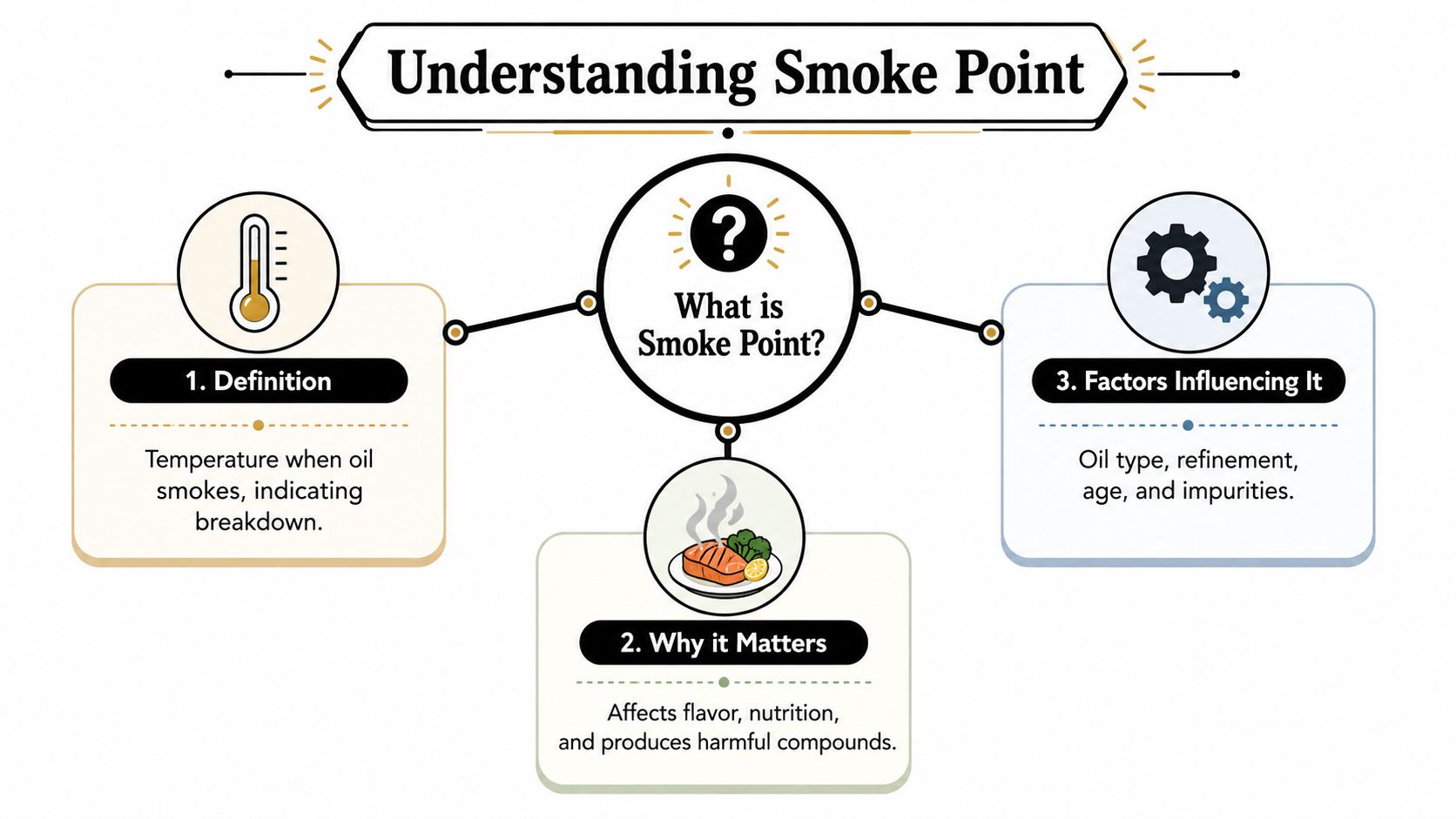
A smoke point is the temperature where an oil starts producing visible smoke and begins breaking down. In kitchen terms, it's the moment your cooking fat stops helping and starts getting in the way.
Consider toast in a toaster. There's a sweet spot where the bread turns golden and tastes great. Push past that point and the smell tells you before your eyes do. Oil behaves in a similar way. It can go from “ready to cook” to “too hot” quickly.
Why smoke point matters in daily cooking
When oil reaches its smoke point, it doesn't just create haze in the kitchen. It can damage flavor and make the food taste bitter. That's why a stir-fry can seem burnt even when the vegetables still look bright.
The term also matters because people often treat one bottle label like a guarantee. It isn't. The number on the bottle comes from controlled testing, but your skillet, oven tray, and air fryer don't behave like a lab bench. Thin layers of oil and crowded cooking surfaces can make oil smoke earlier than expected, as explained in this overview of how smoke point behaves in real cooking.
What changes the smoke point
Several everyday factors affect how an oil performs:
- How processed it is: Refined oils usually tolerate more heat.
- How old it is: Older oil can smoke sooner.
- What's mixed into it: Herbs, spices, and flavor infusions can lower the threshold.
- How you're heating it: A wide skillet with a thin film of oil heats differently than a deep pot.
If you like grilling or smoking outdoors, the same lesson applies there too. Controlled heat gives you better flavor and fewer surprises. These tips for grill enthusiasts are useful because they reinforce the same habit home cooks need indoors. Watch the food and the cooking environment, not just the dial.
Smoke point is a guide, not a promise. Your nose and your eyes are part of the thermometer.
If you're comparing oils for hotter cooking in general, this overview of cooking oils with a high smoke point gives useful kitchen context.
Refined vs Virgin Coconut Oil Smoke Points
The biggest source of confusion is that “coconut oil” isn't one single heat category. The smoke point changes depending on whether the oil is virgin (unrefined) or refined.
Unrefined coconut oil has a smoke point of around 350°F (177°C), while refined coconut oil usually falls around 400 to 450°F (204 to 232°C). That 50 to 100°F gap comes from processing. Refining removes impurities and flavor compounds that burn sooner, which lets the oil tolerate more heat.
Coconut oil at a glance
| Attribute | Virgin (Unrefined) Coconut Oil | Refined Coconut Oil |
|---|---|---|
| Smoke point | Around 350°F (177°C) | About 400 to 450°F (204 to 232°C) |
| Flavor | Noticeable coconut taste and aroma | More neutral |
| Best fit | Low- to medium-heat cooking, baking | Moderate sautéing, shallow frying, roasting |
| Why it behaves this way | Retains more natural compounds that smoke earlier | More processing removes early-burning impurities |
Why the numbers differ
Virgin coconut oil keeps more of the compounds that give it character. That's why it smells more coconutty and tastes more distinctive. But those same leftover bits are less tolerant of heat.
Refined coconut oil is more stripped down. Some flavor is lost, but the oil becomes steadier at higher temperatures. That's the basic trade-off. More flavor, less heat tolerance. Less flavor, more flexibility in the pan.
The difference shows up in actual cooking. Virgin coconut oil can work well in a gentle sauté of sliced apples, soft onions, or pancakes cooked over moderate heat. Try to use that same oil for a hard sear on chicken strips or a fast noodle stir-fry, and you'll likely hit smoke before the food is done.
Kitchen shortcut: If the recipe depends on coconut flavor, choose virgin. If the recipe depends on heat, choose refined.
One more detail matters. Coconut oil can solidify at or below roughly 25°C (77°F), which is one reason it isn't always ideal for cold uses like dressings. Its sweet spot is usually heated cooking, where the smoke point becomes the practical decision-maker.
If you also cook with dairy fats, this comparison of butter vs. ghee can help you think in the same flavor-versus-heat framework.
Matching Your Coconut Oil to Your Cooking Method
Knowing the number is useful. Knowing what dinner that number supports is better.
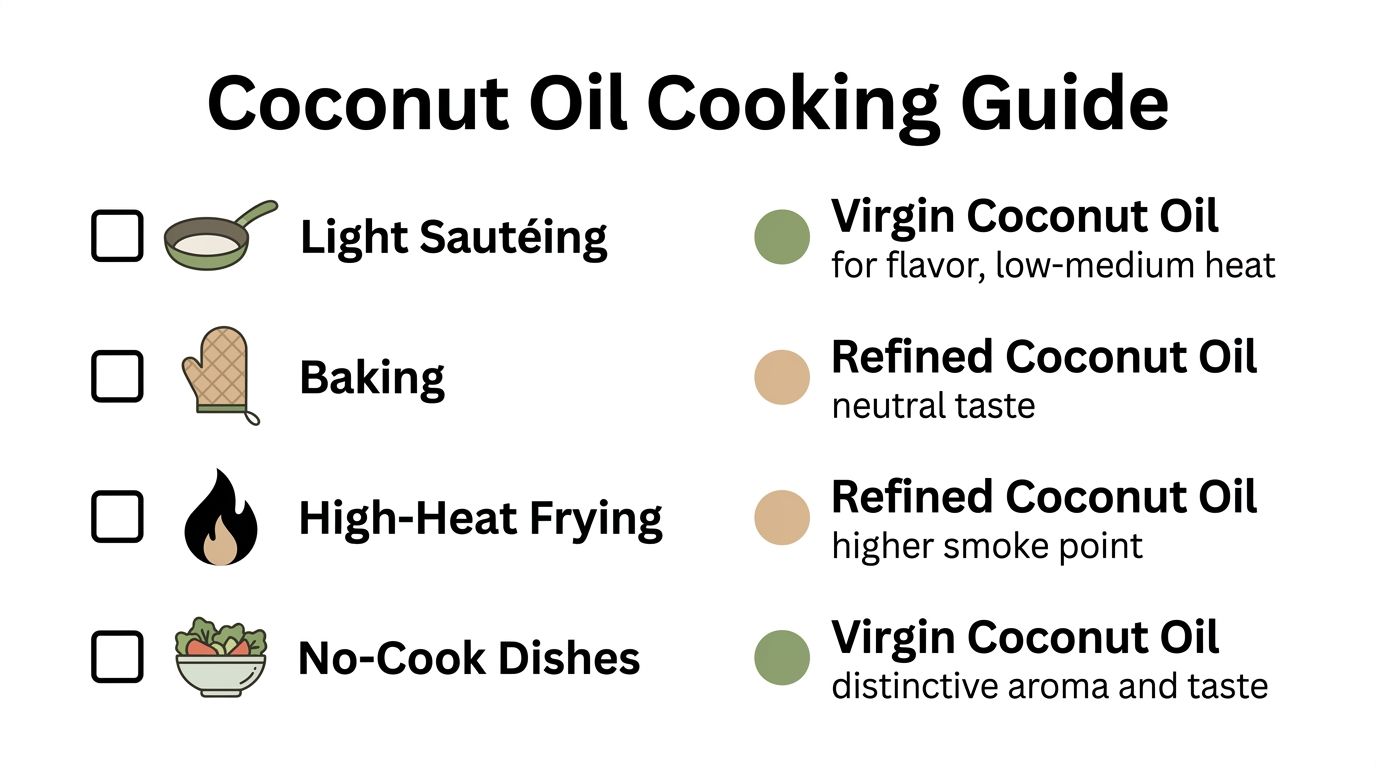
The simplest way to choose is to match the oil to the cooking method first, then think about flavor. If the method is calm and steady, virgin coconut oil can be lovely. If the method is fast and aggressive, refined coconut oil is usually the safer pick.
Use virgin coconut oil when flavor matters
Virgin coconut oil works best in dishes where its aroma is part of the appeal and the heat stays controlled.
Good examples include:
- Gentle sautéing: Softening bananas for oatmeal, warming spices for a mild curry, or cooking pancakes over moderate heat.
- Baking: Muffins, snack cakes, granola, and cookies where a faint coconut note fits the recipe.
- Low-heat skillet cooking: French toast, sweet potato rounds, or tender vegetables cooked without rushing.
In these dishes, the oil is like background music. You notice it, but it doesn't overpower the plate.
Use refined coconut oil when heat matters more
Refined coconut oil makes more sense when you need a little more headroom. It suits recipes where the pan gets hotter and the oil shouldn't contribute much flavor.
Common uses include:
- Shallow frying small cutlets or fritters.
- Roasting vegetables when you want browning without coconut aroma.
- Stovetop sautéing that runs hotter than a gentle sweat.
- Pan-cooking proteins where you need the surface of the food to color before the oil smokes.
One caution matters here. The smoke point printed on a bottle is measured under ideal lab conditions. In a real kitchen, a thin layer of oil in a hot pan or a crowded air fryer basket can push the oil into smoking before the official number suggests it should. That's why it's smart to start with medium heat and only increase if the oil stays calm and odor-free, as noted in the earlier linked smoke-point reference.
A simple decision test
Ask these three questions before you cook:
- Will I taste coconut in a good way? If yes, virgin may be the better choice.
- Is the pan going to get very hot very fast? If yes, refined is safer.
- Am I cooking in a thin skillet film or air fryer? If yes, be extra cautious, because those setups can trigger smoke sooner.
A lot of smoke-point mistakes happen because cooks choose the oil by habit. It's better to choose it by method. The right match gives you better flavor, less bitterness, and a calmer cooking experience.
How Coconut Oil Compares to Other Common Fats
Coconut oil sits in the middle of the home-cooking lineup. It isn't the lowest-heat fat in the kitchen, and it isn't the most heat-proof either. That's useful to know because many people treat it as either too delicate for cooking or suitable for everything. Neither is quite right.
Where coconut oil fits on the kitchen ladder
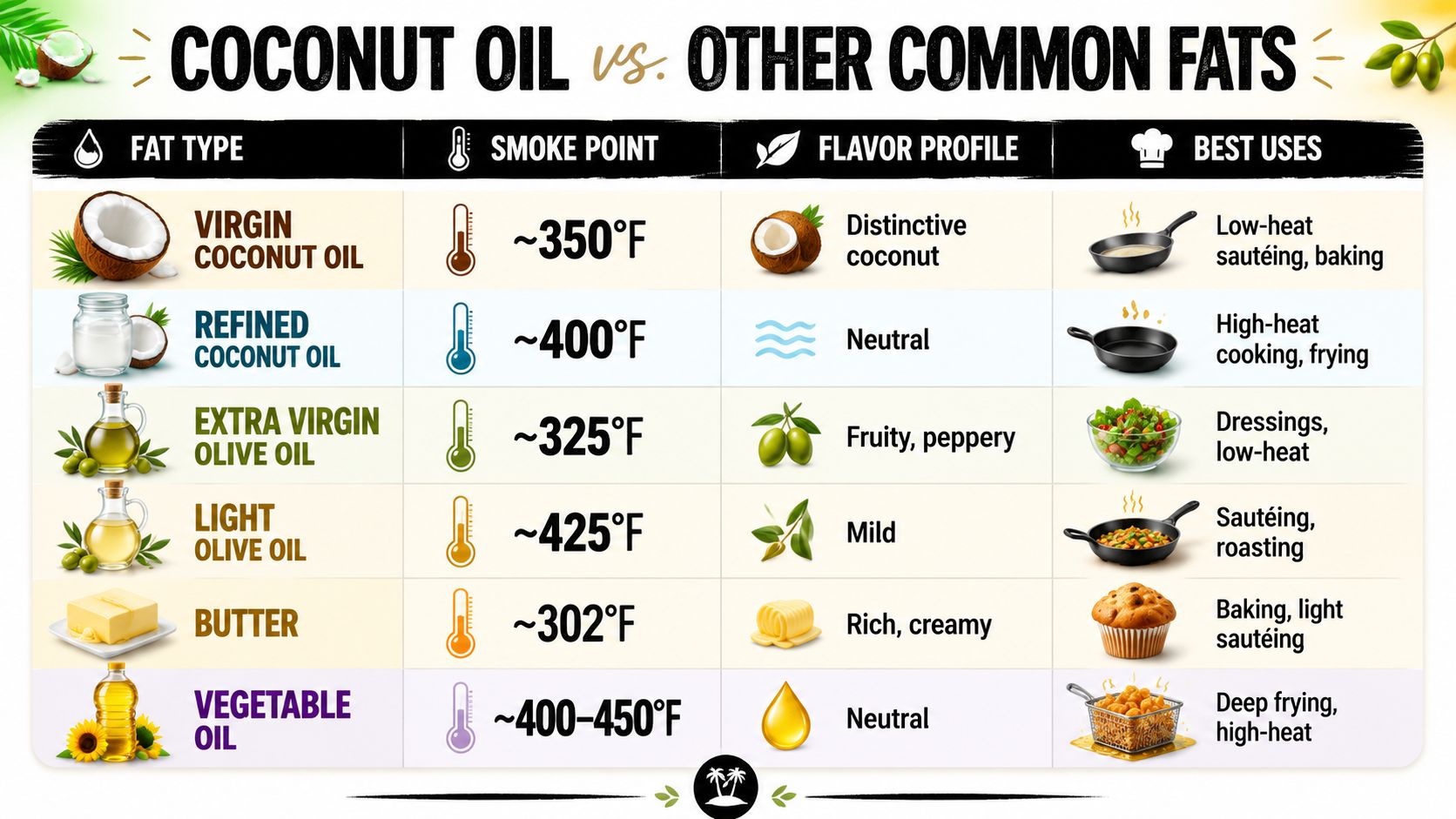
Here's the broad picture. Virgin coconut oil at about 350°F behaves more like a medium-heat fat. Refined coconut oil at about 400°F belongs in the medium-to-higher-heat group. Some refined oils, such as refined avocado or refined safflower, can go higher than that, so refined coconut oil still isn't the top choice for the hottest searing jobs.
Butter usually feels rich and familiar, but in the pan it can become fragile quickly because milk solids burn easily. Extra virgin olive oil often works well for lower-heat or moderate cooking and brings its own flavor. Refined coconut oil is helpful when you want something more neutral than virgin coconut oil and steadier than butter.
A quick comparison by cooking style
| Fat | General heat role | Flavor style | Good everyday uses |
|---|---|---|---|
| Virgin coconut oil | Low to medium | Distinct coconut | Gentle sautéing, baking |
| Refined coconut oil | Medium to higher | Neutral to mild | Roasting, hotter sautéing, shallow frying |
| Butter | Lower heat | Rich and creamy | Eggs, toast, baking, gentle pan work |
| Extra virgin olive oil | Lower to moderate | Fruity, savory | Dressings, sautéing, roasting |
| Refined avocado oil | Higher heat | Mild | Very hot pan cooking and searing |
The practical takeaway is simple. Coconut oil fills a useful middle spot.
If butter burns too fast and a very high-heat oil feels unnecessary, refined coconut oil can be a comfortable middle-ground choice.
That said, virgin coconut oil is more of a specialty player. Use it when you want its flavor and can keep the heat controlled. Use refined coconut oil when you want the texture and cooking behavior of coconut oil without announcing coconut in every bite.
Essential Tips for Storing and Using Coconut Oil
Coconut oil doesn't stay exactly the same from the day you open it to the last spoonful in the jar. Over time, storage conditions affect how it behaves in the pan.
Research discussed in this study on coconut oil heating and storage shows that the smoke point can drop as the oil degrades. Increases in free fatty acid content and peroxide value, especially when the oil sits in heat or light, can make it start smoking sooner. The same research also notes that spice-infused coconut oil can have a much lower smoke point than plain coconut oil.
Storage habits that protect performance
You don't need a laboratory routine. You just need a few solid kitchen habits.
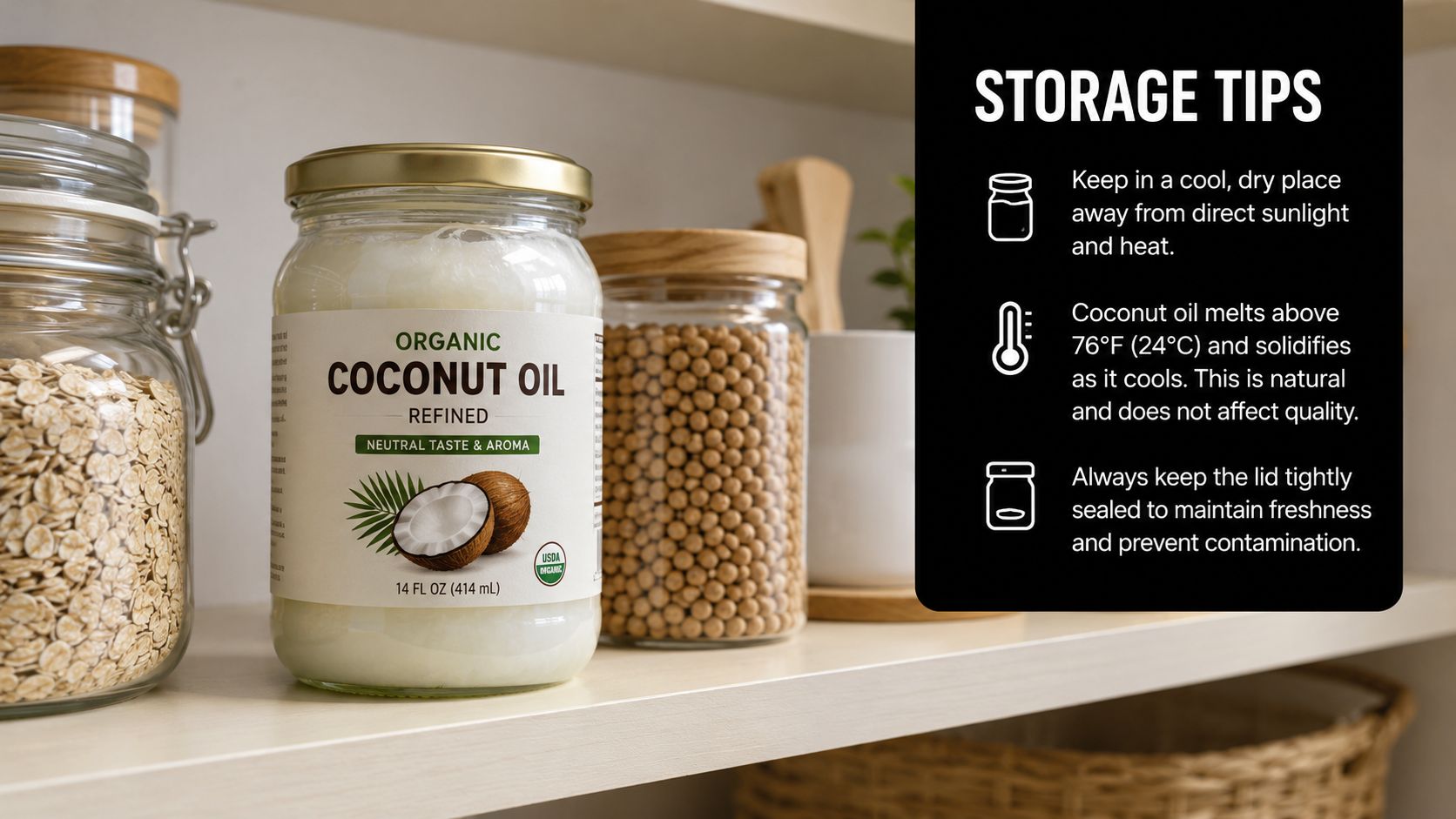
- Keep it away from the stove: Heat speeds up deterioration.
- Protect it from light: A cabinet is better than a bright windowsill.
- Close the jar well: Less exposure helps preserve quality.
- Use flavored oils gently: If you've infused coconut oil with spices, treat it as a lower-heat oil.
Because coconut oil can solidify in cooler rooms, some people worry that texture changes mean it's gone bad. Usually, that change is normal. Liquid one day and solid the next is just coconut oil being coconut oil.
Signs your oil is getting too hot
Home cooks don't need to chase exact pan temperatures every night. Watch for clues instead.
- Visible smoke: The clearest warning.
- Sharp, bitter smell: A sign the oil is breaking down.
- Off flavor in the food: Even if the food looks fine, the oil may have overheated.
- Smoke appearing unusually early: That can be a sign the oil is older or poorly stored.
If your coconut oil starts smoking sooner than it used to, use the rest for gentler cooking or baking rather than hotter skillet work. Fresh oil is the better choice when you need more heat tolerance.
The simplest answer to what is the smoke point of coconut oil is still the most useful one. About 350°F for virgin and 400 to 450°F for refined. The better answer is to pair the right jar with the right cooking method, store it well, and trust your senses when the pan tells you it's had enough.
If you like keeping cooking details straight, especially across saved recipes from social media, cookbooks, and family cards, OrganizEat gives your recipe collection one organized home. You can save recipes, tag notes like which oil works best for a dish, build grocery lists, and pull everything up in Cooking Mode when it's time to make dinner.