


You heat a skillet for steak, add oil, and within seconds the pan starts smoking. The kitchen fills with that sharp smell, the smoke alarm chirps, and suddenly dinner feels like a rescue mission instead of a good meal.
Most home cooks have had that moment. It doesn't mean you're bad at cooking. It usually means the oil and the cooking method weren't matched well. High-heat jobs like searing, stir-frying, and roasting ask more from a fat than a gentle sauté does. If you've been trying to improve pan-seared dinners or elevate your backyard steak grilling, understanding oil choice makes a noticeable difference.
A good cooking oil with high smoke point gives you a wider margin for error. But the smartest choice isn't always the oil with the single highest number on a chart. Flavor matters. Stability matters. The kind of heat you're using matters too.
Table of Contents
- Why Your Searing Steak Set Off the Smoke Alarm
- What Exactly Is a Cooking Oil's Smoke Point
- A Practical Chart of High Smoke Point Oils
- How to Choose the Right Oil Beyond the Numbers
- Storing Cooking Oils for Maximum Freshness
- Organizing Your Recipes for High-Heat Cooking
- Common Questions About High-Heat Cooking Oils
Why Your Searing Steak Set Off the Smoke Alarm
You heat the cast-iron skillet until it looks ready for steakhouse-level browning. The steak hits the pan, but instead of a clean, savory smell, you get a sharp cloud of smoke and a beeping alarm from the hallway.
That usually means the oil gave out before the steak had time to form a good crust.
Smoke point is the temperature where an oil starts to smoke and break down. In real cooking, that matters because searing asks a lot from both the pan and the fat in it. If the oil reaches its limit too early, you smell it right away. The flavor can turn harsh, and the kitchen fills with smoke before dinner is even halfway done.
A useful way to picture it is to treat oil like the wrong pair of shoes for a long walk. It may be fine for a short, gentle trip, then fail fast once the job gets demanding. An oil that tastes great in vinaigrette can struggle in a ripping-hot skillet.
You did not ruin the steak. You matched a high-heat method with an oil that was better suited to lower-heat cooking.
That is why a single smoke-point number does not tell the whole story. For steak, the better question is not just, "Which oil can survive high heat?" It is, "Which oil can handle high heat, stay stable long enough to sear, and still taste right with beef?" Neutral refined avocado oil, canola oil, peanut oil, and other refined oils often work better here than delicate, strongly flavored oils.
If you also like cooking over live fire, guides on how to elevate your backyard steak grilling can help with technique. The same principle applies indoors and out. Match the oil to the heat and the cooking style, and you get browning with less smoke and less stress.
What Exactly Is a Cooking Oil's Smoke Point
A smoke point is the temperature where an oil starts giving off visible smoke. In the kitchen, that is your cue that the oil is no longer just heating up. It has begun to break down.
That matters because heat changes more than appearance. Push oil past this point and the flavor can turn sharp, bitter, or stale-tasting. Browning becomes harder to control, and a pan that should be helping dinner along can start working against you.
A helpful kitchen definition
Water announces itself with bubbles when it boils. Oil gives different signals. First it looks loose and shimmery in the pan. If the heat keeps climbing, smoke appears. That shift is the useful line to watch for during cooking.
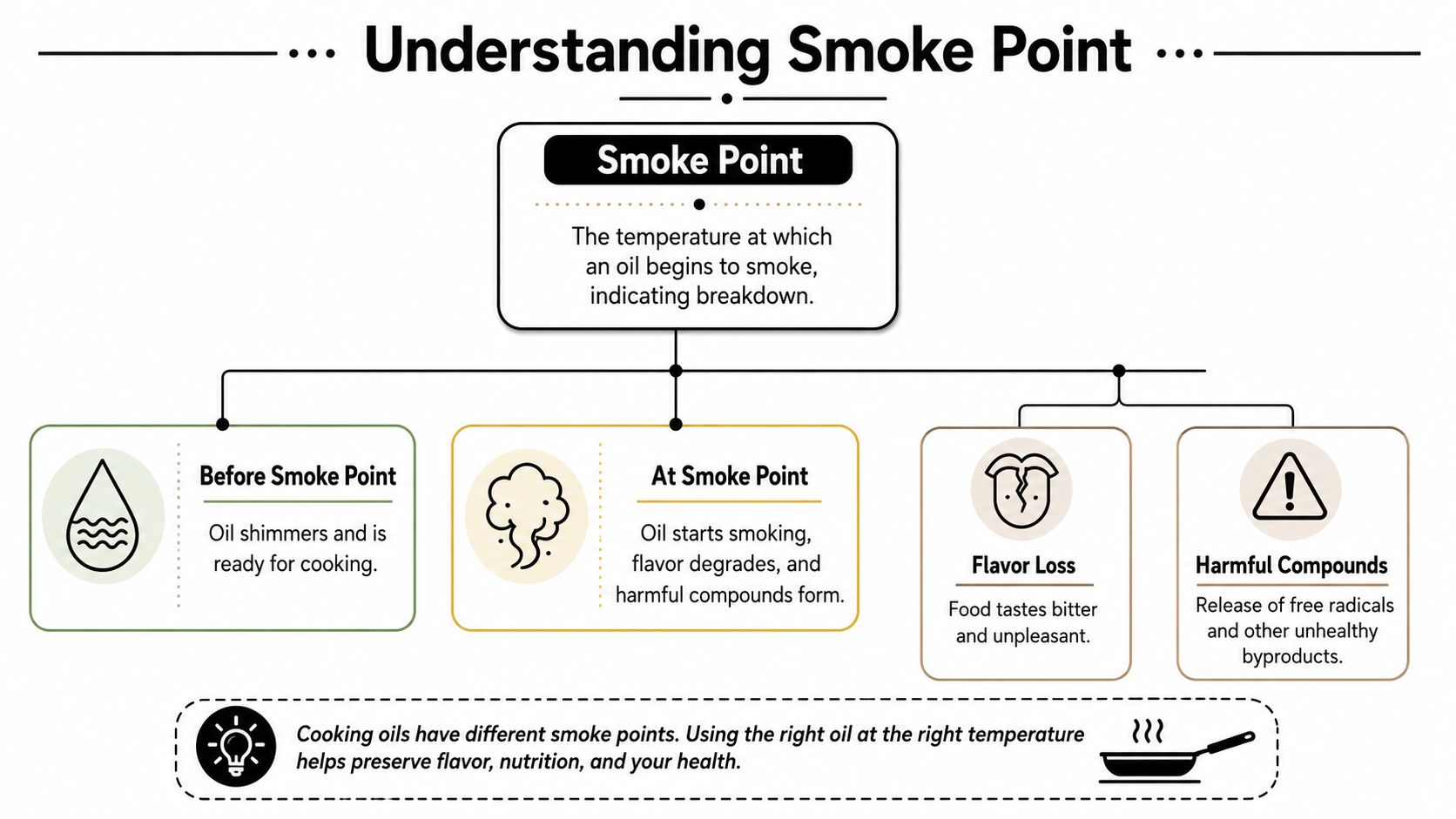
Going past the smoke point works like overbrowning toast. The food is still there, but the pleasant flavor drops off fast. Smoke from the pan is not a sign that you have reached some ideal high-heat zone. It is a warning that quality is slipping.
A practical kitchen rule is to choose an oil whose smoke point sits comfortably above the heat level your method requires. Refined oils often fit that job better because processing removes compounds and impurities that make oil smoke sooner. If you want a good example of how one neutral oil performs at higher temperatures, this guide to the smoke point of grapeseed oil helps show why the number alone is only part of the decision.
Why refined oils usually handle heat better
The term refined can be misleading. It does not automatically mean "better" in every situation, and it does not mean "worse" either. It means the oil has been processed in a way that usually makes it more neutral in flavor and more tolerant of heat.
That is why refined oils are often the practical choice for jobs like:
- Searing meat in a very hot skillet
- Stir-frying over fast, intense heat
- Deep-frying where the oil stays hot for a longer stretch
- High-heat roasting when you want browning without scorched oil flavor
Practical rule: Choose an oil with some breathing room above your cooking temperature.
One more point clears up a common misunderstanding. Smoke point is useful, but it is not the whole decision. Two oils can have similarly high smoke points and still behave differently in your food because flavor, stability, and cooking time also matter. A neutral oil may be perfect for searing steak, while a more distinctive oil may make better sense for roasting vegetables or finishing a dish after cooking.
A Practical Chart of High Smoke Point Oils
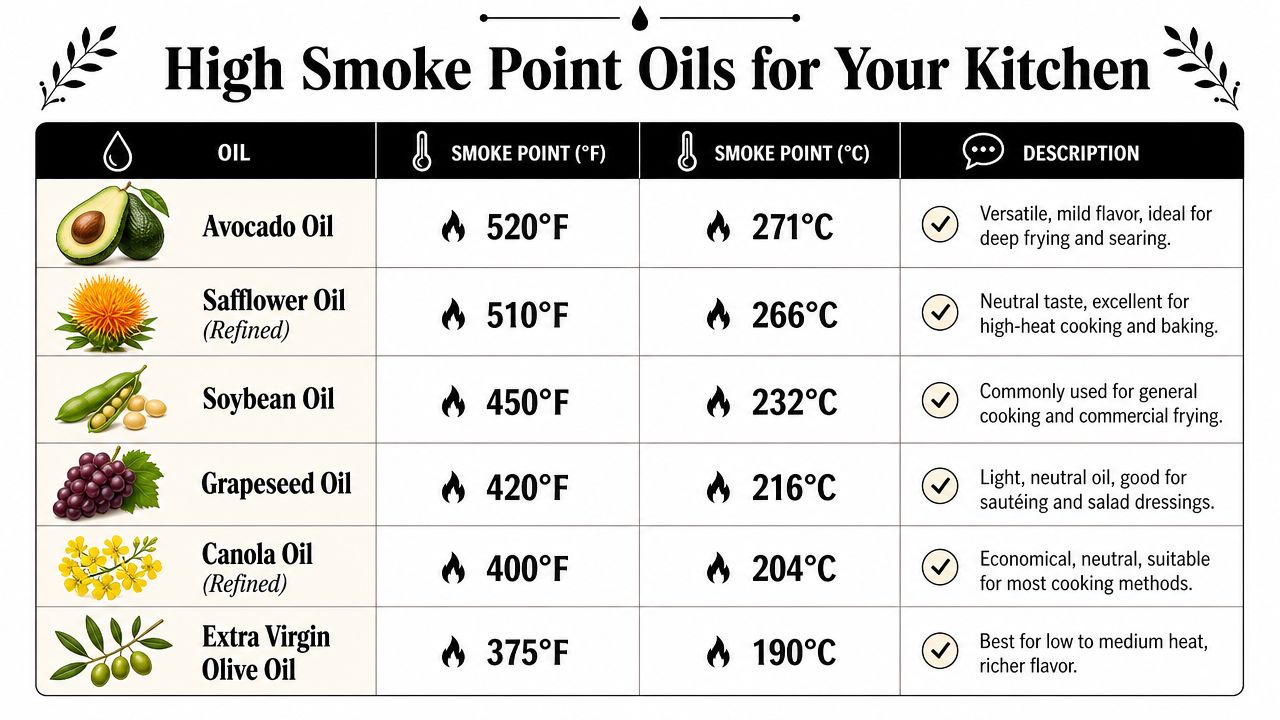
You pull a skillet onto the burner for steak night, add oil, and want two things at once. Enough heat for a good crust, and a flavor that does not fight the food. That is why a useful oil chart needs to answer more than one question.
Quick comparison chart
| Oil | Typical smoke point range | Flavor profile | Best uses |
|---|---|---|---|
| Refined avocado oil | High | Mild, mostly neutral | Searing, deep-frying, wok cooking, roasting |
| Refined safflower oil | High | Neutral | High-heat frying, roasting, baking where you do not want extra flavor |
| Ghee | High | Buttery, nutty | Searing, roasting, skillet cooking where richness helps |
| Refined peanut oil | High | Lightly nutty to neutral | Frying, stir-frying, general high-heat cooking |
| Refined soybean oil | High | Neutral | Frying, roasting, everyday high-heat use |
| Canola oil | Medium-high to high | Neutral | Roasting, sautéing, moderate to high heat cooking |
| Extra virgin olive oil | Lower than the oils above | Fruity, peppery, grassy | Dressings, finishing, gentle to moderate heat |
The exact smoke point can vary by brand and how refined the oil is, so treat this chart as a kitchen guide, not a lab reading.
If grapeseed oil is one of your regular bottles, this guide to grapeseed oil smoke point shows how one neutral oil fits into high-heat cooking.
How to read the chart like a cook
Start with the cooking job.
For a hard sear, you want an oil that stays calm in a very hot pan and does not leave a strong taste behind. Refined avocado oil, safflower oil, and peanut oil usually fit that role well. They work like a plain background in a photo. Your steak, fish, or vegetables stay the focus.
Ghee solves a different problem. It handles strong heat well, but it also brings flavor. That can be a good trade if you are browning mushrooms, toasting flatbreads in a skillet, or cooking chicken where a buttery note adds something welcome.
Extra virgin olive oil belongs in the chart for another reason. It reminds you that the highest number is not always the right pick. If you want grassy, peppery olive flavor in a lower-heat pan sauce or on roasted vegetables added near the end, that flavor matters more than chasing the top smoke point.
A simple way to use the chart is to match each oil to three questions:
- Do I want neutral flavor or noticeable flavor?
- Is the heat brief and intense, or longer and steadier?
- Am I searing, frying, roasting, or finishing?
That last question is where many home cooks get stuck.
Searing and deep-frying both use high heat, but they do not ask the same thing from an oil. A fast sear rewards an oil with a comfortable heat buffer and clean taste. Frying asks for that, plus good staying power over more time. Roasting sits in the middle. You usually want enough heat tolerance, but flavor can matter more because the oil coats the food instead of sitting only in the pan.
Use the chart as a shortlist, then make the final call based on flavor and cooking method. That approach is more helpful than hunting for the single highest smoke point and using it for everything.
How to Choose the Right Oil Beyond the Numbers
You can watch two oils hit the same hot pan and get two different results. One stays calm while your steak sears. The other starts smelling harsh halfway through cooking. The label may show similar smoke points, but the cooking job is different from the number on the bottle.
A better way to choose oil is to match it to what the pan is asking it to do. Heat matters, of course. So do time, flavor, and how much stress the oil will take before the food is done.
Match the oil to the job
A 30-second steak sear and a 12-minute batch of fried chicken are both “high heat,” but they challenge oil in different ways.
For a very fast sear, you want an oil that gives you some breathing room above the pan temperature and stays out of the food’s way flavor-wise. Refined avocado oil or another neutral refined oil works well here because the oil’s main job is to help the surface brown cleanly.
For longer frying, the oil needs endurance. According to Michelin’s discussion of oil quality and smoke point, performance during cooking is also shaped by oxidative stability, refining level, and the proportion of polyunsaturated fats. In kitchen terms, that means an oil can look good on a smoke-point chart yet tire out faster during sustained heat.
That is why a slightly lower number does not automatically make an oil the worse choice for every recipe. Pan time changes the decision.
Use three filters before you pour
Run through these questions in order.
-
How intense is the heat?
Broiler-level skillet heat calls for more headroom than a gentle roast. -
How long will the oil stay hot?
A quick stir-fry asks for short-term heat tolerance. Deep-frying asks for heat tolerance plus staying power. -
Do you want the oil to be tasted or ignored?
Neutral oils fade into the background. Ghee, toasted sesame oil, and extra virgin olive oil leave a fingerprint on the dish.
Flavor is often the tiebreaker. Roasted potatoes can benefit from olive oil or ghee because the oil coats every bite. A hard sear on fish usually goes better with a neutral oil, since you want the fish and browning to lead.
A few real kitchen choices
If you are searing steak for one minute per side, a neutral refined oil is an easy pick. High heat, short contact time, little flavor interference.
If you are frying chicken or doughnuts for several batches, choose an oil known for staying steady during longer heating, even if another bottle advertises a slightly higher smoke point. The oil is working like a marathon runner here, not a sprinter.
If you are browning mushrooms, griddling flatbreads, or cooking eggs where a buttery note helps, ghee can be a smart choice. If you want a clearer sense of ghee and butter in everyday cooking, that comparison can help you decide which flavor fits your kitchen better.
The same logic applies to olive oil. Some extra virgin olive oils can remain impressively stable during cooking because their natural compounds help protect them, as explained in the Olive Oil Council’s discussion of oil stability. That makes extra virgin olive oil a strong option for many moderate-heat jobs and some skillet cooking where its flavor belongs in the final dish.
Here is the short version:
- Fast searing: choose a neutral refined oil with plenty of heat room.
- Longer frying: choose an oil that holds up well over time, not just one with a big number on the label.
- Roasting and skillet cooking where flavor matters: ghee or olive oil may serve the dish better.
- Finishing and lower-heat use: choose for taste first.
Smoke point is useful. It is just one part of the decision. The best oil for your kitchen is the one that fits the method, lasts for the length of the cook, and tastes right on the food.
Storing Cooking Oils for Maximum Freshness
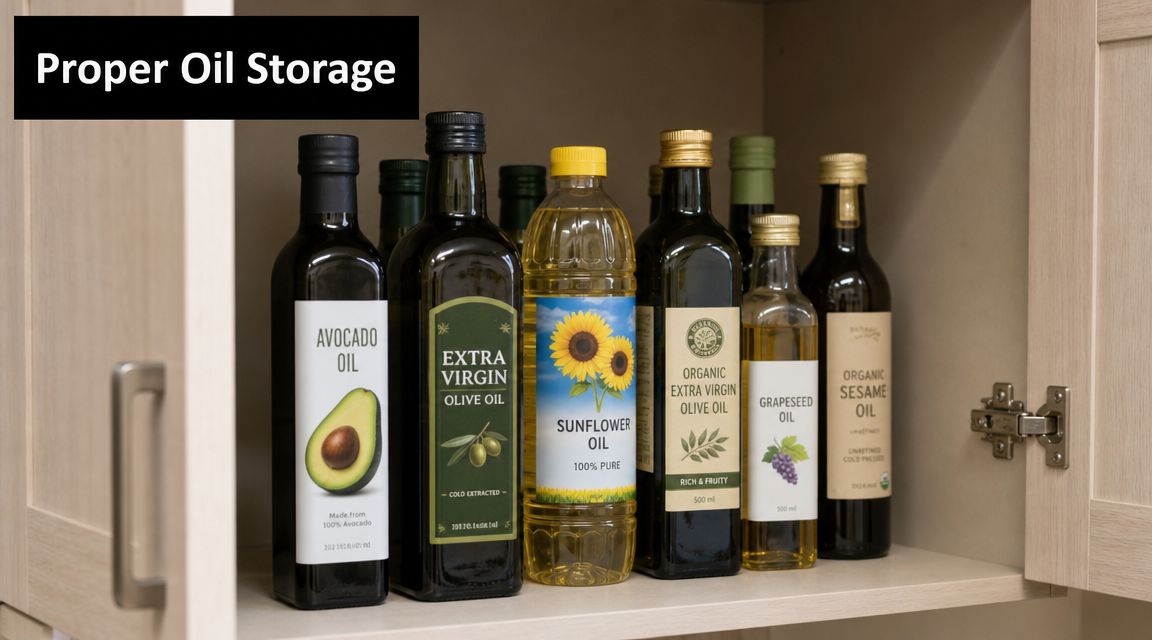
You can buy the right oil and still get poor results if you store it badly. Heat, light, and air all wear oil down over time. Once oil starts turning stale or rancid, its flavor suffers, and it may begin misbehaving in the pan sooner than you expect.
What ruins oil faster
The worst place for many oils is right beside the stove. It’s convenient, but repeated warmth speeds decline. A sunny windowsill isn’t much better.
You’ll also shorten an oil’s life if the cap stays loose. Every exposure to air nudges it toward staleness. That’s especially frustrating with specialty oils you use only occasionally.
Simple storage habits that help
These habits are low effort and worth it:
- Keep bottles cool and dark: a pantry or cabinet works better than the countertop near burners.
- Seal tightly after each use: less air exposure helps preserve flavor.
- Buy practical sizes: if you only deep-fry once in a while, a giant bottle may outlast its prime before you finish it.
- Trust your senses: if an oil smells stale, paint-like, or oddly sharp, don’t use it for an important dish.
Fresh oil cooks predictably. Old oil surprises you at the worst possible moment.
For everyday cooking, a small routine helps. Store your neutral high-heat oil where it’s easy to grab, keep your finishing oil separate, and label bottles if you decant them. That alone cuts a lot of “wait, which one is this?” confusion.
Organizing Your Recipes for High-Heat Cooking
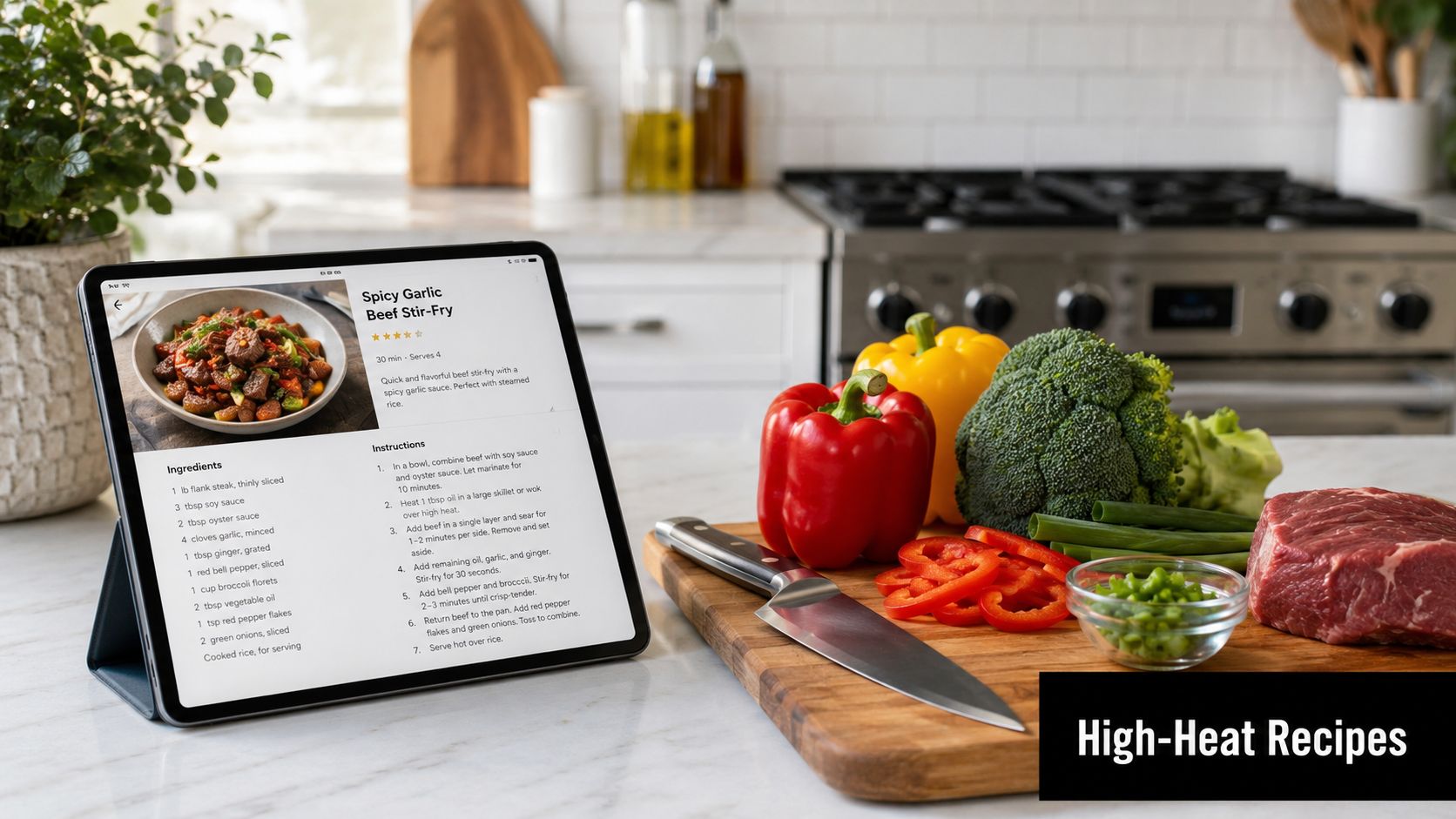
Knowing the right oil is useful once. Saving that knowledge with the recipe is what helps on a busy weeknight.
If you’ve ever reopened a saved recipe and wondered, “Did I use avocado oil for this, or was that the salmon one?” you already know the problem. A short oil note prevents repeat guesswork.
Build oil notes into the recipe itself
When you save a recipe, add one line that names the cooking fat and the reason. Something like:
- “Use refined avocado oil for searing”
- “Ghee works best for the final browning”
- “Don’t use extra virgin olive oil here”
- “Neutral oil only, strong flavors clash”
That note matters most for recipes that move fast, such as stir-fries, scallops, smash burgers, or blistered green beans. In those dishes, there’s rarely time to stop and rethink the oil once the pan is hot.
A recipe organizer can make this easier by letting you save tags, notes, and source material together. If you keep your collection in one place, recipe organization for meal planning success becomes much more practical because your shopping, prep, and cooking notes stay connected.
Useful tags to add
Try tags that reflect action, not just ingredient type:
- High-heat searing
- Neutral oil
- Use ghee
- Deep-fry
- Wok cooking
- Finish with olive oil
If you use OrganizEat, you can save those tags with the recipe card itself, along with screenshots, links, or handwritten notes, so the oil choice shows up when you cook instead of living in your memory.
That’s the small system experienced home cooks build for themselves. Not fancy. Just reliable.
Common Questions About High-Heat Cooking Oils
A few questions keep showing up because oil choice is less like picking the single “best” number on a chart and more like choosing the right pair of shoes for the job. A sprint, a hike, and a rainy walk ask for different things. High-heat cooking oils work the same way. Heat matters, but so do flavor, processing, and how the oil behaves after repeated use.
Why do labels and charts give different smoke points for what seems like the same oil
Oil names are broad categories, not exact performance guarantees.
A bottle labeled “avocado oil” can come from different batches of fruit, different processing methods, and different levels of refinement. That is why one chart may list a higher smoke point than another. The label gives you the family name. The refining level tells you more about how that bottle will behave in a hot pan.
For everyday cooking, the practical shortcut is simple. If you want cleaner performance for searing, stir-frying, or frying, check for words such as refined or high-heat. If you want more character and aroma, words such as virgin or unrefined usually signal an oil that brings more flavor and often less heat tolerance.
How do I know if an oil fits my cooking method
Match the oil to the job, not just the temperature.
A neutral refined oil is useful when the goal is a hard sear and the oil should stay in the background. A more flavorful oil makes sense when the oil is part of the dish, such as a warm vinaigrette, a gentle sauté, or a finishing drizzle after cooking. Ghee sits in another category. It handles heat well and adds a buttery note, which can be great for eggs, potatoes, or pan-roasted vegetables.
If you are unsure, ask two questions. Do I want the oil to add flavor? Will this pan get ripping hot? Those answers usually narrow the choice faster than a long smoke point chart.
What signs mean frying oil should be replaced
Used oil gives plenty of warning if you pay attention.
Watch for these signs:
- The color turns much darker
- The surface foams more than usual
- It starts smoking sooner than it did when fresh
- Food tastes flat, greasy, or a little stale
- The oil smells tired, sharp, or unpleasant
That last clue matters. Fresh oil smells mild. Old oil often smells like the pan needs a reset.
Do I need several oils in my kitchen
A small set is enough for many home cooks.
A practical setup is one neutral high-heat oil for searing and frying, one flavorful oil for lower-heat cooking or finishing, and one specialty fat such as ghee if you like its taste. That covers weeknight stir-fries, roasted vegetables, crisp cutlets, salad dressings, and the final spoonful of flavor on top.
You do not need a shelf full of bottles. You need a few oils with clear jobs.
If you want your oil choices to stay attached to the recipes they belong with, OrganizEat gives you one place to save recipes from websites and social media, add notes like “use refined avocado oil,” tag dishes for high-heat cooking, and pull everything up later while you’re at the stove.