


You've got lettuce washed, maybe some cucumbers sliced, and the salad is ready to eat. Then you open the fridge and realize the dressing situation is grim. No vinaigrette, no ranch, nothing worth pouring over good greens.
That's where an easy mayonnaise dressing earns its place in a real kitchen. Mayo, a splash of acid, a little seasoning, and a quick whisk can rescue dinner in minutes. Better yet, once you understand the ratio, you stop depending on one fixed recipe and start making the dressing that fits what's on your plate.
Table of Contents
- Why Homemade Dressing Is Your Secret Weapon
- The 5-Minute Creamy Dressing Formula
- Quick and Creative Dressing Variations
- Mastering Ratios and Ingredient Substitutions
- Proper Storage and Serving Inspiration
- Save and Organize Your Favorite Recipes
Why Homemade Dressing Is Your Secret Weapon
A homemade mayo dressing solves a very specific kitchen problem. You need something creamy, balanced, and fast, and you need it from ingredients you already have. Mayo is usually there. Vinegar or lemon juice is usually there. Salt, sugar, mustard, garlic powder, milk, herbs. Those are the kinds of ingredients that save a meal without forcing a store run.
What makes it so useful is how forgiving it is. A vinaigrette can feel sharp if the acid is too aggressive. A yogurt dressing can turn chalky if it's overworked or underseasoned. Mayo-based dressing is different. It starts creamy, so you're already halfway to a good result.
Practical rule: If your salad is sturdy enough for coleslaw, potato salad, chopped romaine, or shredded cabbage, a mayo dressing usually works better than a thin vinaigrette.
The flavor is also easier to tune on the fly. If it tastes flat, add acid. If it tastes harsh, add a pinch more sweetness or a little more mayo. If it feels too thick, loosen it with a small splash of water or milk. You don't need a blender, a special jar, or any advanced technique. A bowl and whisk are enough.
Homemade also gives you cleaner control over what goes in. You're not dealing with a bottle that tastes oddly sweet, too salty, or packed with flavors that don't fit your dinner. You get to decide whether the dressing leans peppery, tangy, herby, or mellow.
That control is what turns easy mayonnaise dressing into a habit rather than a backup plan. Once you've made it a few times, it becomes the thing you do automatically when dinner needs one last touch.
The 5-Minute Creamy Dressing Formula
The most useful way to think about easy mayonnaise dressing is as a formula, not a strict recipe. You need a creamy base, an acid, a small balancing note, and, if needed, a loosener.
Start with the core ratio
A classic mayonnaise salad dressing typically combines ½ cup of mayonnaise with 2 Tablespoons of red wine vinegar and 1 teaspoon of sugar, creating a 2:1 ratio of mayo to vinegar that balances richness with acidity for a lovely texture, as shown in this classic mayonnaise dressing reference.
That ratio is worth memorizing because it teaches the structure of the dressing:
- Mayonnaise gives body, richness, and instant creaminess.
- Vinegar or lemon juice cuts through the richness so the dressing doesn't sit heavy on the palate.
- A little sugar rounds the edges. It doesn't make the dressing sweet so much as complete.
- Seasonings like garlic powder, salt, pepper, parsley, or mustard shape the personality.
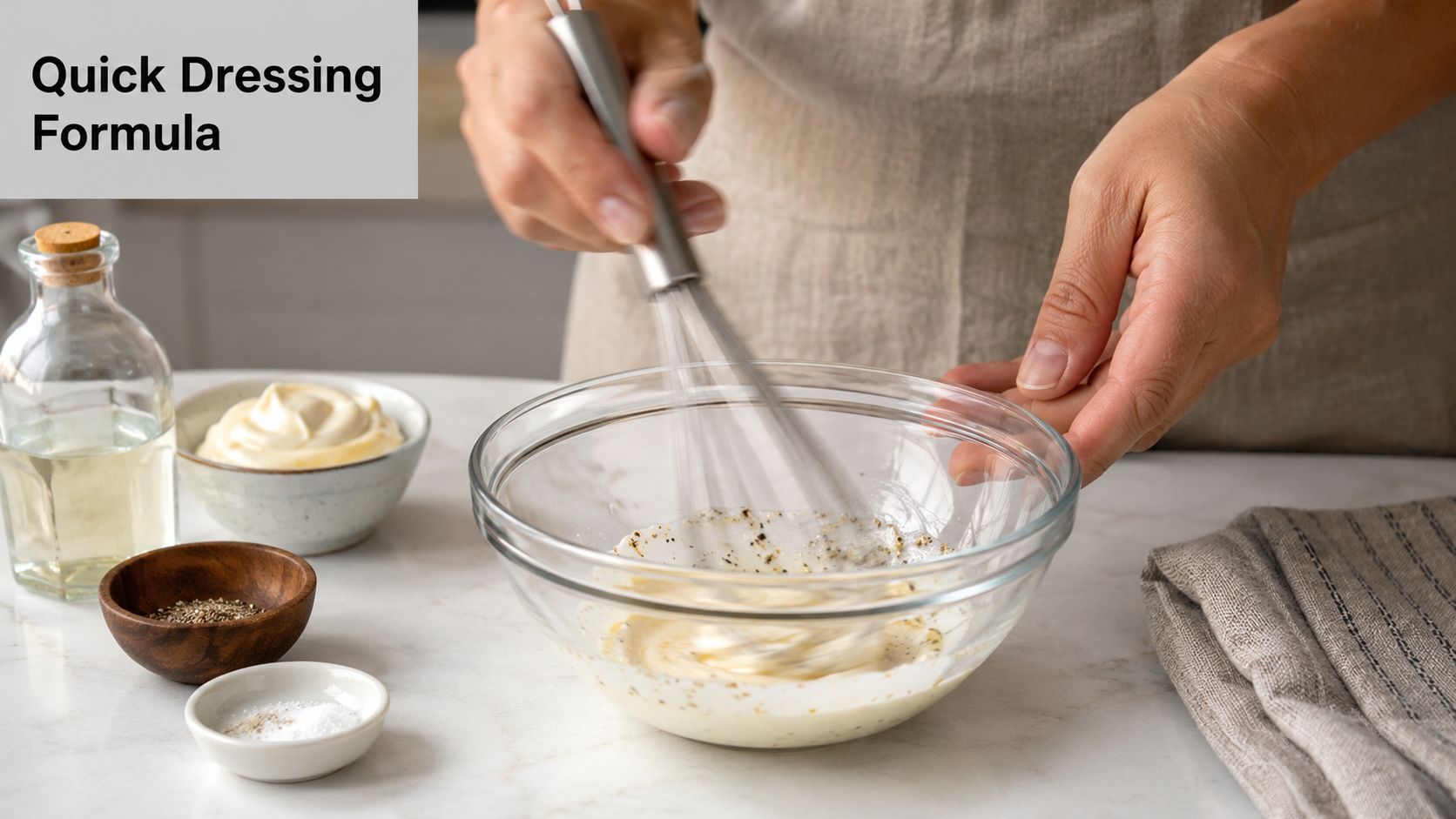
If I'm making one quickly, I start with mayo in a medium bowl, whisk in the acid, then add the sugar and any seasonings. I taste before adding extra liquid. That matters because some salads want a thick, clingy dressing, while others need something looser and more drizzly.
Mixing that works every time
Whisking works best when you add the acid first and loosen gradually. Dumping in too much liquid at once can leave the dressing streaky at first, which worries people unnecessarily. Keep whisking and it usually smooths out.
A good sequence looks like this:
- Add the mayo first: This is your base and gives you a visual sense of how much dressing you're making.
- Whisk in the acid: Red wine vinegar is a strong all-purpose choice, but lemon juice gives a fresher edge.
- Add sweetness and seasoning: Start light. You can always add more.
- Adjust consistency last: Use tiny additions of water or milk if you want it more pourable.
If you prefer seeing the texture before you make it yourself, this quick demo is helpful:
The best easy mayonnaise dressing shouldn't taste like plain mayo thinned with vinegar. It should taste balanced, with enough acid to brighten and enough seasoning to make you want another bite.
A few flavor checks help prevent common mistakes:
| Problem | What it usually means | What to do |
|---|---|---|
| Too thick | Not enough loosening liquid or acid | Add a small splash of water, milk, or more acid |
| Too sharp | Acid is leading too hard | Add a bit more mayo or a pinch more sugar |
| Too bland | Missing salt, garlic, or mustard | Season in small increments |
| Too heavy | Not enough brightness | Add lemon juice or vinegar |
This is the dressing I reach for when I want speed without settling for a flat, bottled taste.
Quick and Creative Dressing Variations
Once the base tastes right, variation becomes easy. You're no longer following a single recipe. You're choosing a direction.
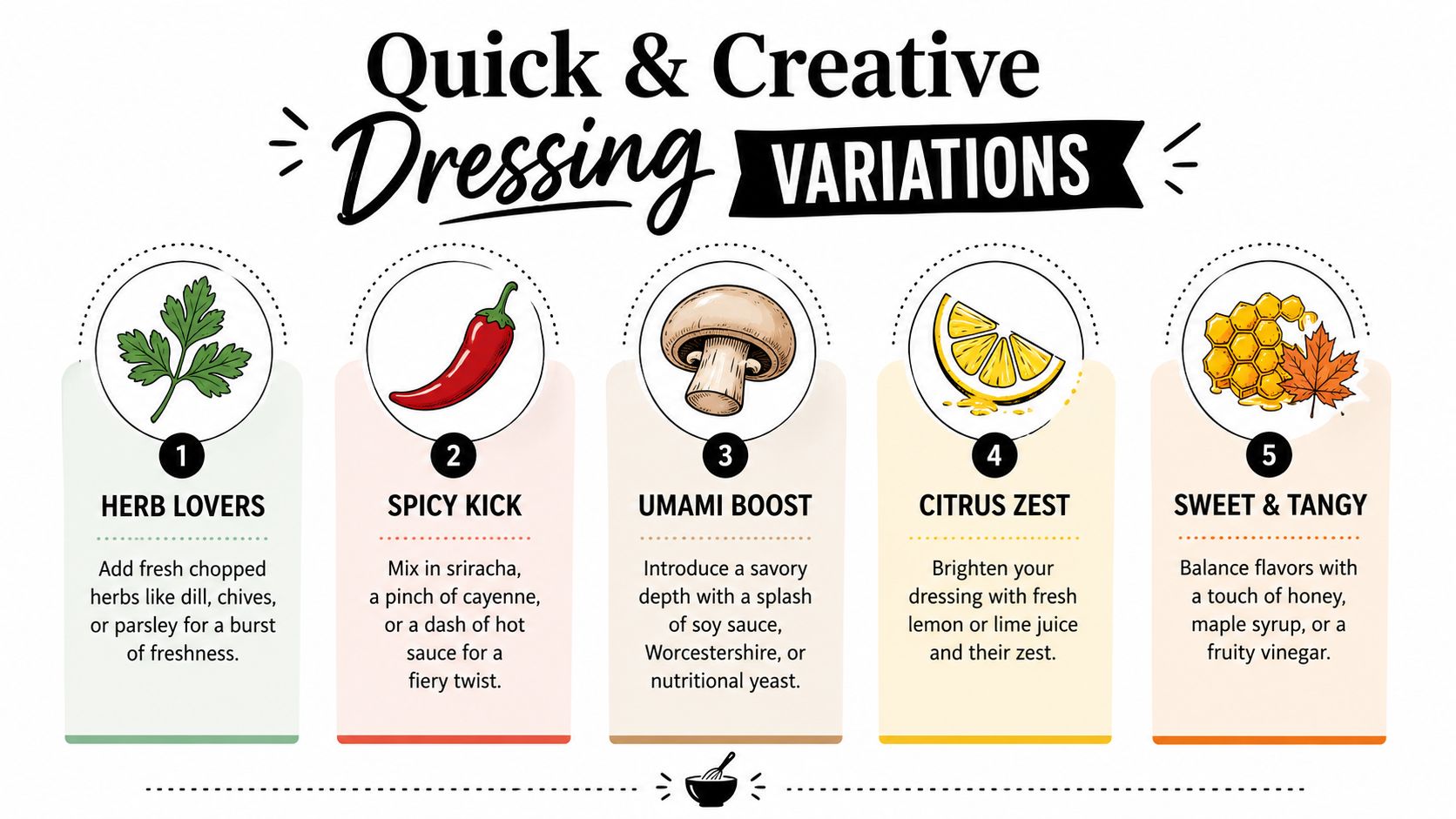
Five flavor directions that always work
Some add-ins change the dressing completely with almost no effort.
- Herb lovers: Fresh chopped dill, parsley, or chives make the dressing taste cooler and brighter. Fresh herbs work best when you want the dressing to feel lively and green.
- Spicy kick: Sriracha, cayenne, or hot sauce add heat fast. Start small because spice builds as the dressing sits.
- Umami boost: Soy sauce, Worcestershire, or nutritional yeast deepen the savoriness. This is especially good on slaws, grilled vegetables, and sandwich spreads.
- Citrus zest: Lemon or lime juice wakes up a rich base. A little zest gives it even more lift.
- Sweet and tangy: Honey, maple syrup, or a fruity vinegar can smooth out a sharper dressing and pair well with bitter greens.
A mustard variation is one of the easiest to remember. For a tangy twist, a precise ratio of ½ cup mayonnaise to 2 tablespoons of Dijon or whole grain mustard creates a 4:1 base volume that keeps the dressing creamy without extra thickeners, according to this creamy mayo dressing ratio.
A quick comparison guide
Here's how I think about a few dependable versions side by side:
| Variation | Best add-in | Flavor result | Best use |
|---|---|---|---|
| Lemon herb | Lemon juice and chopped herbs | Fresh and bright | Green salads, grilled chicken |
| Roasted garlic | Mashed roasted garlic | Sweet, mellow depth | Potato salad, wraps, burgers |
| Mustard mayo | Dijon or whole grain mustard | Sharp, savory, structured | Slaws, sandwiches, grain bowls |
| Spicy mayo dressing | Hot sauce or cayenne | Bold and punchy | Taco salads, fries, roasted vegetables |
| Plant-based version | Plant-based mayo | Similar body, different finish | Vegan bowls, crunchy salads |
Keep dried herbs for dressings that need to sit a bit, and fresh herbs for dressings you’ll serve right away. Dried herbs soften into the mayo. Fresh herbs stay more vivid but can lose their edge if they sit too long.
A vegan version is straightforward. Use plant-based mayo and build the dressing the same way you would with regular mayo. The exact tang and richness will depend on the brand, so taste earlier and adjust more often. Some plant-based mayos need an extra squeeze of lemon or a pinch more salt to taste fully rounded.
Mastering Ratios and Ingredient Substitutions
The ratio is what gives you control. Once you understand how mayo behaves, you can make a dressing thicker for dipping, thinner for drizzling, or sharper for sturdy greens without feeling like you’re gambling with dinner.
How to adjust thickness without guessing
If your dressing is too dense, don’t reach for more vinegar first. More acid changes flavor and texture at the same time. If the flavor is already right, loosen with a neutral liquid.
To create a pourable consistency without a blender, shaking ½ cup mayonnaise with 3 teaspoons of milk in a lidded jar shows how a 16:1 ratio of mayo to milk can produce a stable emulsion, as shown in this jar-shaken dressing method.
That’s a useful lesson because it separates texture adjustment from flavor adjustment.
- For dip consistency: Keep the liquid minimal and lean on mustard, herbs, or garlic for flavor.
- For salad consistency: Add a small splash of milk or water after seasoning.
- For shredded salads: Aim for slightly thicker than you think. Cabbage and similar vegetables release moisture after dressing.
Smart swaps from your fridge and pantry
Not every kitchen has the same lineup every day, and that’s fine. The easiest way to improvise well is to swap by function.
Greek yogurt and sour cream both bring tang, but they don’t behave exactly like mayo. Yogurt tastes lighter and sharper. Sour cream gives a fuller dairy tang. If you swap either one in, you may need a little more seasoning because mayo brings built-in richness that those alternatives don’t match on their own.
Acids behave differently too. Red wine vinegar is assertive and savory. Lemon juice reads fresher. Lime pushes the dressing in a brighter, punchier direction. Honey softens edges differently than sugar, and maple syrup adds a warmer sweetness.
If you need help thinking through pantry swaps, this ingredient substitution finder for any recipe is handy for making practical substitutions without derailing the dish.
A good dressing isn’t about exact obedience. It’s about keeping richness, acid, seasoning, and texture in balance.
That balance is why some substitutions work immediately and others need a second round of tasting. The more often you make easy mayonnaise dressing, the faster you’ll recognize which side needs help.
Proper Storage and Serving Inspiration
Homemade dressing deserves the same care as the salad it finishes. Store it cold, keep it covered, and expect the texture to change slightly after it rests.
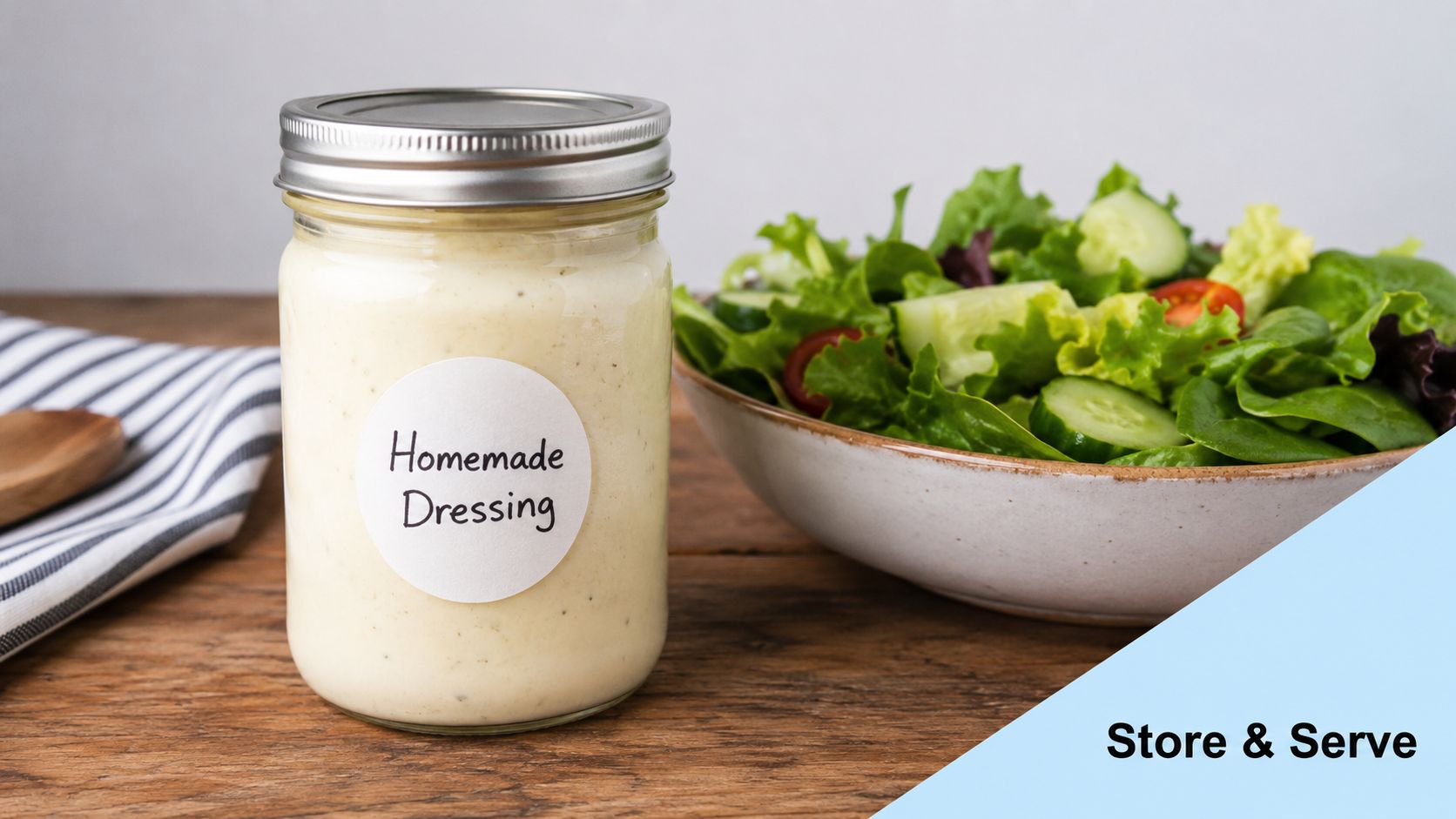
How to store it safely
Refrigerated homemade mayonnaise dressing remains safe and stable for 5–7 days, and its density often increases by 15–20% after 24 hours of cold storage as the emulsion firms up, according to this mayonnaise storage guidance.
That thickening is normal. In fact, it’s one reason a dressing that seemed a little loose right after mixing can feel perfect the next day. If it firms up more than you want, stir in a small splash of water or milk just before serving.
Storage basics matter:
- Use a clean container: A glass jar with a tight lid makes shaking and serving easy.
- Label the date: Homemade dressings don’t have the safety cushion of shelf-stable bottled versions.
- Choose the right material: If you store food often in plastic containers, this guide to safe food storage plastics is worth reading.
- Compare options practically: For everyday leftovers and dressings, this look at plastic vs stainless steel food storage helps sort out which material fits your habits.
Ways to use it beyond salad
Mayo dressing does far more than coat lettuce. A thicker version binds slaw beautifully and gives potato salad a smoother finish. A mustard-forward batch works as a sandwich spread. A garlicky one turns into a dip for raw vegetables, roasted potatoes, or chicken.
It also works as a finishing sauce. Spoon a little over grilled fish, tuck it into wraps, or drizzle it over a grain bowl that needs moisture and punch. That’s where easy mayonnaise dressing keeps proving itself. It’s not just a side condiment. It’s a workhorse.
Save and Organize Your Favorite Recipes
A recipe this useful shouldn’t end up buried in screenshots, browser tabs, or a note you’ll never find again. Simple staples are the ones worth saving properly because they’re the recipes you do repeat. If you like collecting and refining your own go-to versions, it helps to keep them somewhere searchable.

For digital organization, this guide on how to convert web recipes into personal digital collections is a practical place to start. The key benefit isn’t just saving one dressing recipe. It’s keeping your tweaks, your favorite variations, and the recipes your family frequently requests in one reliable place.
If you want a cleaner way to save recipes like this easy mayonnaise dressing, organize your custom variations, and keep your meal planning in one place, try OrganizEat.