


Coconut sugar is always made from the sap of coconut palm flowers, while palm sugar can mean sugar made from the trunks of various palm species. That difference matters immediately in the kitchen because coconut sugar has a glycemic index of about 35 compared with table sugar's 65, but from a culinary standpoint, it often tastes much lighter than the deep, smoky palm sugars used in many Southeast Asian dishes.
If you're standing in the grocery aisle with two brown sweeteners in your hand and wondering whether they're basically the same, that's the exact moment this distinction saves dinner. A lot of blogs flatten the issue into “both are natural sugars,” which is technically tidy and practically useless. What matters at the stove is whether your dessert, curry, glaze, or cookie needs a clean granulated caramel note or the darker, rounded depth that traditional palm sugar brings.
In everyday Western baking, you can often get away with a swap. In Thai desserts, Malaysian sweets, and other Southeast Asian recipes, that same swap can leave the final dish tasting flat, thin, and strangely unfinished.
| Feature | Coconut sugar | Palm sugar |
|---|---|---|
| Plant source | Sap of coconut palm flowers | Broad term that may refer to sugar from various palm species |
| Typical form | Granulated | Often sold as cakes, discs, or softer blocks, depending on type |
| Flavor direction | Mild caramel, subtle butterscotch | Often deeper, more caramelized, sometimes smoky |
| Best use | Cookies, muffins, granola, coffee, simple swaps | Southeast Asian desserts, sauces, and dishes where palm flavor matters |
| Label confusion | “Coconut sugar” and “coconut palm sugar” are the same thing | “Palm sugar” can be specific or frustratingly vague |
Table of Contents
- Palm Sugar vs Coconut Sugar Decoding the Labels
- A Side-by-Side Sensory Analysis
- The Ultimate Culinary Guide When to Use Each Sugar
- Nutrition and Health Impact Compared
- Sourcing Storing and Budgeting
- Your Final Verdict and Recipe Substitution Rules
Palm Sugar vs Coconut Sugar Decoding the Labels
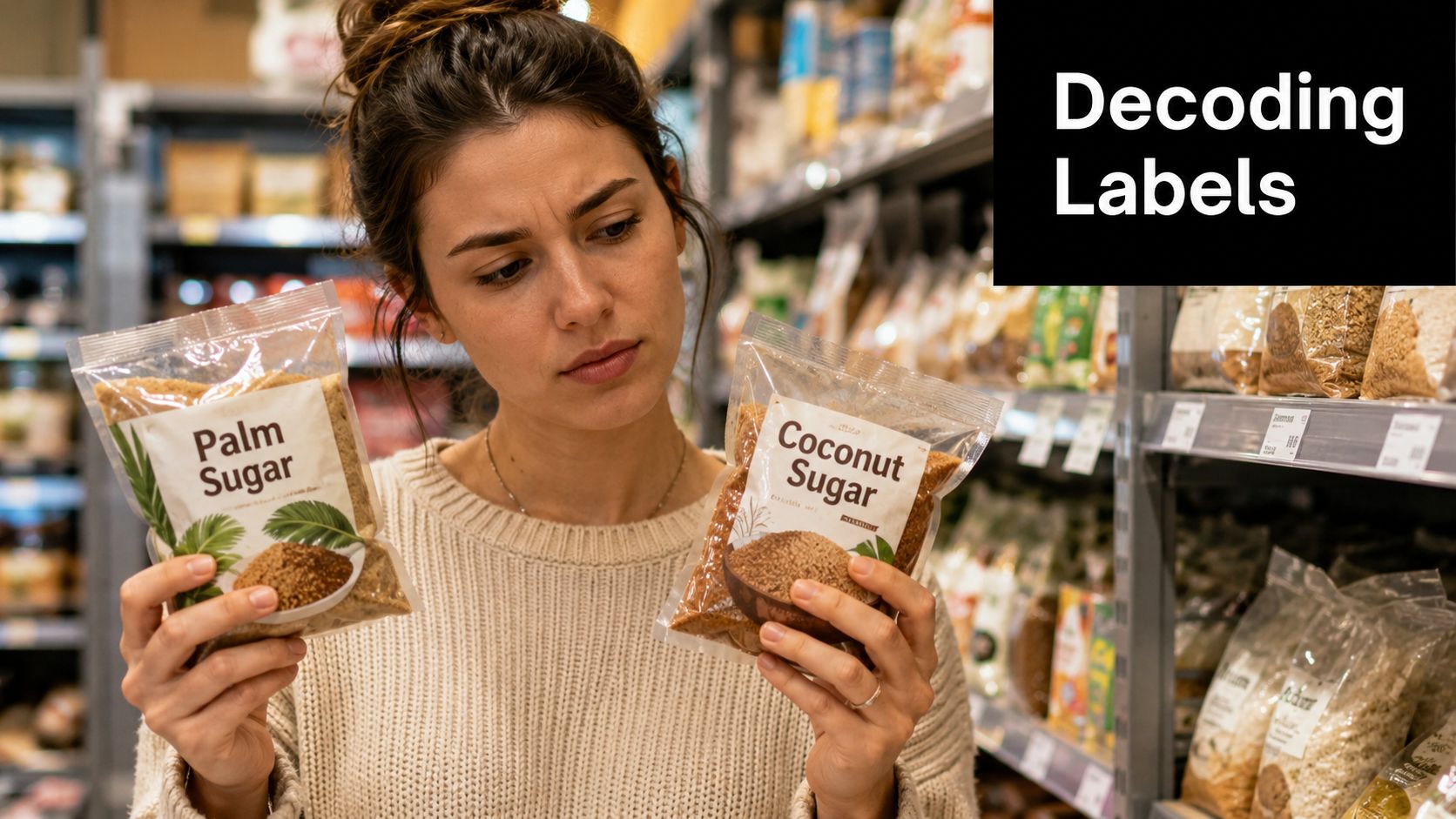
The confusion usually starts with the package, not the recipe. You see palm sugar, coconut sugar, and sometimes coconut palm sugar, and it looks like three names for one product. It isn't.
What the labels actually mean
Coconut sugar is specific. It comes from the sap of the flowers on the coconut palm tree. According to this breakdown of coconut sugar versus coconut palm sugar, coconut sugar and coconut palm sugar are identical products, while generic palm sugar is not the same thing.
Palm sugar is broader. It can refer to sugar made from other palm species, and that broadness is exactly why cooks get tripped up. If a recipe writer says “palm sugar” but means a traditional Southeast Asian palm sugar, grabbing a tub of granulated coconut sugar may change the dish more than you expect.
Practical rule: When the package says coconut sugar or coconut palm sugar, treat those as the same product. When it only says palm sugar, assume you need to look closer.
Why marketing makes this worse
A lot of products are labeled in ways that blur a real distinction. “Coconut palm sugar” sounds like a middle category, but it isn't. It's just coconut sugar under a longer name.
That matters because shopping by label alone encourages bad substitutions. A home cook sees “palm” on both packages and assumes the flavor, moisture, and cooking behavior will line up. Often, they won't.
If you're trying to shop more deliberately, it helps to use the same habit you'd use with any pantry staple: read the ingredient panel, note the form, and compare before tossing it in the cart. A practical grocery routine like the one in this guide to what to buy at the grocery store helps here because sweeteners are one of those categories where the package front tells only half the story.
The one distinction to remember
If you only keep one thing in your head from the whole palm sugar vs coconut sugar debate, keep this:
- Coconut sugar is always from coconut palm blossoms
- Palm sugar is a category name, not a precise ingredient
- “Coconut palm sugar” is just coconut sugar
- Traditional palm sugars used in regional cooking may taste very different from granulated coconut sugar
That's the label problem in plain English. Once you know what you're buying, the rest of the cooking decisions get much easier.
A Side-by-Side Sensory Analysis
Flavor decides whether a substitution works. Not the wellness halo, not the label, not the fact that both are brown and unrefined-looking. Flavor.
How coconut sugar tastes in real food
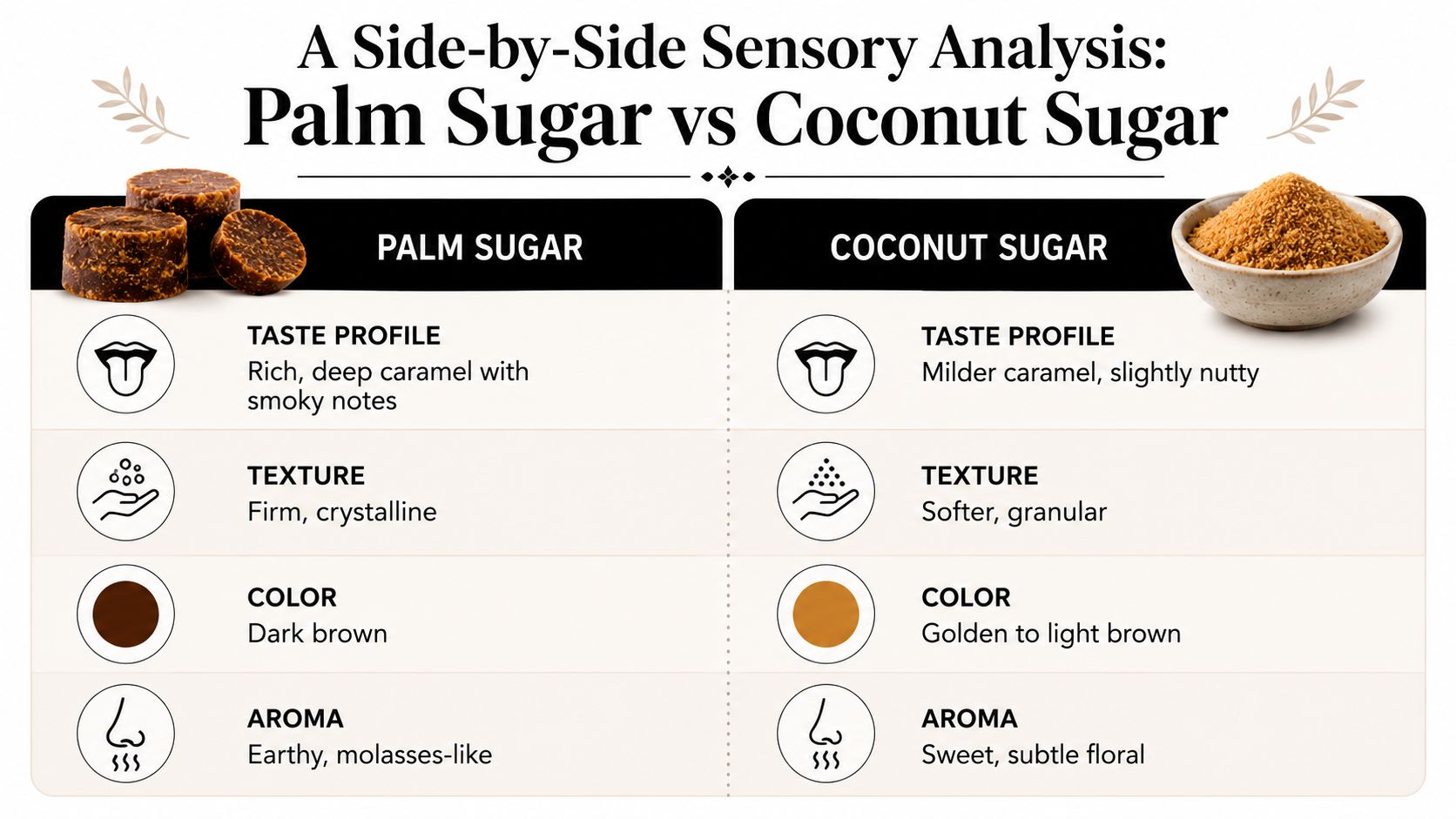
Coconut sugar usually reads as soft caramel with butterscotch notes. It's gentler than many cooks expect. In oatmeal, banana bread, coffee, and snickerdoodle-style baking, that softer profile is pleasant because it sweetens without taking over.
It also tends to feel familiar fast. If you've baked with brown sugar before, coconut sugar sits in that same conversational neighborhood, though it isn't identical. The sweetness is rounded, but the finish is usually cleaner and less dark than a richly flavored palm sugar cake.
How palm sugar changes the room
Traditional palm sugar often carries a deeper caramel profile with a smokier edge. In some dishes, that difference is the whole point. It doesn't just sweeten. It adds body, warmth, and the sort of bass note that makes a sauce or dessert taste complete.
This is why saying “they're interchangeable” misses what cooks taste. One sugar supports. The other can shape the identity of the dish.
Palm sugar often tastes like it's already halfway to a sauce. Coconut sugar tastes more like a dry sweetener with a caramel accent.
Texture matters more than people think
The second big divide is physical form.
Granulated coconut sugar is usually easy to scoop, measure, and stir into a batter. That makes it convenient for standard baking. It behaves like something a weeknight baker can reach for without changing technique.
Palm sugar is often sold in cakes, discs, or blocks. Depending on the product, you may need to shave it, chop it, or dissolve it first. That extra step is not a nuisance when the recipe depends on its character. It's part of the ingredient.
Here's the practical kitchen difference:
| Sensory trait | Coconut sugar | Traditional palm sugar |
|---|---|---|
| Flavor | Milder caramel, subtle butterscotch | Deeper caramel, often smokier |
| Aroma | Light and sweet | More pronounced and cooked |
| Texture | Dry granules | Cake, block, paste-like, or firm molded form |
| Dissolving behavior | Easy for batters and drinks | May need chopping or melting |
| Best culinary signal | Flexible sweetener | Flavor-building ingredient |
Color and aroma cues
Color can help, but it’s not foolproof. Coconut sugar often sits in the golden to medium brown range. Palm sugar products can skew darker and look more cooked, though the exact shade varies by style and brand.
Aroma is often a better clue. Open coconut sugar and you’ll usually get something sweet and faintly toasty. Open a good palm sugar and the smell can be richer, almost like caramel that spent longer on the heat.
When the difference feels small
It’s fair to say there are plenty of times the distinction won’t make or break the dish.
For example:
- In muffins and loaf cakes: either sugar can work if the recipe isn’t chasing a precise traditional flavor
- In coffee or tea: sweetness is typically noticed first, nuance second
- In spice-heavy recipes: cinnamon, ginger, cocoa, or espresso can cover some of the gap
But in cleaner recipes, the sensory difference is obvious. A coconut sugar swap in a dish built around palm sugar won’t taste “wrong” in a dramatic way. It will just taste less deep, less rounded, and less authentic.
The Ultimate Culinary Guide When to Use Each Sugar
The discussion of palm sugar vs coconut sugar stops being a label debate and becomes a cooking decision. The right answer depends on what you’re making.
Use coconut sugar when convenience matters
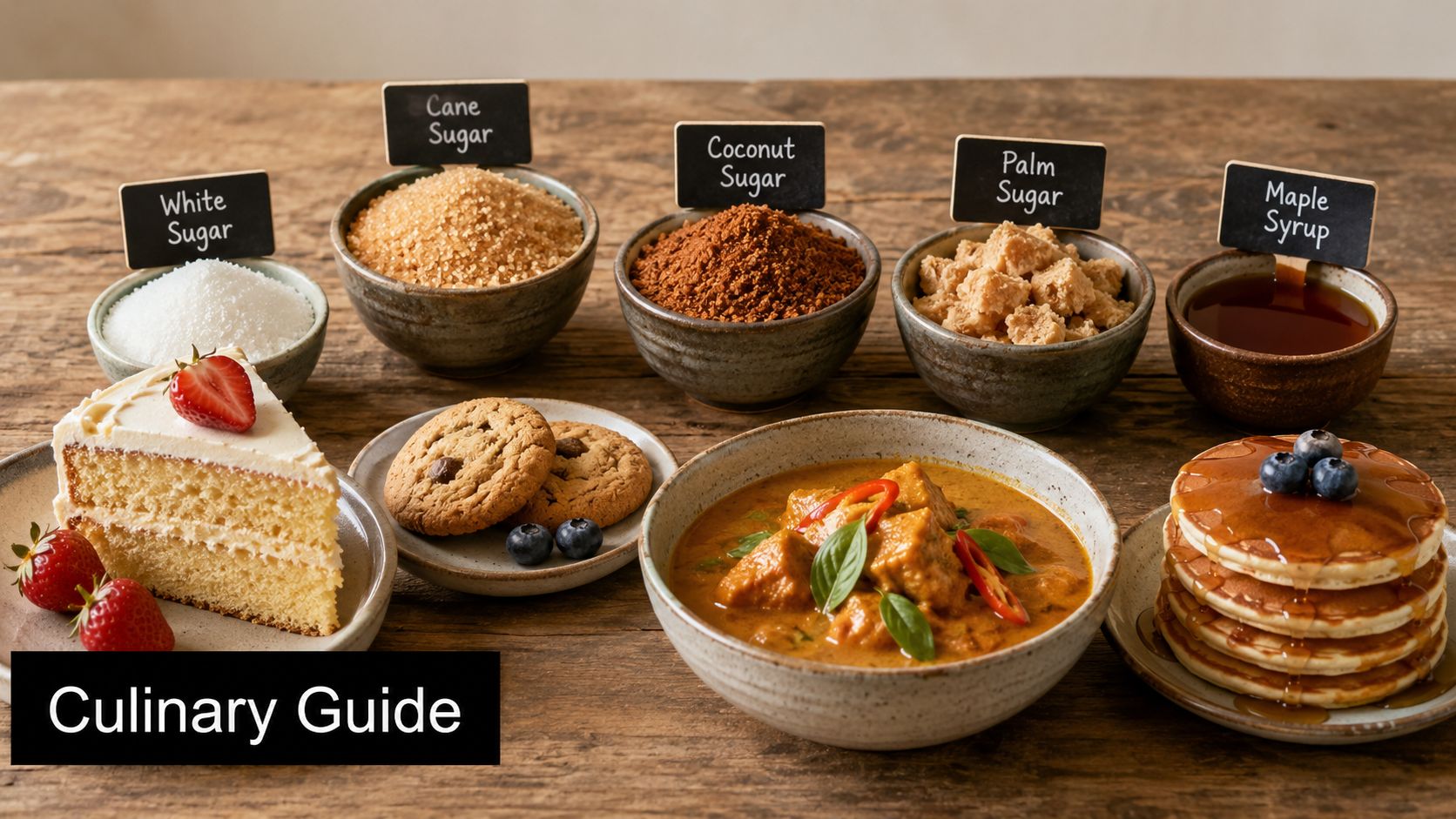
Coconut sugar is the easier weeknight ingredient. Because it’s usually granulated, you can measure it fast and use it much like a less-refined baking sugar.
It works well in:
- Cookies and bars: especially recipes that welcome a warm brown-sugar style sweetness
- Quick breads: banana bread, zucchini bread, bran muffins
- Granola and crumbles: where a light caramel note helps
- Coffee, tea, and oatmeal: where ease matters more than deep complexity
If you’re baking something casual and homey, coconut sugar usually earns its spot. It doesn’t ask much from the cook, and it rarely creates handling problems.
Use palm sugar when the recipe depends on it
Palm sugar becomes worth hunting down when the sugar itself is part of the dish’s identity. That’s especially true in Southeast Asian cooking.
According to Hot Thai Kitchen’s guide to palm sugar, this is the part most blogs miss: palm sugar and coconut sugar are not interchangeable in Southeast Asian cuisine. Traditional Thai palm sugar and gula melaka have distinct caramelized, smoky profiles, while granulated coconut sugar is described as very light with a milder flavor, making it a poor fit when a recipe needs those darker notes.
That’s not a fussy technicality. It changes the food.
Where substitution fails hardest
The biggest misses happen in dishes with only a few dominant flavors. In those recipes, the sugar isn’t hiding. It’s one of the main voices.
A few examples where traditional palm sugar usually matters more:
-
Thai desserts
If a dessert relies on deep caramel flavor, granulated coconut sugar can make it taste thin. The sweetness is there, but the finish feels less cooked and less rich. -
Sauces and glazes
Palm sugar can contribute a fuller background note in sauces that balance salty, sour, and spicy elements. Coconut sugar sweetens, but it may not deliver the same rounded depth. -
Regional sweets like gula melaka-style applications
Here, the flavor profile is part of authenticity. A substitute can shift the dish from recognizable tradition to “inspired by.”
If the recipe comes from Thai, Malaysian, or Indonesian cooking and specifically names palm sugar, don’t assume a bag of granulated coconut sugar will do the same job.
Where substitutions are usually safe
There are also plenty of places where using coconut sugar instead of palm sugar won’t ruin anything.
Try coconut sugar when:
- You need a brown sugar stand-in for a standard American baking recipe
- The recipe already has strong flavors like chocolate, coffee, or warm spices
- You want an easy pantry sugar that pours, stores, and measures with minimal fuss
And use palm sugar when:
- The dish is culturally specific
- The sweetness should taste caramelized, not just sweet
- The recipe relies on balance and depth, not just sugar quantity
What works in real kitchens
A practical pantry setup is simple. Keep one bag of granulated coconut sugar for general baking. Keep palm sugar, ideally in the form the recipe tradition expects, for dishes where authenticity matters.
That split saves a lot of frustration. You stop asking one ingredient to do every job.
Many home cooks get into trouble because they want a universal swap. There really isn’t one. Coconut sugar is better for convenience. Palm sugar is better for certain flavor targets. Once you accept that, your desserts and sauces start tasting more intentional.
Nutrition and Health Impact Compared
A lot of cooks reach for coconut sugar because it sounds like the healthier pick, then use that logic to swap it into everything. That shortcut causes two different mistakes. It can make a Southeast Asian dish taste wrong, and it can make the sweetener seem more nutritionally different than it really is.
What actually matters nutritionally
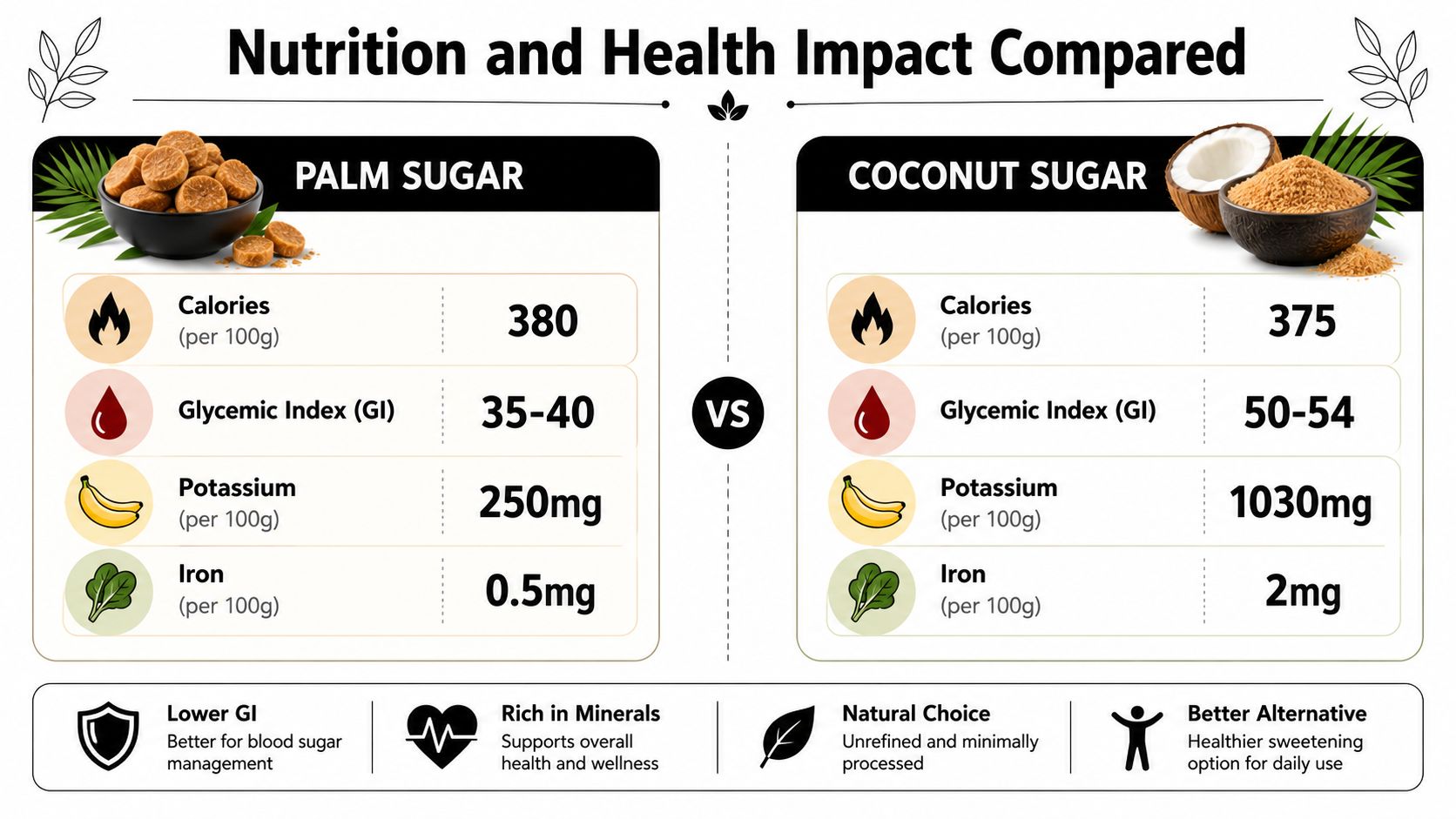
Coconut sugar is often discussed as a less refined option than white sugar because it retains small amounts of minerals and some inulin. Healthline’s nutrition review of coconut sugar also makes the practical point that those nutrients are present in very small amounts in a normal serving.
That is the part labels tend to blur. A spoonful of coconut sugar is still a spoonful of sugar.
The glycemic index claim is one reason coconut sugar gets so much attention, but GI numbers are not a free pass. Harvard T.H. Chan School of Public Health explains that glycemic index can shift based on the food itself, ripeness, processing, and what else you eat with it, so it is a limited tool for judging overall health impact in real meals: Harvard’s guide to the glycemic index.
Where palm sugar fits into the health discussion
Palm sugar and coconut sugar are both concentrated sweeteners made from palm sap, so the practical nutrition gap between them is smaller than the marketing gap. In a recipe, the bigger difference is usually how much you use and what the sugar is doing in the dish.
That matters in real cooking. If a Thai sauce needs palm sugar for its rounded, deeper sweetness, replacing it with coconut sugar does not suddenly turn the dish into a health food. It just changes the flavor while still adding sugar.
For anyone watching carbohydrates or blood sugar, portion control and the total recipe matter more than chasing a perfect sugar. Master Your Diabetes’ low carb guide is a useful companion if you are trying to build meals around that bigger picture. If you want to check the actual numbers in your own cooking, using a recipe nutrition calculator with scanner is more useful than relying on front-of-package claims.
A kitchen-first way to read the trade-off
Use coconut sugar because you like how it behaves in baking or because you prefer it over white sugar. Use palm sugar because the recipe needs its flavor profile and texture. Use both in moderation.
That is the honest middle ground.
If health is the goal, the best move is usually using less sweetener overall, not assuming one traditional sugar cancels out the effect of another. If flavor is the goal, especially in Southeast Asian cooking, choosing the right sugar often matters more than the small nutritional differences between them.
Sourcing Storing and Budgeting
A lot of substitution mistakes start at the store, not in the pan. If a recipe for pad thai, klepon, or gula melaka syrup really needs palm sugar, grabbing a bag of coconut sugar because the labels look close can flatten the dish before you even begin. This is one of those details that sounds fussy until you taste the finished food side by side.
How to shop without getting fooled
Read past the front label. “Coconut sugar” and “coconut palm sugar” are usually the same pantry-friendly product. “Palm sugar” is broader, and that is where shopping gets messy, because the term can cover different sugars sold in different forms for different cuisines.
Form matters in a practical way. Dry granules are easy to scoop, measure, and fold into baking recipes. Discs, cakes, tubs, or blocks are more common for traditional palm sugar, especially the kind used in Southeast Asian cooking where the sugar brings body and a darker, rounder sweetness.
A few checks help avoid buying the wrong thing:
- Read the ingredient line. The package should tell you what plant the sugar comes from, not just sell a rustic image.
- Look at the form before you buy. Granules suit everyday baking. Blocks and cakes are often better for sauces, desserts, and recipes built around palm sugar’s specific flavor.
- Match the product to the dish. For banana bread, flexibility is fine. For a regional recipe, use the sugar the recipe writer likely had in mind. If you need help vetting a swap, this ingredient substitution finder for recipe-specific swaps is a practical place to start.
Storage that keeps both usable
Coconut sugar is easy. Keep it in an airtight jar or container in a cool, dry cupboard, and treat it like any other dry sugar. If it clumps a little, you can usually break it up with a spoon or your fingers.
Palm sugar needs more care because texture affects how it cooks. A soft cake or block is easier to shave, chop, or melt into curry paste, caramel syrup, or dipping sauce. Once it dries out hard, it becomes a project.
I wrap palm sugar well, then seal it in a container or bag. If it has already hardened, finely chopping it before melting saves time and frustration.
Buy the form you will actually use. An authentic palm sugar block is only a good purchase if you are willing to chop, grate, or melt it.
The cost trade-off
Coconut sugar often costs more than standard white or brown sugar, and that adds up fast if you bake often. Palm sugar can also be expensive, especially if you are buying a specialty import instead of whatever is easiest to find locally.
The better budgeting question is not which one is cheapest per spoonful. It is which one earns its place in your kitchen. I keep coconut sugar for recipes where its dry texture is convenient and its mild caramel note fits naturally. I buy palm sugar in smaller amounts for dishes where the flavor really matters, because that is where a casual substitution can make the food taste generic.
Packaging can also push shoppers toward the pricier option for the wrong reason. As noted earlier, the nutrition differences are not big enough to justify paying extra unless you also want the flavor, texture, or authenticity that specific sugar brings.
Your Final Verdict and Recipe Substitution Rules
You notice the difference fastest when a dish depends on the sugar itself, not just the sweetness. Swap coconut sugar into a Thai dipping sauce, a Malaysian dessert, or an Indonesian palm-sugar syrup, and the recipe can still turn out edible while tasting flatter, drier, or just wrong for the dish. That is the gap a lot of substitution guides miss.
My short answer is simple. Coconut sugar is the easier pantry sugar. Palm sugar is the one to keep for recipes where the sugar is part of the dish’s identity.
The decision framework
Choose coconut sugar if the job is mostly sweetness and convenience. It works well in cookies, muffins, granola, fruit crisps, and casual recipe swaps where a dry, scoopable sugar makes life easier. If you are baking by feel on a weeknight, this is usually the lower-friction choice.
Choose palm sugar if the recipe comes from a Southeast Asian cooking tradition and the sugar is expected to bring more than sweetness. In pad thai sauce, sticky rice desserts, caramel-like syrups, or rich sambal-based recipes, palm sugar adds a rounder, darker flavor and a softer melt that coconut sugar does not fully copy.
That distinction matters.
Substitution rules I actually trust
-
For American-style baking, coconut sugar is usually the safer swap.
It measures easily, mixes predictably, and brings a light caramel note that fits into cookies, quick breads, and crumb toppings without much adjustment. -
For Southeast Asian recipes, treat palm sugar as a flavor ingredient.
If a recipe specifically calls for palm sugar, the writer often expects its deeper taste and softer dissolve. Coconut sugar can make the dish sweeter without giving it the same character. -
For sauces, syrups, and dessert fillings, texture matters almost as much as flavor.
Palm sugar often melts into a smoother, more integrated sweetness. Coconut sugar can leave the result tasting a little more one-note, especially in recipes with few ingredients. -
For coffee, tea, oatmeal, or yogurt, use whichever one you like better.
In those cases, authenticity is not really the point. Taste and convenience are. -
For health-focused swaps, keep expectations realistic.
As noted earlier, neither one turns dessert into a health food. Choose based on flavor and how the sugar behaves in the recipe first.
If you substitute ingredients often, a good ingredient substitution finder for any recipe can help with general cooking swaps. For palm sugar and coconut sugar, though, I would still make the final call based on the dish’s origin and what role the sugar plays.
The bottom line
There is no universal winner.
Coconut sugar earns its keep because it is easy to use and easy to store. Palm sugar earns its keep because some dishes do not taste fully themselves without it. If you bake often, keep coconut sugar. If you cook Thai, Malaysian, Indonesian, or Filipino dishes with any regularity, keep palm sugar too.
A significant mistake is calling them interchangeable in every recipe. In a muffin, that shortcut usually works. In a Southeast Asian dessert or sauce, it can strip out the flavor that made the dish worth making in the first place.
If you like keeping these kinds of substitution notes, recipe tweaks, and ingredient preferences in one place, OrganizEat is a smart home for them. You can save recipes from social media and websites, organize family favorites, add your own cooking notes, and keep your shopping lists synced so the next time you need palm sugar instead of coconut sugar, you’ll know before you leave the house.