


Dinner prep usually starts the same way. Onions on the board, herbs waiting, chicken to portion, and one knife doing nearly all the work. A chef’s knife earns that spot because it handles a wide range of jobs well, but good results come from matching the right motion to the ingredient, not from using the same cut for everything.
That is the fundamental value of learning chef knife uses as skills instead of a loose list of tasks. Slicing, dicing, mincing, chopping, and the finer cuts each ask for a different grip, pace, and blade path. Once home cooks understand when to use each technique, prep gets faster, cleaner, and safer.
A sharp edge matters just as much as technique. If the knife feels clumsy, wedges in onions, or bruises herbs, address the edge, the cutting board, or your storage before blaming your hands. For edge care between sessions, review how to keep your knives sharp.
This guide teaches each use as a practical kitchen skill. You will see when a chef’s knife is the best tool, why the cut matters for cooking, and where another knife or tool makes more sense. That is how a general-purpose knife starts feeling precise.
Table of Contents
- 1. Slicing
- 2. Dicing
- 3. Mincing
- 4. Chopping
- 5. Chiffonade
- 6. Julienne
- 7. Brunoise
- 7 Essential Knife Cuts Compared
- From Techniques to Triumphs in the Kitchen
1. Slicing
Slicing is where most chef knife uses begin. It’s the move you rely on for onions, mushrooms, tomatoes, citrus, cooked meat, and raw proteins that need neat, even pieces. A chef’s knife is widely described in culinary education as the most frequently used and versatile knife, used for slicing, chopping, and mincing across most food prep, as explained in this overview of different knives and the best uses for each.
The mistake most home cooks make is pushing straight down. That crushes soft ingredients and stalls the blade on dense ones. A good slice travels forward and down, or back and down, using more of the edge so the knife cuts instead of wedges.
How to make a slice clean instead of ragged
For onions, use long strokes from heel to tip and keep the root end intact until the last cuts if you want the layers to stay together. For tomatoes, a sharp chef’s knife should glide through the skin without you sawing aggressively. For flank steak or chicken breast, angle the blade slightly and slice against the grain so the finished bite chews tender instead of stringy.
Practical rule: If the ingredient squashes before it separates, your edge is too dull, your stroke is too short, or both.
Here’s where slicing gets more useful in daily cooking:
- For caramelized onions: Cut thin, even half-moons so the pan cooks them at the same pace.
- For stir-fries: Slice meat against the grain and keep thickness consistent so one piece doesn’t overcook while another stays chewy.
- For mushrooms and citrus: Use light pressure and a full stroke. Delicate structure falls apart when you force it.
When I watch people struggle with slicing, the issue is almost never courage. It’s rhythm. Slow down, let the blade travel, and keep your guiding hand in a claw grip so your knuckles set the thickness.
2. Dicing
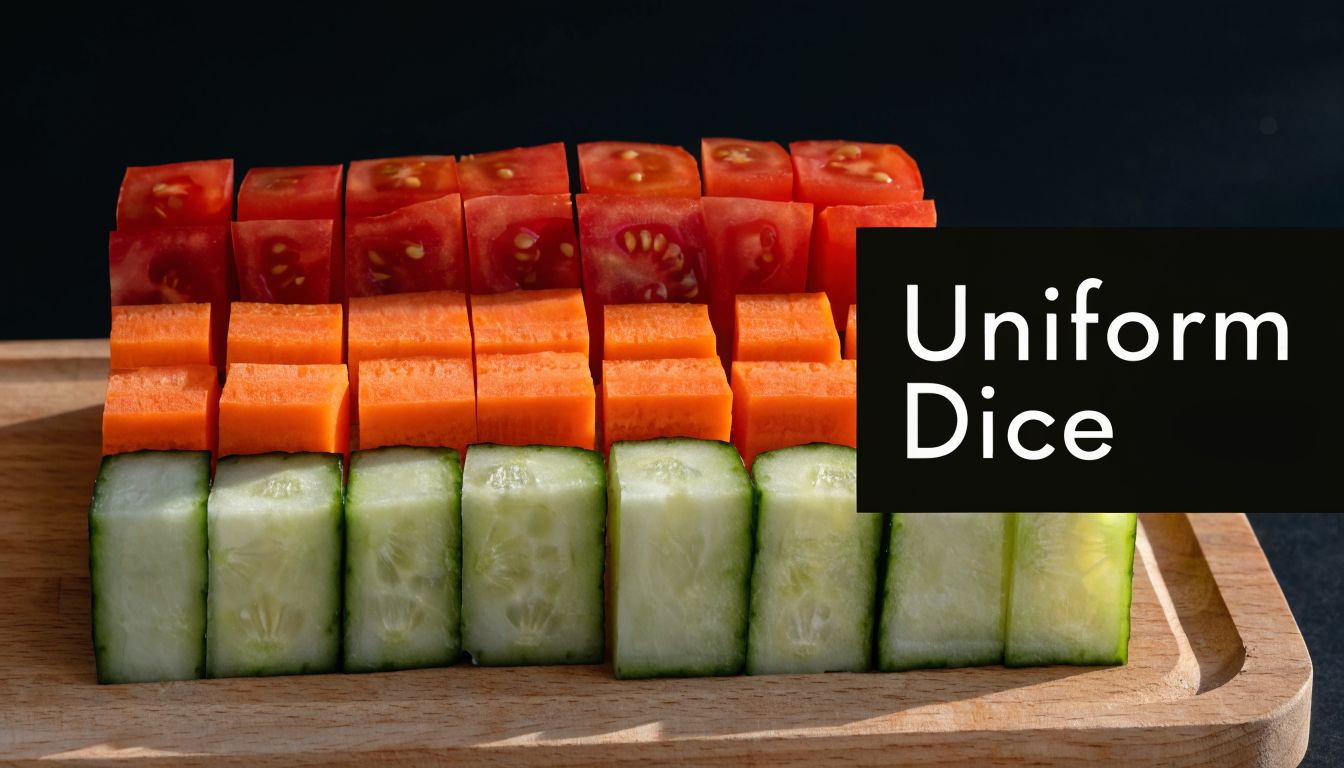
Dicing is the cut that makes weeknight cooking feel organized. Once onions, carrots, peppers, potatoes, or tomatoes are in even cubes, everything cooks more predictably. Your soup base softens together. Your salsa looks intentional. Your skillet hash browns more evenly instead of steaming in random chunks.
A chef’s knife shines here because its blade height gives you control while the heel gives you enough power for denser produce.
Build the shape before you cut the cubes
Good dicing starts before the cubes. First create a flat, stable side. On a round ingredient like an onion, that might mean halving it and placing the cut side down. On a carrot, it might mean trimming one side into a plank so it won’t roll.
After that, think in sequence:
- Cut planks first: Flat sheets are easier to control than a rounded vegetable.
- Turn planks into sticks: Keep them roughly the same width if you want a true dice.
- Cut across the sticks: That final pass creates the cubes.
The useful trade-off is speed versus precision. A medium dice is the home-cook sweet spot because it’s fast and still cooks evenly. A tiny dice looks polished, but if the recipe is going into a long-simmered stew, you probably won’t gain much from the extra labor.
Use dicing when uniformity changes the result. Mirepoix for soup, diced bell pepper for chili, tomato for bruschetta, apple for a salad, or potato for breakfast hash all benefit from consistent size.
Small cuts cook faster. If dinner needs to move quickly, reduce the dice instead of raising the heat.
One more point matters here. The broader kitchen knife market keeps growing because both home cooks and foodservice kitchens depend on these tools, and commercial demand remains strong enough that product choices now need to consider region, channel, durability, and professional use patterns, according to this market view of commercial kitchen knives. In plain kitchen terms, your chef’s knife isn’t a niche gadget. It’s the workhorse worth learning well.
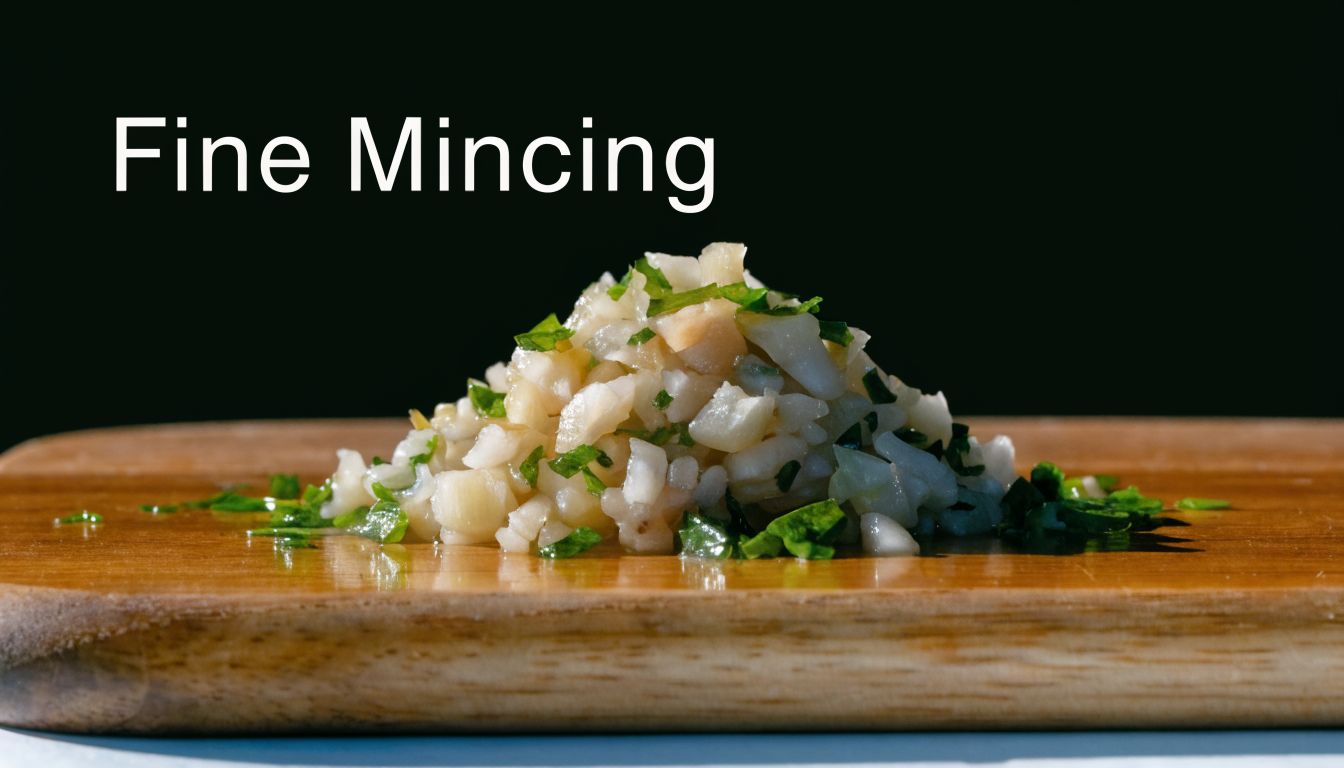
3. Mincing
Mincing is where the chef’s knife starts to feel smart instead of just sharp. Garlic disappears into a vinaigrette instead of landing in harsh chunks. Ginger spreads through a stir-fry. Herbs flavor the whole dish instead of sitting on top in leafy pieces.
This is one of the chef knife uses that rewards a curved blade profile. The tip can stay near the board while the rest of the knife rocks through the pile.
Let the curve of the blade do the work
Start by slicing the ingredient into thin strips or small pieces. Then gather it into a compact mound and rock the knife over it, pivoting near the front of the blade. Don’t slam the edge straight down over and over. That turns mincing into hacking, and hacked ingredients are rarely even.
For garlic, I like to crush the clove lightly with the side of the blade first so the skin slips off cleanly. Then slice, gather, and mince. If you want a finer result, add a small pinch of salt only when the recipe can handle it, since salt helps break the garlic down but also changes seasoning fast.
A few ingredients that respond especially well to proper mincing:
- Garlic: Better distribution in sauces, marinades, and compound butter.
- Parsley and chives: Cleaner flavor in dressings and finishing garnishes.
- Anchovy or ginger: Easier blending into pan sauces, broths, and emulsions.
A mince should look intentional, not mashed. If moisture floods the board, you’re pressing too hard or using a tired edge.
Minced herbs bruise quickly, so cut them as close to serving time as possible. Basil is especially unforgiving. If the board turns green and wet, the knife is crushing the leaves instead of cutting them.
4. Chopping
Dinner gets easier the moment you stop demanding precision from every ingredient. Chopping is the practical cut for prep that needs to be fast, safe, and good enough for the job.
Use it for mirepoix headed into a long braise, vegetables for stock, rustic chili, or nuts that will be folded into batter. In those cases, even cooking matters more than perfect shape, and a rough chop gets you there without wasting time chasing tiny corrections.
Use chopping when the dish will do the finishing
Choose a chop when the food will soften, simmer, puree, or otherwise lose its sharp edges in the final dish. Onion chunks for soup can be larger than onion dice for salsa. Carrots for stock can be irregular as long as they are in the same general size range, so they give up flavor at a similar pace.
The skill to practice here is control, not finesse. Keep the tip close to the board, lift and lower the heel in a steady rocking motion, and move the guiding hand back as the knife advances. If the pieces come out wildly mixed, slow down and make one clean pass through a smaller pile. Speed comes after the motion stays consistent.
A chef’s knife earns its keep here because the broad blade gives you knuckle clearance and enough length to cut through a pile in smooth strokes. Home cooks often reach for it first for exactly that reason. It handles rough prep efficiently without switching tools every few minutes.
For rough chopping, gather ingredients with the spine or the flat of the blade, not the edge. That small habit protects the knife and keeps the board work cleaner.
There is also a point where a chef’s knife is not the best answer. Very hard squash sometimes calls for a heavier knife and a more deliberate breakdown first. Herbs for a garnish need slicing, not a rough chop, if appearance matters. And if you need every piece identical for quick sauteing, go back to a dice instead of forcing a chop to do a finer cut’s job.
Good chopping looks relaxed and repeatable. If the board is sliding, the pieces are scattering, or your shoulder is tensing up, reset before you go faster.
5. Chiffonade
You finish a bowl of pasta, add a few broad basil leaves, and it still looks unfinished. Slice those same leaves into fine ribbons and the dish eats differently. The herb spreads through each bite instead of landing in random bursts. That is why chiffonade is worth learning as a separate skill, not just a garnish trick.
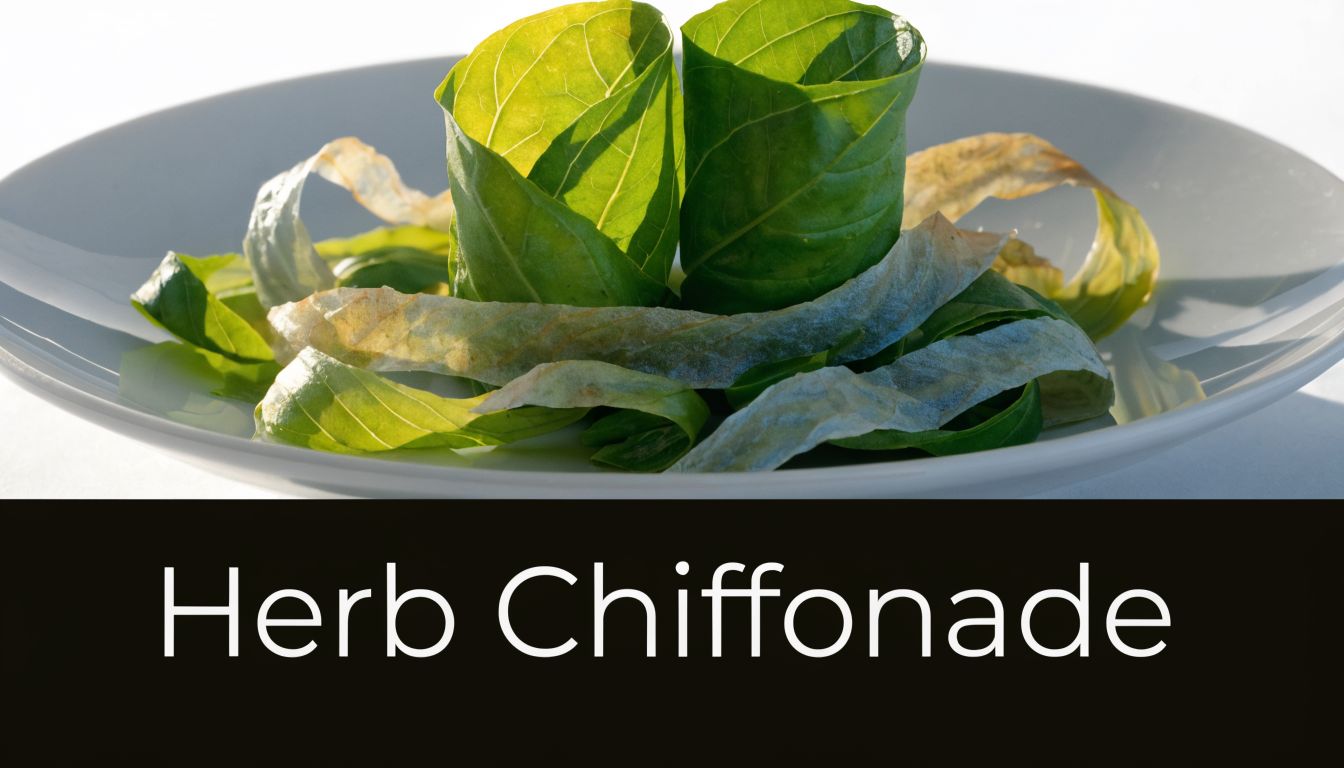
A chiffonade works best on broad, tender leaves such as basil, mint, and spinach. It can also work on kale, but only if the leaves are tender and the ribs are removed first. Small herbs like thyme or oregano are better minced. Thick, wet greens are often better chopped.
Keep leafy herbs looking fresh
Lay the leaves flat and stack them from largest to smallest. Roll them into a loose cigar shape, then slice crosswise into narrow ribbons with smooth forward strokes. Use very light pressure. A heavy push bruises the leaves, especially basil, and the cut edges darken fast.
A chef’s knife is a good fit here because the long blade can finish each slice cleanly. If your knife drags or crushes, sharpen it before blaming your technique. Dry leaves matter too. Moisture makes them stick to the blade and collapse into a clump.
Use chiffonade when you want the herb to distribute evenly without disappearing into the dish:
- Basil for pasta or pizza: Slice just before serving and add at the end.
- Mint for fruit or yogurt: Thin ribbons give a cleaner bite than torn pieces.
- Spinach or kale for soup: Narrow strips wilt quickly and look neater in the bowl.
One trade-off matters here. Chiffonade looks refined, but it is not always the right cut. If the leaves are destined for a cooked sauce, a rough chop is often faster and gives a similar result once they wilt. If you need rustic texture for pesto or salsa verde, chopping or hand-torn leaves usually works better.
Cut herbs right before serving whenever possible. If the ribbons mash together, your roll was too tight, the leaves were too wet, or the knife was too dull. Fix those three points and chiffonade becomes one of the fastest ways to make simple food look and taste more polished.
6. Julienne
Julienne is the cut that teaches discipline. Thin matchsticks of carrot, bell pepper, zucchini, cucumber, or ginger cook quickly and look clean on the plate. In slaws, noodle bowls, stir-fries, and spring rolls, julienne gives you both speed and texture.
It also reveals sloppy setup instantly. If the base shape is off, the final strips will wander.
Precision matters more than speed
Square off the ingredient first. That means trimming a carrot or zucchini into a manageable block, then slicing it into flat planks. Stack the planks and cut them into even sticks. Once the shape is stable, the cut becomes much easier.
For stir-fries, julienne is often better than thick slices because the pieces soften fast but still keep some bite. For raw salads, it helps hard vegetables feel more elegant and easier to eat. A coarse carrot coin can dominate a bite. A carrot julienne blends in.
Use a chef’s knife for julienne when you want control over thickness and length. That broad blade also lets you move the finished pile neatly from board to pan.
A practical warning belongs here. A chef’s knife is the default all-rounder, but it isn’t the right blade for every job. Western-style chef’s knives are commonly sharpened around a more durable edge angle, while thinner edges cut more precisely but chip more easily, which is why task choice matters. That edge-angle trade-off is explained clearly in this guide to understanding kitchen knife angles. In real use, don’t force your chef’s knife through frozen food, bones, or jobs that ask for a cleaver, boning knife, or serrated blade.
Thin strips need confidence. Hesitation creates wobble, and wobble creates uneven cooking.
If your julienne leans crooked, shorten the vegetable into smaller sections. Long pieces look impressive, but shorter blocks are far easier to cut accurately.
7. Brunoise
A spoonful of salsa, a clear soup garnish, a neat finish on a canape. These are the moments when brunoise earns its keep. The cut is small, precise, and surprisingly useful once you know when to choose it.
Brunoise is a very fine dice made from evenly cut strips, then turned into tiny cubes. It asks more of your knife work than any other cut in this list because every inconsistency shows. Uneven planks become uneven sticks. Uneven sticks become a dice that cooks at different speeds and looks messy on the plate.
That is why I treat brunoise as a skill, not just a shape. It trains accuracy, patience, and pressure control with a chef’s knife.
Use it when you want fast cooking and a refined texture. A brunoise of carrot, celery, onion, or leek melts neatly into sauces, folds cleanly into fillings, and gives soups or garnishes a polished look without leaving big chunks behind. For home cooks, that matters most in small-format dishes where oversized pieces feel clumsy.
Good practice ingredients are firm but manageable. Carrot works well if your knife is sharp and your cuts stay controlled. Zucchini flesh, trimmed cucumber, or deseeded tomato flesh are easier starting points because they offer less resistance. Watery cores are a poor choice. They collapse under the blade and ruin the clean cube you want.
A chef’s knife is still the right tool for this job, which helps explain why it remains the blade many cooks reach for most often. Fortune Business Insights projects the global kitchen knife market at USD 2.11 billion in 2025, rising to USD 3.73 billion by 2034 at a 6.64% CAGR, and notes in its analysis of the kitchen knife market that the cook’s or chef knife category was projected to hold a 28.70% share in 2026. In practice, the reason is simple. One well-handled chef’s knife covers the cuts cooks use every day, including fine work like brunoise.
Keep the motion small and deliberate. Rushing usually tips the sticks out of alignment, and once that happens the cubes stop matching.
If your brunoise starts going sloppy, stop and check the setup before blaming your hands. The usual problem is upstream. The strips were too thick, the ingredient was too wet, or the knife was not sharp enough for clean vertical cuts. If the food is delicate and you only need a rough fine chop for a sauce or relish, a true brunoise may be more precision than the dish needs.
A quick demo can help once you’ve got the basics in your hands:
7 Essential Knife Cuts Compared
| Technique | 🔄 Complexity | ⚡ Speed / Efficiency | 💡 Resources / Tips | 📊 Outcomes & ⭐ Quality | Ideal Use Cases |
|---|---|---|---|---|---|
| Slicing | Low–Medium 🔄 (basic rocking/sliding) | High ⚡ (fast for most tasks) | 💡 Sharp chef’s knife; use full‑length forward/back motion; claw grip; specify thickness | 📊 Even, attractive pieces; ⭐ Highly versatile, low waste | Sandwiches, roasts, salads, carpaccio, general prep |
| Dicing | Medium 🔄 (planks → sticks → cubes) | Moderate ⚡ (efficient for home cooks) | 💡 Create flat surface; stack planks; consistent pressure; note dice size | 📊 Uniform cubes for even cooking; ⭐ Practical and adaptable | Mirepoix, salsas, stews, soups, everyday recipes |
| Mincing | Medium–High 🔄 (fine rocking control) | Low–Moderate ⚡ (slow for large qty) | 💡 Very sharp knife; rock using tip pivot; mince herbs last-minute | 📊 Fine texture, maximized flavor release; ⭐ High flavor extraction and refinement | Aromatics (garlic, herbs), dressings, pestos, sauces |
| Chopping | Low 🔄 (casual, forgiving) | Very High ⚡ (fastest for bulk) | 💡 Tip on board, full rocking motion, batch chop for volume | 📊 Irregular pieces; ⭐ Best for speed and large quantities | Stocks, stews, batch meal prep, rough ingredient prep |
| Chiffonade | Medium 🔄 (stack → roll → slice) | Moderate ⚡ (quick for leafy herbs) | 💡 Stack & roll leaves tightly; very sharp blade; cut before serving | 📊 Delicate ribbons, preserved color; ⭐ Elegant garnish for herbs/greens | Basil on pasta, herb garnishes, composed salads, finishing dishes |
| Julienne | High 🔄 (precise parallel cuts) | Low ⚡ (time‑consuming) | 💡 Use rectangular vegetables; chill for firmness; steady strokes | 📊 Uniform matchsticks, even cooking; ⭐ Visually striking, professional | Stir‑fries, salads, garnishes, spring rolls |
| Brunoise | Very High 🔄 (julienne → tiny cubes) | Very Low ⚡ (extremely time‑intensive) | 💡 Master julienne first; razor‑sharp knife; work deliberately on small batches | 📊 Perfect 1/8″ cubes, exceptional precision; ⭐ Highest visual refinement | Fine dining garnishes, consommés, gourmet plating, special occasions |
From Techniques to Triumphs in the Kitchen
The true value of mastering chef knife uses isn’t that your cuts look more professional, though they often will. It’s that your cooking starts to behave. Vegetables cook on time. Aromatics distribute evenly. Herbs land with intention instead of clutter. You stop fighting the prep and start controlling it.
That confidence changes how you cook on busy nights. A quick soup feels easier when you can rough chop stock vegetables without overthinking them. A stir-fry improves when sliced meat and julienned vegetables are ready at the same pace. A simple pasta tastes fresher when basil is chiffonaded cleanly instead of bruised into dark strips.
There’s also a practical ceiling to what a chef’s knife should do. It handles most prep work, but it shouldn’t be your answer for bones, frozen foods, or every delicate slicing task. Knowing when not to use it is part of becoming skilled. Good knife work isn’t just about technique. It’s about judgment.
The more you cook, the more useful it becomes to save not only recipes but prep decisions. That’s especially true for family favorites. Maybe one soup works best with a medium dice, your salsa needs a finer mince, or your basil should always be chiffonaded at the last second. Keeping those notes with the recipe saves time and helps results stay consistent.
If you want to keep building your fundamentals, this piece on best cutting techniques for amateur chefs is a good companion read.
A sharp knife and a well-organized recipe collection make a powerful pair. One improves execution. The other preserves what worked so you can repeat it without guesswork. That’s how home cooking gets easier, better, and more enjoyable over time.
OrganizEat gives all those recipe details a home. Save recipes from social media, websites, handwritten cards, and cookbooks, then add your own notes about slice thickness, dice size, herb cuts, or timing so your best results are easy to repeat. Explore OrganizEat if you want your growing kitchen knowledge organized in one place across phone, tablet, and web.