



You eat a normal dinner. Maybe it's yogurt with fruit for breakfast, a sandwich at lunch, or a homemade pasta sauce packed with onion and garlic because you're trying to cook “healthy.” A few hours later, your stomach feels tight and swollen. Your jeans press into your belly. Gas builds. You wonder whether you ate too fast, picked the wrong food, or whether your gut is just being difficult again.
That cycle can get exhausting. Many people with fodmap intolerance symptoms don't feel sick immediately, which makes the pattern hard to spot. You might blame the last thing you ate, when the trigger came earlier. You might cut out random foods, then feel frustrated when symptoms keep coming back.
If that sounds familiar, there's a practical way to make sense of it. FODMAPs are a group of carbohydrates that can trigger bloating, abdominal pain, excess wind, diarrhea, constipation, and other digestive discomfort in sensitive people. Once you understand how they work, it gets much easier to connect symptoms to meals, identify your own triggers, and build a calmer way of eating at home.
Table of Contents
- The Frustrating Mystery of Post-Meal Discomfort
- What Are FODMAPs and Why Do They Cause Symptoms
- Recognizing Common and Uncommon Symptoms
- Symptom Timing and Triggers by FODMAP Subgroup
- Is It FODMAP Intolerance IBS or an Allergy
- The Path to Diagnosis and When to See a Doctor
- Managing Symptoms with Smart Low-FODMAP Meal Planning
The Frustrating Mystery of Post-Meal Discomfort
One of the hardest parts of digestive symptoms is how inconsistent they seem. You can eat the same food twice and feel fine one day, then miserable the next. You may even notice that a “clean” meal causes more trouble than takeout, which makes no sense until you look closely at the ingredients.
A common example is the extra-healthy home meal. Think roasted vegetables, a lentil side, a sauce with garlic and onion, and maybe fruit for dessert. Nothing about that looks suspicious. Yet a few hours later, your stomach feels puffed up, crampy, loud, or unpredictable.
That confusion often leads people to broad food fear. They stop eating dairy, then wheat, then fruit, then beans, without a clear reason. Meals get smaller, more stressful, and less enjoyable.
Why the culprit is easy to miss
FODMAP reactions are easy to misread because the issue usually isn't one dramatic ingredient and it usually isn't instant. It can be the total load of certain carbohydrates across the day. It can also be one subgroup, like lactose or polyols, rather than every high-FODMAP food.
Sometimes the most useful question isn't “What food is bad?” It's “What pattern keeps repeating?”
Another source of frustration is that many trigger foods are nutritious foods. Garlic, onions, legumes, milk, fruit, wheat, and mushrooms all show up in ordinary cooking. If your gut is sensitive to some of these carbohydrates, symptoms can follow meals that seem balanced on paper.
A manageable explanation
FODMAPs become helpful, not scary, in this context. They offer a framework for understanding why meals that look unrelated can lead to similar symptoms. Instead of seeing your digestion as random, you start to see clues.
Once you recognize that bloating, pain, bowel changes, and gas may be tied to specific carbohydrate groups and portion sizes, the process becomes more organized. You're no longer guessing. You're observing, testing, and learning what your own gut handles well.
What Are FODMAPs and Why Do They Cause Symptoms
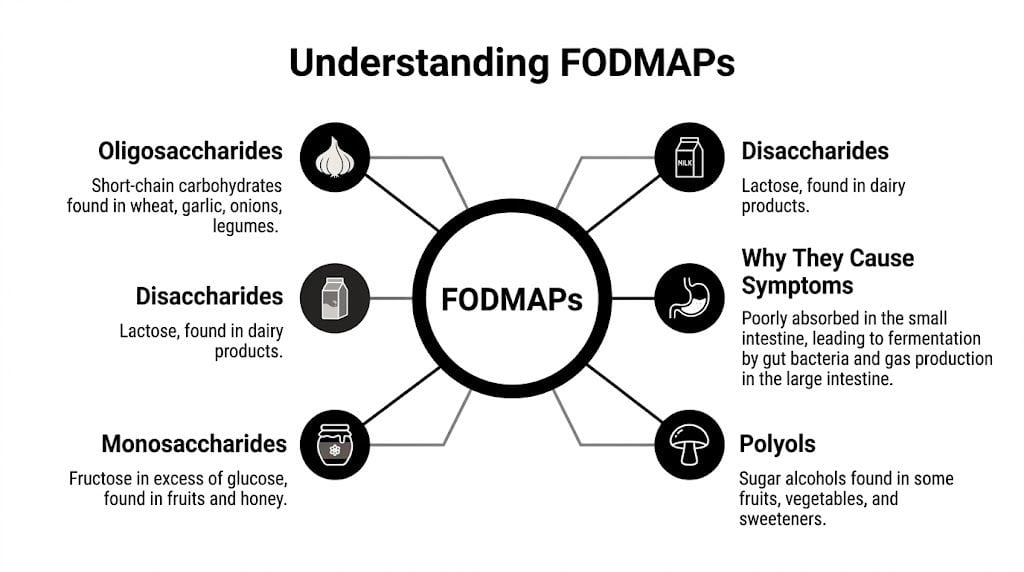
FODMAP is a shorthand for a group of carbohydrates that can be hard to digest for some people. The full name is Fermentable Oligosaccharides, Disaccharides, Monosaccharides, and Polyols. The terminology sounds dense, but the main idea is simple. These are small carbohydrates that may pass through the small intestine without being fully absorbed.
When that happens, they keep traveling through the gut instead of being neatly taken in and processed. That is where many fodmap intolerance symptoms begin.
The acronym in plain English
You do not need to memorize the chemistry. It helps more to know the food patterns behind each group:
- Oligosaccharides are found in foods such as wheat, onions, garlic, and some legumes.
- Disaccharides mainly refers to lactose, the sugar in milk and some dairy foods.
- Monosaccharides usually means excess fructose in certain fruits and sweet foods.
- Polyols are sugar alcohols found in some fruits, vegetables, and reduced-sugar sweeteners.
These groups matter because one person may react mostly to lactose, while another notices trouble with onions, garlic, or certain fruits. That is why symptom tracking can be more useful than broad food avoidance.
If dairy keeps showing up in your notes, the Lola Health lactose intolerance test guide can help you decide whether lactose is one of the clearer pieces of your pattern.
Why symptoms happen
Two gut processes explain most FODMAP reactions.
First, some FODMAPs pull extra water into the intestine. A sponge works as a good comparison here. As more water is drawn in, stool can become looser and the bowel can feel urgent or unsettled.
Second, gut bacteria ferment these carbohydrates after they reach the colon. A balloon is a useful comparison. Fermentation creates gas, and that gas stretches the bowel. For people with a sensitive gut, that stretching can feel like pressure, cramping, rumbling, or visible bloating.
So the problem is not that the food is “bad.” The issue is that your digestive system may struggle with the amount, the type, or the combination.
Why one meal is fine and another is not
This part confuses many people. A small serving of a food may cause no issues, but a larger portion of the same food can tip the balance. The same thing can happen when several moderate-FODMAP foods show up in one meal or across the same day.
A practical example helps. You might do well with a little milk in coffee. Add yogurt at breakfast, wheat at lunch, onion in dinner, and fruit for dessert, and the total load may become more than your gut handles comfortably. The pattern matters as much as the single ingredient.
That is why home cooking can be so helpful. Once you know which subgroup tends to bother you, you can make targeted swaps instead of cutting out everything. Someone sensitive to fructans might use garlic-infused oil instead of garlic cloves. Someone who reacts to lactose might choose lactose-free milk but keep other foods the same. Small kitchen changes often make meals feel more predictable and much less stressful.
Recognizing Common and Uncommon Symptoms
A lot of people start with one clue. Their jeans feel tighter after dinner, their stomach looks swollen by evening, or a meal leaves them crampy and unsettled. Then the pattern gets harder to read. One day it is gas and pressure. Another day it is urgency, constipation, or a vague wiped-out feeling that seems out of proportion to what they ate.
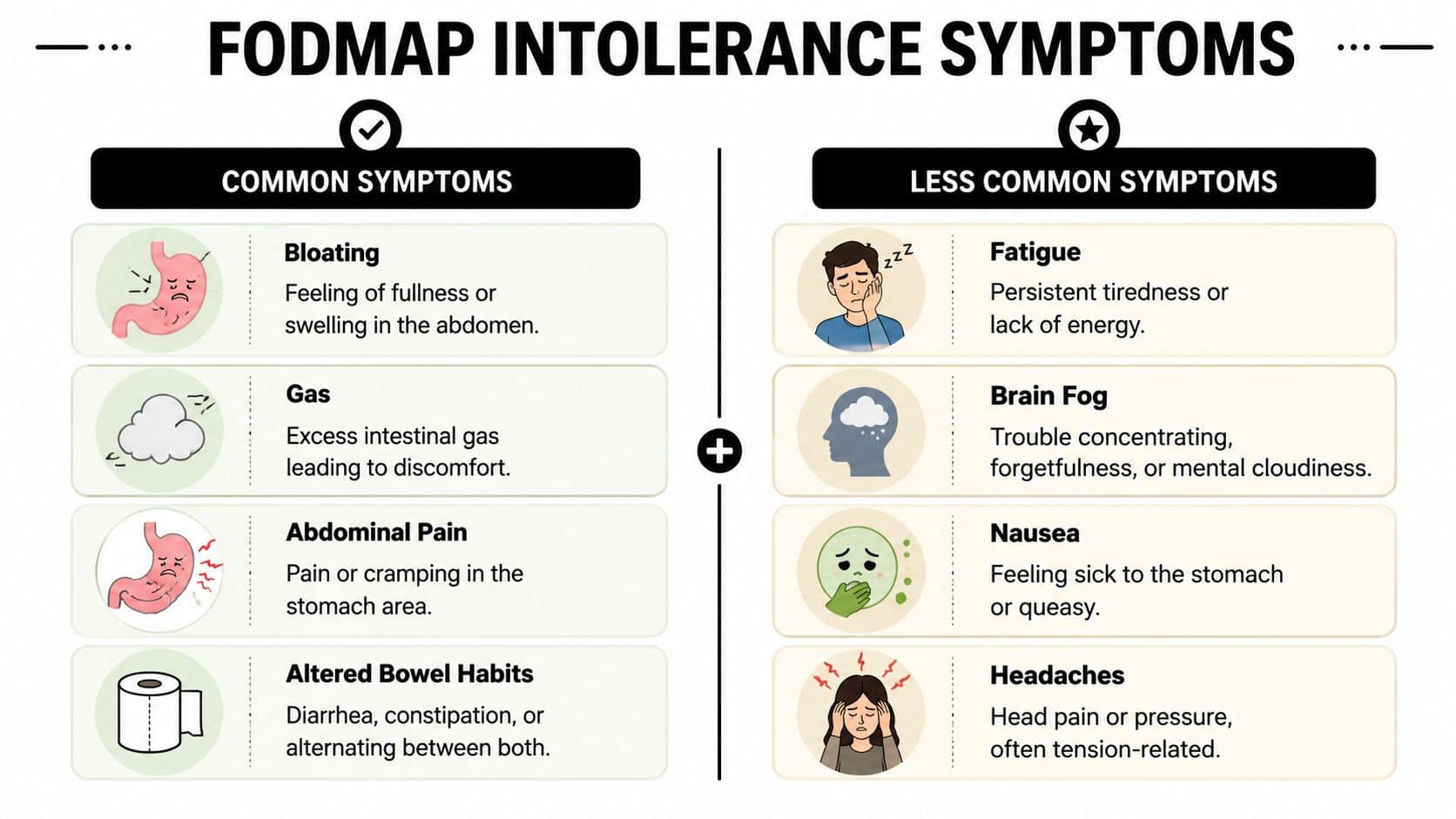
That variety is part of what makes FODMAP symptoms so confusing. The same type of carbohydrate can lead to different symptoms in different people, and your own pattern may shift depending on portion size, stress, and what else you ate that day.
Classic gut symptoms
The symptoms people notice most often are centered in the digestive tract. Common examples include bloating, abdominal pain, gas, diarrhea, constipation, or a mix of bowel changes over time.
A helpful way to read these symptoms is to ask, “What does my gut do after certain meals?”
You might notice:
- Bloating after meals, with a belly that feels stretched, full, or visibly puffier than usual
- Abdominal pain or cramping that comes in waves, eases after passing gas, or improves after a bowel movement
- Excess wind that builds as the day goes on
- Diarrhea or urgency after meals that seem to trigger your gut
- Constipation or a sluggish, incomplete feeling
- Alternating bowel habits, where some days are loose and urgent and others feel slow and backed up
Pattern recognition proves useful. A lactose-sensitive person may notice trouble after milk or ice cream. Someone who reacts more to excess fructose may do worse with certain fruits or sweeteners, which is why a guide to the best fruits for IBS can be useful when you start sorting out what your gut handles comfortably.
Less obvious symptoms
Some reactions are harder to connect to food because they are not as specific. They still matter.
You may also notice:
- Nausea, especially when bloating and pressure are strong
- Fatigue after a difficult digestive day
- Brain fog or poor focus, often when discomfort is distracting or sleep has been disrupted
- Headaches that seem to show up on the same days as digestive flare-ups
- Anxiety around meals, especially if symptoms have started to feel unpredictable
These symptoms do not confirm FODMAP intolerance by themselves. They are better treated like supporting clues than the main evidence.
A simple analogy helps here. Your gut symptoms are usually the smoke alarm. Tiredness, fogginess, or meal-related worry can be the ripple effect after the alarm has been going off for hours.
Look for your pattern, not someone else's
Two people can eat the same meal and describe completely different reactions. One gets loud stomach noises and gas. The other feels pressure, constipation, and nausea. That does not mean one of them is “wrong.” It means FODMAP intolerance is often about your personal trigger pattern.
Try watching for three practical clues:
- Which symptom shows up most often
- Which foods or ingredients tend to appear before it
- Which home-cooked swaps make meals feel calmer
For example, if pasta with garlic-heavy sauce leaves you bloated and crampy, but rice with a simple tomato and herb sauce sits well, that gives you something useful to test. If regular milk causes trouble but lactose-free milk does not, that is another strong clue. Small kitchen changes can turn a confusing symptom list into a clearer map of what your body is telling you.
If your notes keep showing combinations like “bloating plus fatigue” or “cramping after onion-heavy meals,” bring that pattern to a doctor or dietitian. Specific examples are often more helpful than a long list of random symptoms.
The goal is not to label every sensation perfectly. The goal is to notice repeatable links between symptoms, food triggers, and the meals you can make at home without stress.
Symptom Timing and Triggers by FODMAP Subgroup
You eat a dinner that seems harmless enough. A few hours later, your stomach feels tight, noisy, or uncomfortable, and now you are staring at the snack you ate afterward, wondering if that was the problem. This is one reason FODMAP reactions are so confusing. The food that caused the symptoms is often not the last thing you ate.
Timing matters because these carbohydrates need time to move through the digestive tract before they start causing trouble. For some people, symptoms show up later the same day rather than right after the meal. That delay can make breakfast look innocent when it was indeed the start of the chain reaction, or make dinner seem guilty when lunch was the primary trigger.
Different FODMAP groups can also leave different clues. Lactose in milk or creamy sauces is sometimes easier to spot because the pattern feels more direct. Fructans, on the other hand, often hide in garlic, onion, broths, marinades, and packaged seasonings, so the trigger can be buried inside an otherwise simple meal.
FODMAP subgroup triggers and symptom timing
| FODMAP Subgroup | Common Food Sources | Typical Symptom Pattern |
|---|---|---|
| Fructose | Some fruits, honey, foods with excess fructose | May show up within hours for some people |
| Lactose | Milk, soft dairy foods, creamy sauces | May be easier to connect to symptoms after dairy-heavy meals |
| Fructans | Wheat, garlic, onions | Often harder to trace because they are common hidden ingredients |
| GOS | Legumes and pulses | May build up with larger portions or combination meals |
| Polyols | Some fruits, mushrooms, sweeteners with sugar alcohols | Can trigger gas, bloating, or loose stools in some people |
A helpful way to use this table is to treat it like a kitchen detective chart. If a pasta dinner with onion and garlic keeps leading to bloating by bedtime, that points you in one direction. If cereal and regular milk leave you uncomfortable by mid-morning, lactose becomes a stronger suspect. If stone fruit, mushrooms, and sugar-free gum tend to show up before symptoms, polyols are worth a closer look.
This is also where home cooking becomes useful. A simple meal made from plain rice, a protein, and a low-FODMAP vegetable gives you a clearer signal than a restaurant dish with sauce, marinade, and seasoning blends. The fewer mystery ingredients on the plate, the easier it is to connect the dots between symptoms and triggers.
For people trying to sort out fruit triggers, this guide to the best fruit for IBS can make the food side of the pattern easier to spot.
Write down three things. What you ate, what time you ate it, and what happened afterward. Over a week or two, that simple record often shows more than memory alone.
If symptoms feel sudden, severe, or seem to go beyond digestion, it is worth reviewing how food allergy symptoms and testing differ from a delayed carbohydrate intolerance pattern.
Is It FODMAP Intolerance IBS or an Allergy
These terms get mixed together all the time. Someone says they're “allergic” to onion. Another person says they have IBS, so they assume every symptom must be IBS. Someone else reacts to milk and assumes that means all dairy is off the table forever.
How these problems overlap
FODMAP intolerance isn't a separate disease in the same way celiac disease or a classic allergy is. It's a digestive mechanism. Certain carbohydrates aren't absorbed well, then they create symptoms through the gut processes described earlier.
IBS is a broader clinical condition. A person with IBS may have a sensitive gut that reacts strongly to stretching, movement, and bowel changes. That's one reason a low-FODMAP approach is often used to manage IBS symptoms. It doesn't cure IBS. It helps identify which foods worsen symptoms.
Food allergy is different again. Allergy involves the immune system. Reactions are often faster and can include symptoms outside the gut, such as swelling, hives, or breathing problems.
If you're unsure what an allergy reaction can look like, this overview of food allergy symptoms and testing gives a useful plain-language distinction.
A simple side-by-side comparison
| Condition | Main mechanism | Typical timing | Common symptom pattern |
|---|---|---|---|
| FODMAP intolerance | Poor carbohydrate absorption, water shifts, fermentation | Often hours after eating | Bloating, pain, gas, diarrhea, constipation |
| IBS | Gut sensitivity and altered bowel function | Variable | Ongoing digestive pattern with flares and trigger sensitivity |
| Food allergy | Immune system reaction | Often rapid | Hives, swelling, itching, breathing symptoms, sometimes gut symptoms too |
There’s also practical overlap in real life:
- A person can have IBS and also react to FODMAPs.
- A person can have lactose issues without reacting to every FODMAP subgroup.
- A person can have digestive symptoms that are not a food allergy at all.
For more IBS-focused meal ideas and food patterns, the IBS diet articles here can help you think in terms of symptom management rather than fear-based restriction.
Quick rule of thumb: delayed gut symptoms point more toward intolerance or IBS patterns. Fast reactions with hives, swelling, or breathing changes need urgent medical attention.
The Path to Diagnosis and When to See a Doctor
You eat what seems like a normal dinner, then spend the evening trying to figure out what went wrong. Was it the pasta, the sauce, the garlic, the portion size, or stress? That kind of guesswork gets exhausting fast, and it usually keeps people stuck longer than necessary.
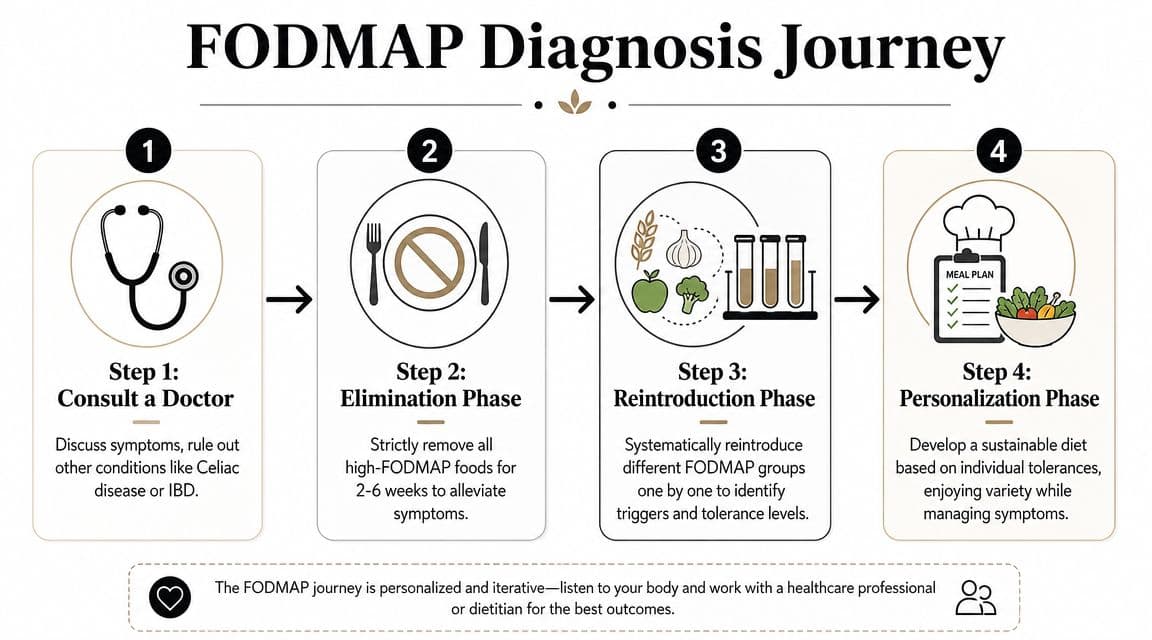
A clearer path starts with two goals. First, rule out problems that should not be self-diagnosed. Second, test food triggers in a way that helps you spot your own pattern instead of cutting foods at random.
A clinician may check for other causes before focusing on FODMAPs, especially if symptoms are new, severe, or changing. Bloating, pain, diarrhea, and constipation are common symptoms, but they are not exclusive to FODMAP intolerance. Several digestive conditions can look similar at first.
A medical workup often feels less overwhelming when you can see the sequence.
The low-FODMAP diet is a test not a forever rulebook
The low-FODMAP diet works best as a three-phase investigation. It is less like being handed a list of forbidden foods and more like running a careful kitchen experiment.
-
Elimination phase
For a short period, high-FODMAP foods are reduced so you can see whether symptoms settle. -
Reintroduction phase
Foods are added back one subgroup at a time. This helps you connect symptoms to a specific type of carbohydrate and, just as important, to a specific portion size. -
Personalization phase
You build an eating pattern around what your body tolerates, so meals become more varied, practical, and easier to cook at home.
The primary goal is a useful food map. You want to learn, for example, that a small amount of yogurt may be fine but a large milk-based smoothie is not, or that wheat bothers you more than fruit does. Those details are what turn diagnosis into calmer grocery shopping and simpler weeknight meals.
This short video gives a helpful overview of how the process works in practice:
Working with a dietitian or nutrition professional can make the process much easier to follow. A good plan keeps meals nutritionally balanced, limits unnecessary restriction, and gives you a simple way to track what happened after each food trial. If you want practical guidance on how to plan meals for dietary restrictions, it can help you turn diagnosis notes into a repeatable cooking routine. If you also want broader testing context, these holistic food intolerance insights add useful background.
Red flag symptoms need medical attention
Some symptoms need medical review rather than home testing.
Get medical care promptly if you have: unexplained weight loss, blood in the stool, severe anemia, persistent vomiting, fever, symptoms that are getting worse without a clear reason, or pain that feels severe or unusual for you.
Those signs can point to something other than a simple food intolerance.
For your appointment, a basic symptom diary is often more helpful than a long list of suspected foods. Try to record:
- What you ate
- When you ate it
- When symptoms started
- What the symptoms felt like
- Whether stress, travel, illness, or a larger portion may have contributed
That record gives your clinician something concrete to work with. It also helps you see the difference between a one-off bad day and a repeatable trigger pattern you can cook around.
Managing Symptoms with Smart Low-FODMAP Meal Planning
Once you know your triggers, daily life gets easier when your kitchen system supports you. Individuals often do not struggle because they lack willpower. They struggle because every meal becomes a memory test.

Make your kitchen easier on your gut
Home cooking is often where symptom control improves the most, because you can see exactly what’s in the meal. The challenge is staying organized enough to repeat what works.
A few habits help immediately:
- Keep a short list of reliable meals you can make when your gut feels sensitive.
- Read labels for hidden ingredients such as onion, garlic, milk powders, or sweeteners with polyols.
- Edit favorite recipes instead of abandoning them. A pasta sauce, soup, or stir-fry often needs only a few ingredient swaps.
- Group meals by trigger level so you know which ones are your safest fallback options.
A calm week of eating usually starts with a calm plan, not with perfect discipline in the grocery aisle.
Build a repeatable system
Meal planning matters more on a low-FODMAP approach because you’re juggling recipes, tolerated portions, shopping lists, and reintroduction notes. That’s where a digital system can help.
For example, if you want a structure for planning around sensitivities, this guide on how to plan meals for dietary restrictions is a useful starting point. Some people use a notebook. Others use notes apps or spreadsheets. If you want everything in one place, OrganizEat lets you store recipes, tag them by needs like low-FODMAP or dairy-free, build grocery lists from ingredients, and place meals on a calendar so your “safe” options are easy to find later.
The practical goal isn’t to make food feel clinical. It’s to remove friction. When your tolerated recipes are searchable, your shopping list is ready, and your weekly meals are mapped out, it’s much easier to eat well without second-guessing every ingredient.
You’re also less likely to drift into unnecessary restriction. Good organization makes variety possible, which matters when you’re trying to personalize your diet instead of shrinking it.
If you’re building a low-FODMAP routine at home, OrganizEat can help you keep recipes, meal plans, and grocery lists in one organized place so your safe meals are easier to repeat and your food notes don’t get lost.