


You're probably here because you had zarandeado-style fish somewhere memorable, maybe at a beach restaurant, maybe at a backyard cookout, and now every grilled fish you make at home feels like it's missing that smoky, savory, slightly creamy red coating. Or you found a few recipes online and realized they don't even agree on what the sauce is supposed to be.
That confusion is real. Some versions are basically a seasoned soy marinade. Others are richer, deeper, and redder from chiles and achiote. A good zarandeado sauce recipe should clear that up, then give you a version that is effective on a standard home grill, especially if you're cooking fillets instead of a whole butterflied fish.
Table of Contents
- The Soul of Pescado Zarandeado
- The Complete Zarandeado Sauce Recipe
- Grilling Perfection with Zarandeado Sauce
- Customize Your Sauce and Pairings
- Storage Tips and Troubleshooting
- Save This Recipe Forever in OrganizEat
The Soul of Pescado Zarandeado
Pescado zarandeado is one of those dishes that tastes bigger than the ingredient list suggests. The fish picks up smoke, salt, chile, tang, and that unmistakable grilled edge where the sauce catches just enough heat to caramelize without turning harsh. Done right, it tastes coastal and rustic, but also extremely precise.
Most home cooks get tripped up before they even light the grill. They assume there's one fixed, timeless definition of “authentic” sauce. There isn't. Historical records show the original 19th-century marinade was a simple blend of soy sauce, Worcestershire, oil, and spices, while the achiote and rehydrated dried chiles used in many modern versions came later as a regional adaptation from Nayarit, and that version has become the modern standard for the dish's flavor and color, as noted in this historical look at zarandeado's evolution.
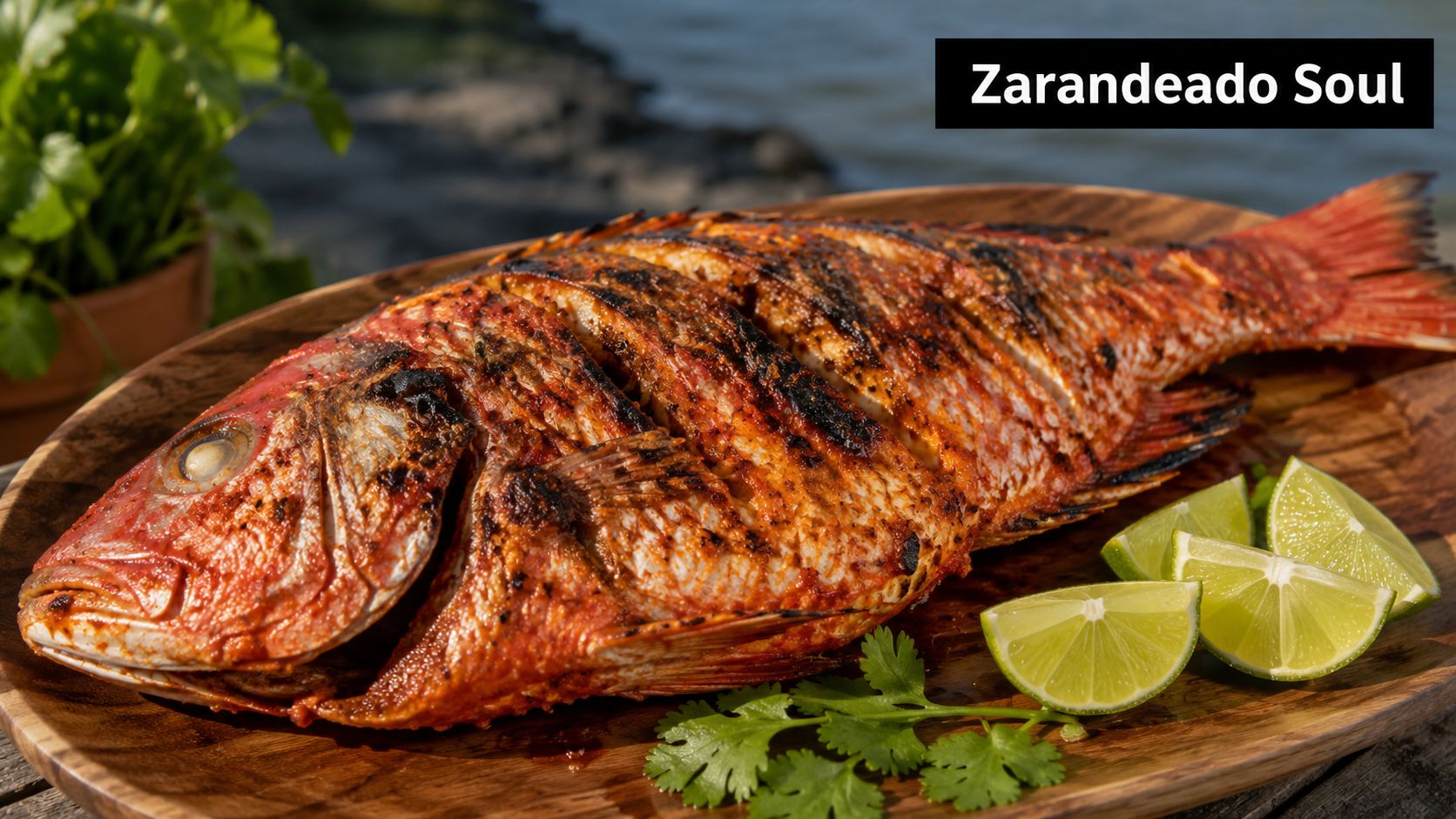
That matters because it tells you what kind of result to expect. If you make the older soy-forward marinade, you get something leaner and sharper. If you make the modern Nayarit-style version, you get a fuller sauce with more body, more cling, and more color on the fish.
Why the modern version is the one most home cooks want
For a backyard grill, the modern style is usually the better choice. It coats fish more evenly, especially fillets, and it gives you more room to build flavor before the fish dries out. The creamy emulsified base softens the edges of the dried chiles and helps the sauce stay on the fish long enough to brown.
Authenticity isn't one frozen recipe. It's knowing which tradition you're cooking from and why.
That's the version worth mastering first. It's also the one that solves the most common home-cooking problem, which is getting a sauce to behave on real grill grates instead of sliding off, burning instantly, or turning muddy.
What this sauce should taste like
A proper zarandeado sauce recipe should hit several notes at once:
- Savory depth from soy sauce and Worcestershire
- Round richness from mayonnaise and mustard
- Gentle sweetness and color from tomato paste
- Earthy chile flavor from guajillo and or arbol
- Enough salt to still taste lively after fish juices hit the grill
If one note dominates, the sauce feels flat. Too much chile without enough fat tastes aggressive. Too little salt tastes dull once it cooks. Too thick, and it scorches. Too thin, and it runs off before doing its job.
The Complete Zarandeado Sauce Recipe
You soak the chiles, blend everything, brush the fish, and the sauce still slides off or burns in spots. That usually comes down to texture, not flavor. Zarandeado sauce has to be smooth enough to brush thinly and strong enough to keep its character once fish juices hit the grate.
Ingredients that build the right texture
Use this as your working formula:
- Dried guajillo chiles and or arbol chiles. Guajillo brings the red color and rounded chile flavor. Arbol adds sharper heat. Start light with arbol, because it can overpower the sauce fast.
- Mayonnaise. This gives the sauce body and helps it cling, which matters even more if you are grilling fillets instead of a butterflied whole fish.
- Mustard. Adds acidity and helps keep the mixture unified.
- Worcestershire sauce. Brings savory depth with a little sweetness.
- Soy sauce. Provides the salty backbone and much of the umami.
- Tomato paste. Adds color, light sweetness, and a thicker finish.
- Salt. Add enough that the sauce tastes slightly aggressive on its own. That edge softens once it is brushed onto fish.
If your pantry is limited, make the sauce with guajillo first and treat arbol as an adjustment, not a foundation. If you want more heat, increase chile before increasing soy sauce. Too much soy makes the sauce darker and muddier before it makes it better.
A little oil can help with brushing and browning, especially on lean fillets. Use a high-smoke-point cooking oil for grilling fish so the sauce stays glossy instead of tasting scorched.
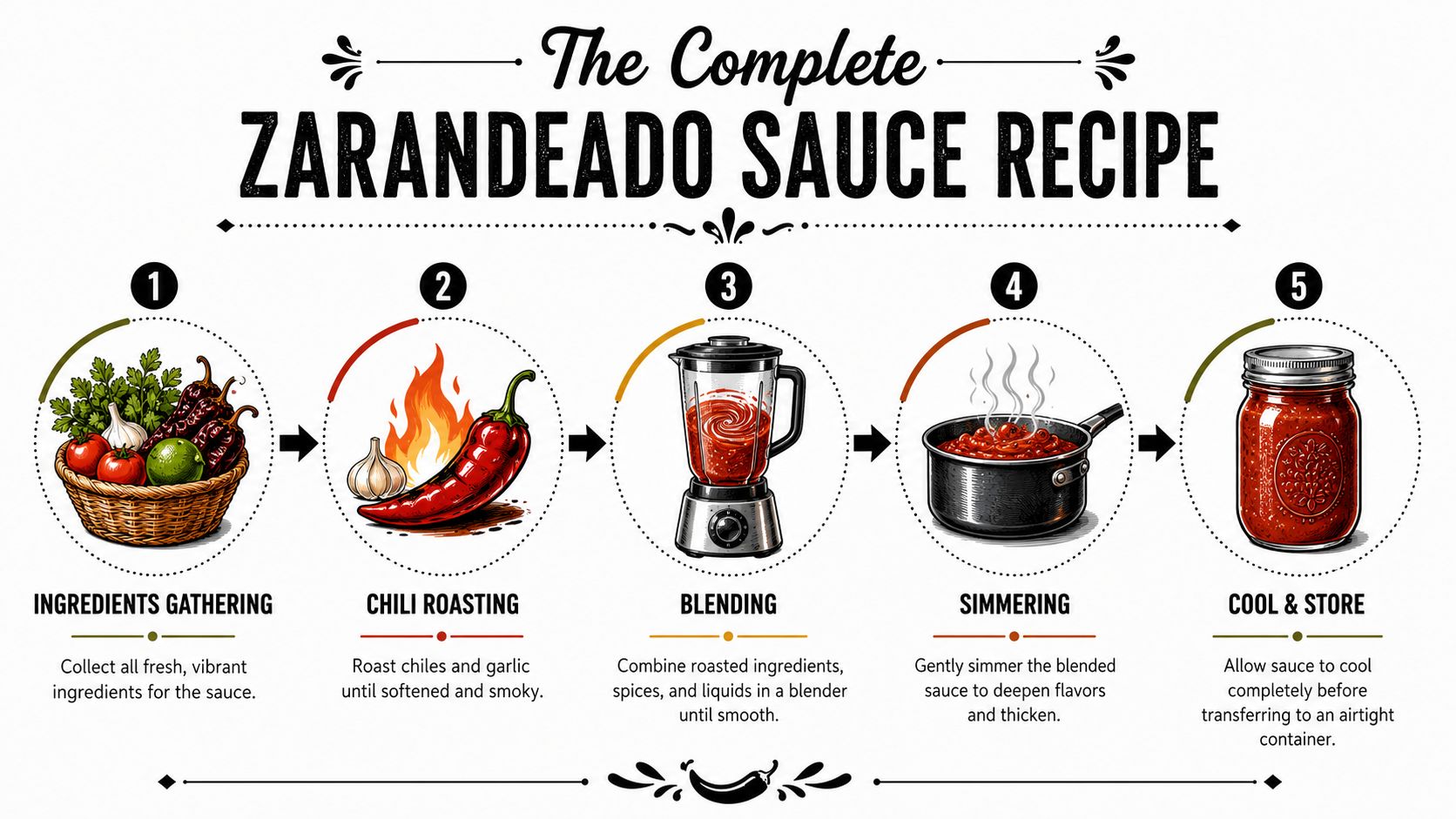
How to make the sauce step by step
-
Soak the dried chiles until fully softened.
Give them enough time in hot water to turn pliable all the way through. If the skins still feel tough near the stem end, they are not ready. Under-soaked chiles leave flecks in the sauce and never blend as smoothly as you want. -
Blend the chiles with the base until the mixture is completely uniform.
Add the softened chiles to a blender with mayonnaise, mustard, Worcestershire, soy sauce, tomato paste, and salt. Blend longer than seems necessary. A rough blend can taste fine in the jar and still cook unevenly on the fish. -
Season for the grill, not for the spoon.
The sauce should taste a touch saltier and stronger than a table sauce. Fish releases moisture as it cooks, and that moisture softens every flavor in the coating.
Kitchen judgment: If the sauce tastes balanced as a dip, it will usually taste muted after grilling.
-
Press the sauce through a medium-mesh sieve.
This is the step that moves it from rustic to dependable. Straining removes chile skin, seed fragments, and any fibrous bits that catch heat too quickly. The result is a smoother coating and more even browning, especially on delicate fillets. -
Adjust the consistency before it goes near the fish.
The finished sauce should cling to a spoon in a thin layer and brush on without dragging. If it is too thick, add a small splash of water. If it is too loose, let it sit for a few minutes before changing anything. Tomato paste and mayo tighten up as they rest.
For home cooks working on a standard grill, that last texture check matters more than strict tradition. The original method was built around fish held in a grill basket and shaken over fire. Most backyard setups use grates and a brush, so the sauce needs to be slightly looser and smoother to behave well.
If you want to refine your setup before you cook, discover essential BBQ gear that makes brushing, turning, and managing fish much easier.
A quick reference helps:
| Sauce issue | What it looks like | What to do |
|---|---|---|
| Too thick | Sits in heavy mounds | Loosen with a small splash of water until it brushes on cleanly |
| Too thin | Runs off the spoon quickly | Let it rest, then reassess before adding more solids |
| Too gritty | Visible bits of skin or seeds | Strain it again through the sieve |
| Too flat | Good color, weak finish | Add salt in small pinches and taste again |
The best zarandeado sauce looks smoother than many cooks expect. That smooth texture is what lets it lacquer the fish in thin, repeatable layers instead of forming random clumps that burn before the flesh is done.
Grilling Perfection with Zarandeado Sauce
A lot of home cooks lose this dish in the last ten minutes. The sauce is balanced, the fish is fresh, then the grill runs too hot and the surface burns before the center finishes. Zarandeado works best with controlled heat, thin layers of sauce, and frequent attention.
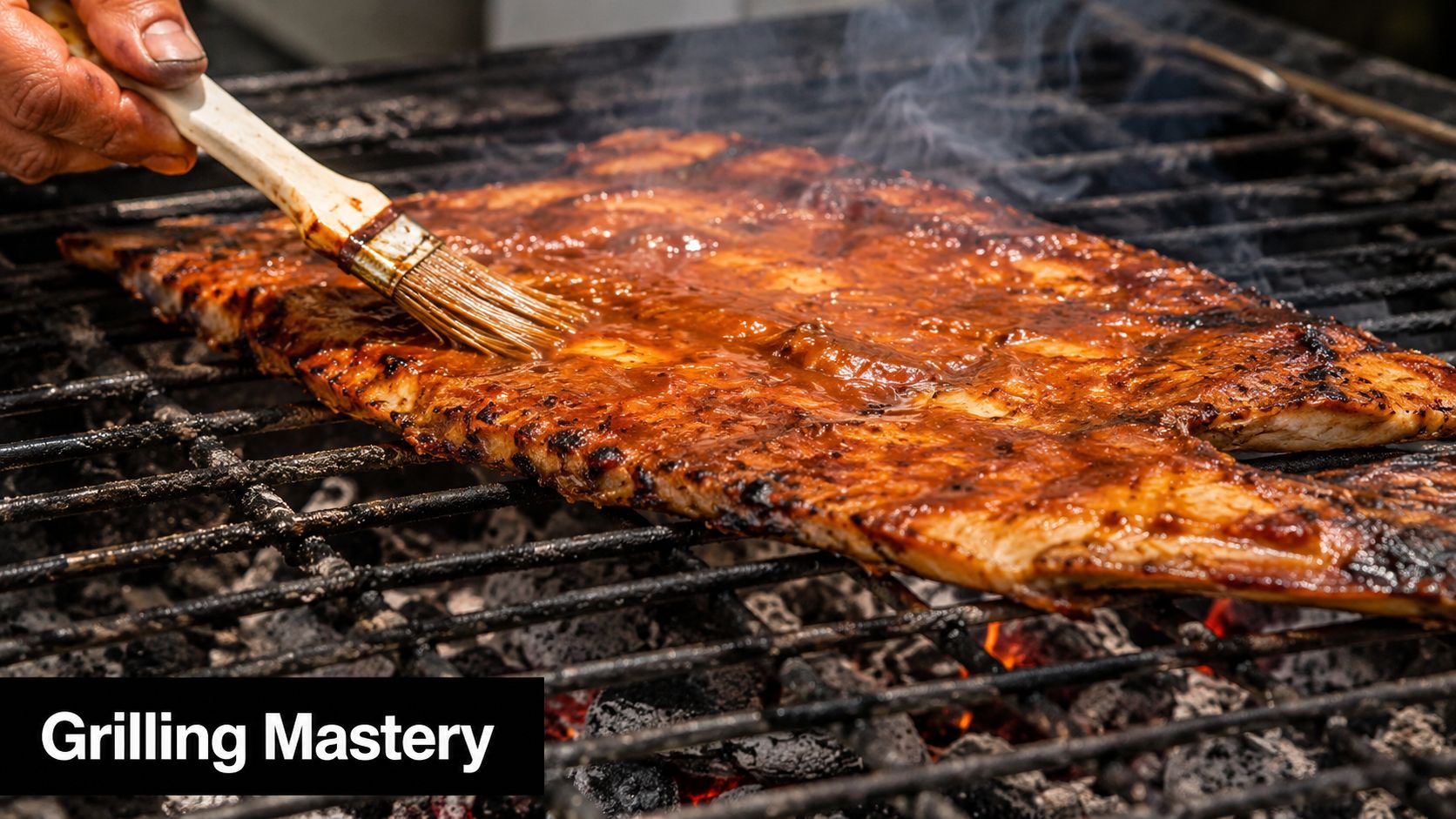
Traditional pescado zarandeado was built around whole butterflied fish clamped in a grate and turned over fire. That matters because many home cooks are working with fillets on standard grill grates, which behave very differently. Fillets cook faster, stick more easily, and give you less margin for heavy saucing. The goal at home is not to copy the restaurant setup piece for piece. It is to preserve the character of the dish, smoky, layered, and slightly lacquered, with equipment you have.
A lower, steadier fire gives the sauce time to set instead of scorch. If your grill has zones, keep one side medium and one side lower. Start the fish on the gentler side, then use the hotter area only if you need a little more color at the end.
How to prep the fish
For a large fillet, cut a few shallow slashes across the thickest part. Keep them shallow enough that the fish still holds together when you turn it. Those cuts help the heat move through the thicker areas and give the sauce a little more surface to cling to.
Use a brush, not a spoon. A spoon drops sauce in patches, and those thick spots burn first. A brush gives you thin, even coats, which is the whole method with zarandeado.
Good tools reduce breakage. If you need better tongs, a fish basket, or a brush that doesn't shed, it helps to discover essential BBQ gear before your next cookout.
How to grill fillets without wrecking the sauce
Fillets need a lighter hand than a whole split fish. Brush on a thin first coat, grill briefly, flip carefully, then brush again. Repeated light layers build better flavor than one heavy coating, and they are much less likely to scorch.
A clean, well-oiled cooking surface matters here. If you want help choosing the right fat, this guide to cooking oil with high smoke point is useful.
This sequence is reliable on a standard gas or charcoal grill:
- Oil the grates well right before the fish goes on.
- Start with a thin coat of sauce on the flesh side.
- Cook over moderate heat so the sauce can set gradually.
- Flip every few minutes instead of leaving one side down too long.
- Brush after each turn in light passes.
Frequent turning is one of the biggest differences between good zarandeado and burnt zarandeado. If you leave a sauced fillet sitting too long over direct heat, the sugars and solids in the sauce take the hit first. Turning regularly protects the surface and helps the fish cook more evenly.
Thin fillets respond better to layers than to a heavy blanket of sauce.
Use timing as a check, not a rule carved in stone. Thickness matters more than weight. A smaller fillet may be done in around 12 minutes, while a thicker large fillet may need closer to 18. Start checking once the flesh turns opaque and flakes with light pressure. Pull it while it still looks juicy, because carryover heat finishes the job fast.
| Fish size | When to check | What you're looking for |
|---|---|---|
| Large fillets | 18-minute mark | Interior should be just barely firm, not hard |
| Smaller fillets | 12 minutes | Cooked through, still moist |
If the fish keeps sticking, do not force it. Give it another 30 to 60 seconds and try again with a thin metal spatula. Fish usually releases once the surface has set. If the sauce is darkening too fast, move the fillet to the cooler zone and keep basting in lighter coats.
A visual demonstration helps once you’ve got the timing in mind:
For a smokier finish on fillets, let a little sauce catch at the edges instead of coating the entire top heavily. You get those charred, savory bits that make zarandeado taste right, without drying out the center.
Customize Your Sauce and Pairings
The best part of this dish is that you can stay faithful to its character while still adapting it to what’s in your pantry or fish case. Good zarandeado isn’t about rigid perfection. It’s about preserving the balance of smoke, savoriness, chile depth, and cling.
Adjust the sauce to your kitchen
If you like a hotter finish, nudge the arbol upward and leave the rest of the sauce alone. That keeps the base stable. If you can only find guajillo, the sauce will still taste true to style, just softer and rounder.
If your market has halibut, mahi-mahi, or snapper, any of them can work well. Firm fish holds up best under repeated brushing and flipping. If all you’ve got is tilapia fillets, the trick is restraint. Use a thinner coat of sauce and a gentler hand when turning.
When substitutions start stacking up, it helps to check a practical ingredient substitution finder for any recipe. That’s especially handy if you’re deciding between Worcestershire, soy-heavy adjustments, or different chile options.
A substitution works when it preserves the job of the ingredient, not just the color or the category.
You can also take the method beyond fish. Firm tofu, grilled cabbage, or thick slices of cauliflower all respond well to this style of sauce because they benefit from repeated brushing and surface char.
What to serve with it
Keep the plate simple. Zarandeado fish already has a lot going on.
A meal usually comes together well with:
- Warm corn tortillas for building tacos at the table
- Cilantro-lime rice if you want something softer against the smoky fish
- Pickled red onions for brightness
- A fresh salsa that leans acidic rather than sweet
- Lime wedges because the final squeeze wakes up the whole dish
If you’re serving wine and want a broader guide to balancing smoky, spicy food with the bottle on the table, it’s useful to master flavor combinations with wine. For this dish, I’d lean toward something crisp and refreshing rather than oaky or heavy.
One practical dinner strategy works especially well for families. Grill a larger batch of fish, set out tortillas, onions, salsa, and rice in separate bowls, and let everyone build their own plate. The fish does the heavy lifting, so the sides should stay clean and bright.
Storage Tips and Troubleshooting
This is the part that saves dinner when the first try isn’t perfect. Zarandeado sauce is simple, but it has a few common failure points, and most of them are easy to fix once you know what you’re looking at.
What to do with leftover sauce
Store extra sauce in an airtight container in the refrigerator and use it while it still smells fresh and lively. Give it a good stir before using because emulsified sauces often tighten up and settle after sitting. If it thickens too much in the cold, let it stand at room temperature briefly, then stir again.
Freezing can work if you want to save a batch, but texture may change a little after thawing. If that happens, whisk it back together and pass it through a sieve again if needed.
Common issues and practical fixes
If the sauce tastes bitter, the usual culprit is rough chile texture or bits that didn’t blend and strain out fully. That’s one reason the medium-mesh sieve matters so much. Bitterness often reads as “too much chile” when it’s really a texture problem.
If the sauce seems too thin, don’t rush to dump in more ingredients. Let it sit for a few minutes first. If it still runs off the fish, use a lighter coat and build layers during grilling instead of trying to force thickness in the bowl.
If the fish sticks, the problem is usually heat management or poor surface prep. Oil the grate or basket, let the fish begin to set before moving it, and avoid trying to pry it loose too early.
If the sauce burns before the fish cooks through, your fire is too aggressive for this style. Lower the heat, apply thinner layers, and flip more often. Zarandeado rewards control, not speed.
Save This Recipe Forever in OrganizEat
A recipe like this is exactly the kind that gets lost in the shuffle if you don’t save it properly. You make it once, tweak the chile mix, finally get the grill timing right, and then a month later you’re trying to remember whether you used guajillo only or guajillo plus arbol, whether the fish needed a thinner first coat, and where that note about sieving was.
That’s why it helps to turn a good web recipe into something personal and searchable. If you want a practical walkthrough, this guide on how to convert web recipes into personal digital collections lays out a clean process for saving and organizing recipes you cook more than once.
Why this recipe is worth saving properly
This isn’t a throwaway weeknight formula. It has technique built into it. You’ll probably want to save your own version with notes like:
- Chile choice if you changed the heat level
- Fish type if halibut worked better for your grill than snapper
- Grill behavior if your setup runs hotter than expected
- Serving notes like tortillas, salsa, or rice that worked especially well
Those personal notes matter more than people think. A recipe becomes reliable when it includes what happened in your kitchen, not just what was printed on a page.

A simple way to organize it for later
A smart setup is to save the recipe and tag it in ways you’ll use later. For example:
- #grilling when you’re planning outdoor meals
- #mexican when you want bold, sauce-driven mains
- #seafood for quick filtering by protein
- #summer dinner if this is one of your warm-weather staples
It also helps to attach a photo of your finished dish. Visual memory is powerful in cooking. If you nail the color and texture on one batch, that photo becomes a reference for the next one.
Another practical move is generating a grocery list straight from the ingredient list. Zarandeado isn’t hard, but it does rely on a few specific pantry items that are easy to forget if you shop from memory. Having the list ready before you head out saves the annoying second trip for dried chiles or Worcestershire.
For households that meal plan, this kind of saved recipe earns its keep fast. Once it’s in your collection, you can pull it up when fish is on sale, when you need a weekend grilling idea, or when you want to use the same sauce on vegetables or tofu without searching all over again.
If you want one place to keep recipes like this, your notes, your photos, and your grocery list together, OrganizEat gives your favorite dishes a permanent home so they’re ready whenever grilling season hits.