




You open the fridge to make breakfast, reach for the carton, and realize the eggs spent the night on the counter. Or maybe you bought eggs from a farm stand and noticed they weren't chilled at all. That's usually when the confusion starts. Some people say eggs must always stay cold. Others keep them in a bowl on the counter and think nothing of it.
The short answer is yes, eggs can go bad if they're not refrigerated, but the exact answer depends on what kind of eggs you have. That's why egg storage advice seems so contradictory. A carton from a U.S. supermarket is handled differently from eggs sold at a local farm or in many non-U.S. countries, and that difference changes how long they stay safe and fresh.
Table of Contents
- The Countertop Egg Debate Explained
- The Protective Bloom Washed vs Unwashed Eggs
- How Long Do Eggs Really Last
- How to Spot a Spoiled Egg
- The Float Test and Other Freshness Checks
- Best Practices for Storing and Handling Eggs
The Countertop Egg Debate Explained
If you're asking whether eggs go bad if not refrigerated, you're probably dealing with one of two situations. You either left store-bought eggs out longer than you meant to, or you bought eggs that were never refrigerated in the first place. Those are not the same scenario.
For U.S. store-bought eggs, the safest mindset is simple. They were washed before sale, and that changes how they need to be stored. Once those eggs have been chilled, leaving them out too long can create moisture on the shell and make spoilage more likely.
Farm eggs and eggs sold in many other countries can be different. If they're unwashed, they may still have their natural outer coating intact, which gives them more protection at room temperature. That's why one person keeps eggs in the fridge while another keeps them in a basket on the counter and both can be following sensible food-safety rules.
Bottom line: The right storage method depends less on “eggs” in general and more on whether the eggs were washed or unwashed before you got them.
A lot of kitchen stress comes from treating all eggs as if they were identical. They aren't. Once you know which kind you have, the decision gets much easier. If you're trying to make your kitchen routines simpler overall, a practical system like a free fridge organization program can help you keep track of what needs quick use and what can safely wait.
The Protective Bloom Washed vs Unwashed Eggs
The biggest piece of this puzzle is something many home cooks never hear about until they run into conflicting advice online. It's called the bloom, also known as the cuticle.
Why the answer depends on the egg
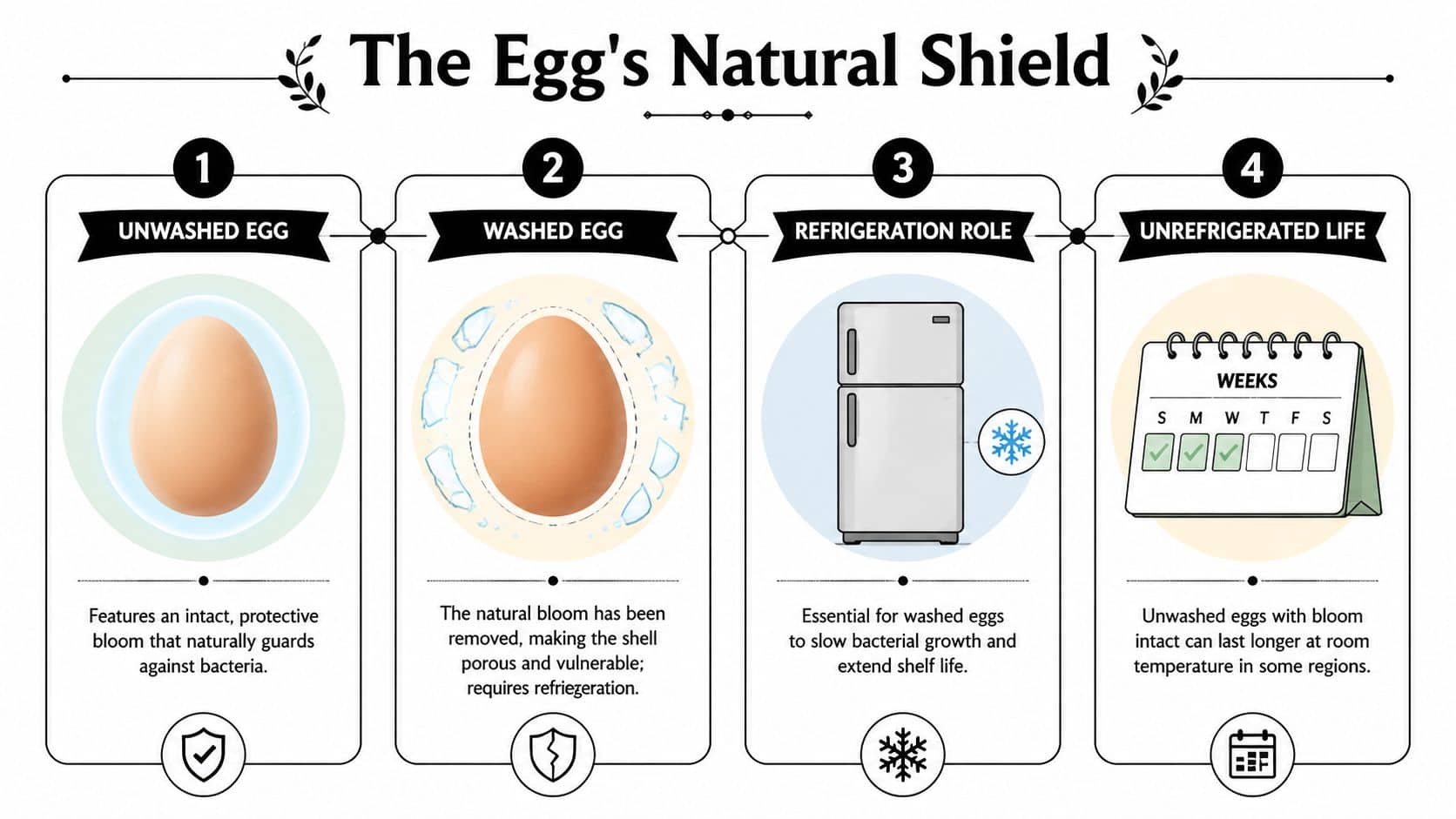
Think of the bloom like a thin natural raincoat on the shell. It helps seal the egg's porous surface and makes it harder for bacteria to move inward. When that coating is still intact, the egg has more built-in protection.
In the United States, consumer eggs are generally washed and processed before sale. That cleaning step removes the protective outer layer. Once the bloom is gone, refrigeration matters much more because cold storage helps slow bacterial growth.
Why countries give different advice
The global divide in egg handling becomes clear. Organic Valley notes that U.S. store-bought eggs are washed, which removes the protective bloom, so they require refrigeration for about 3 to 5 weeks, while unwashed farm or EU eggs with the bloom intact can last about 2 to 3 weeks unrefrigerated. It also explains that refrigeration is required after washing to inhibit bacterial growth, not to preserve the egg itself (Organic Valley on why the U.S. refrigerates eggs).
That's why a refrigerated carton in an American supermarket and shelf-stable eggs in a European shop can both reflect local safety rules. The storage method follows the handling method.
Here's the simplest way to remember it:
| Egg type | Protective bloom | Typical storage approach |
|---|---|---|
| U.S. supermarket eggs | Removed by washing | Refrigerate |
| Unwashed farm eggs | Intact | Can often stay at room temperature for a while |
| Many EU market eggs | Intact | Often sold unrefrigerated |
Eggs don't become safer just because they sit in one place or another. Safety starts with how they were handled before they reached your kitchen.
That one distinction clears up most of the confusion around whether eggs go bad if not refrigerated. Washed eggs and unwashed eggs follow different rules because they start with different protection.
How Long Do Eggs Really Last
Once you know whether your eggs were washed, the next question is shelf life. This is the information commonly looked for as a quick reference.
A quick comparison
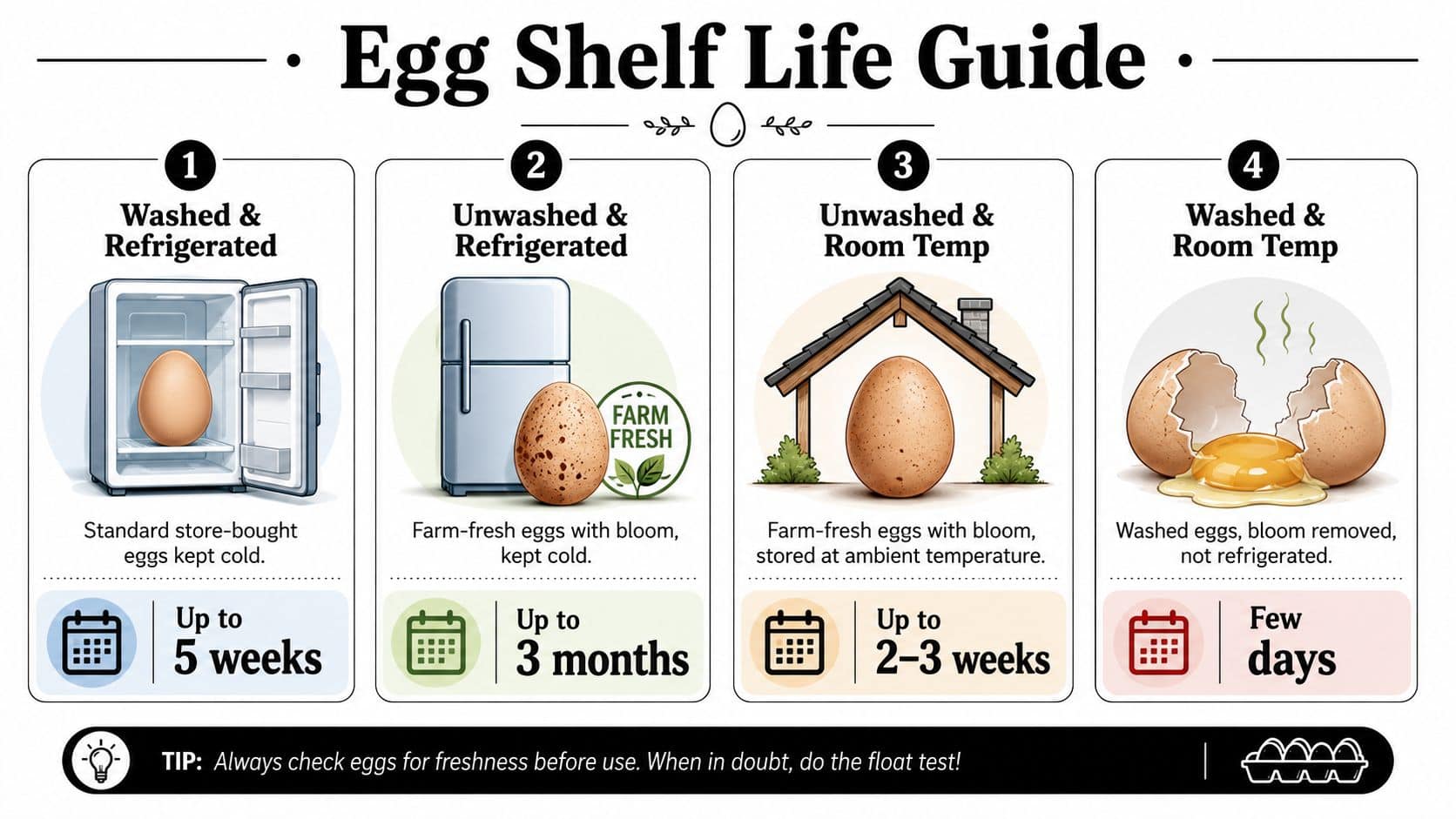
For washed U.S. store-bought eggs, the difference between room temperature and refrigeration is substantial. When kept unrefrigerated at room temperature, they last about 7 to 10 days, compared with about 30 to 45 days when properly refrigerated, because washing removes the protective cuticle (room-temperature vs refrigerated shelf life for washed eggs).
For unwashed eggs, the timeline shifts. Unrefrigerated, unwashed eggs from backyard chickens or farmers' markets typically stay good for about 2 to 3 weeks if they're kept away from direct sunlight and heat. Refrigerated unwashed eggs can last from about 21 days to 15 weeks, roughly 3 to 5 months, when kept at a constant 40°F (Mill guidance on how long eggs last).
What changes the timeline
A date range is helpful, but your kitchen conditions still matter.
- Heat speeds decline: Eggs kept near a stove, sunny window, or warm room won't hold quality as well as eggs stored in a cool spot.
- Consistency matters: Eggs last longer when temperature stays steady instead of swinging up and down.
- Cold washed eggs are the most sensitive to being left out: Once chilled eggs warm up, the shell can collect condensation.
If you want a practical cheat sheet, think of it this way:
| Storage situation | Practical takeaway |
|---|---|
| Washed and refrigerated | Best choice for U.S. supermarket eggs |
| Washed and left out | Use caution, quality and safety drop much faster |
| Unwashed and room temp | Often fine for a couple of weeks in good conditions |
| Unwashed and refrigerated | Usually the longest-lasting option |
The reason people argue about egg storage is that they’re often talking about different eggs without realizing it.
How to Spot a Spoiled Egg
Even when you’ve stored eggs carefully, it helps to know what spoilage looks like. A bad egg usually gives clear warnings.
What to notice before cracking
Start with the shell. If an egg is cracked, sticky, or has anything odd on the surface, be cautious. For eggs that were previously refrigerated, time on the counter matters too. Refrigerated eggs shouldn’t be left at room temperature for more than 2 hours, or 1 hour if the temperature is above 90°F/32°C, because warming causes sweating on the shell that can help bacteria move inward (USDA egg storage guidance).
That same source notes that this warming and cooling cycle can reduce refrigerated shelf life by up to 50%. So even if an egg doesn’t smell bad yet, rough handling and temperature swings can shorten the usable window.
What a bad egg looks and smells like
Once you crack it open, your senses do a lot of the work.
Watch for these signs:
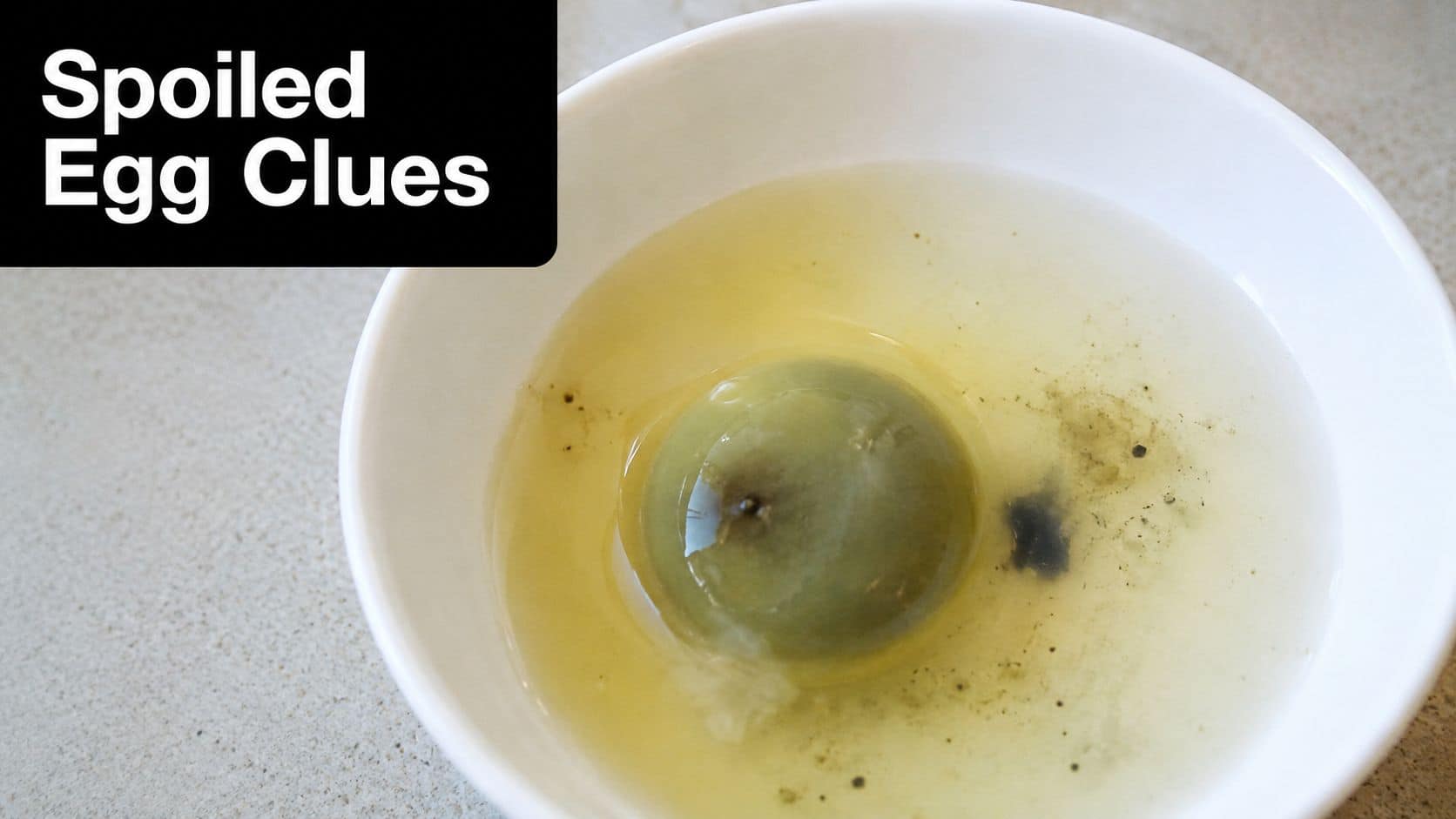
- Sulfur smell: A rotten, sulfuric odor means the egg is spoiled. Don’t taste it.
- Pink or iridescent whites: USDA information identifies pink or iridescent egg whites as a spoilage sign linked to Pseudomonas bacteria.
- Anything clearly off in color or texture: If the contents look strange enough to make you hesitate, trust that reaction.
When an egg seems questionable, crack it into a separate bowl instead of directly into batter, pancake mix, or a hot pan.
That habit saves the rest of your ingredients if the egg is bad. It also makes cleanup easier and helps prevent waste in the long run. If you like building better kitchen habits around leftovers and ingredients, the articles collected under food waste tips and kitchen organization ideas are useful for everyday cooking.
The Float Test and Other Freshness Checks
If you’d rather check an egg before opening it, the float test is the easiest tool you already have. It doesn’t require any gadget. Just a bowl and water.
How to do the float test
Here’s the method:
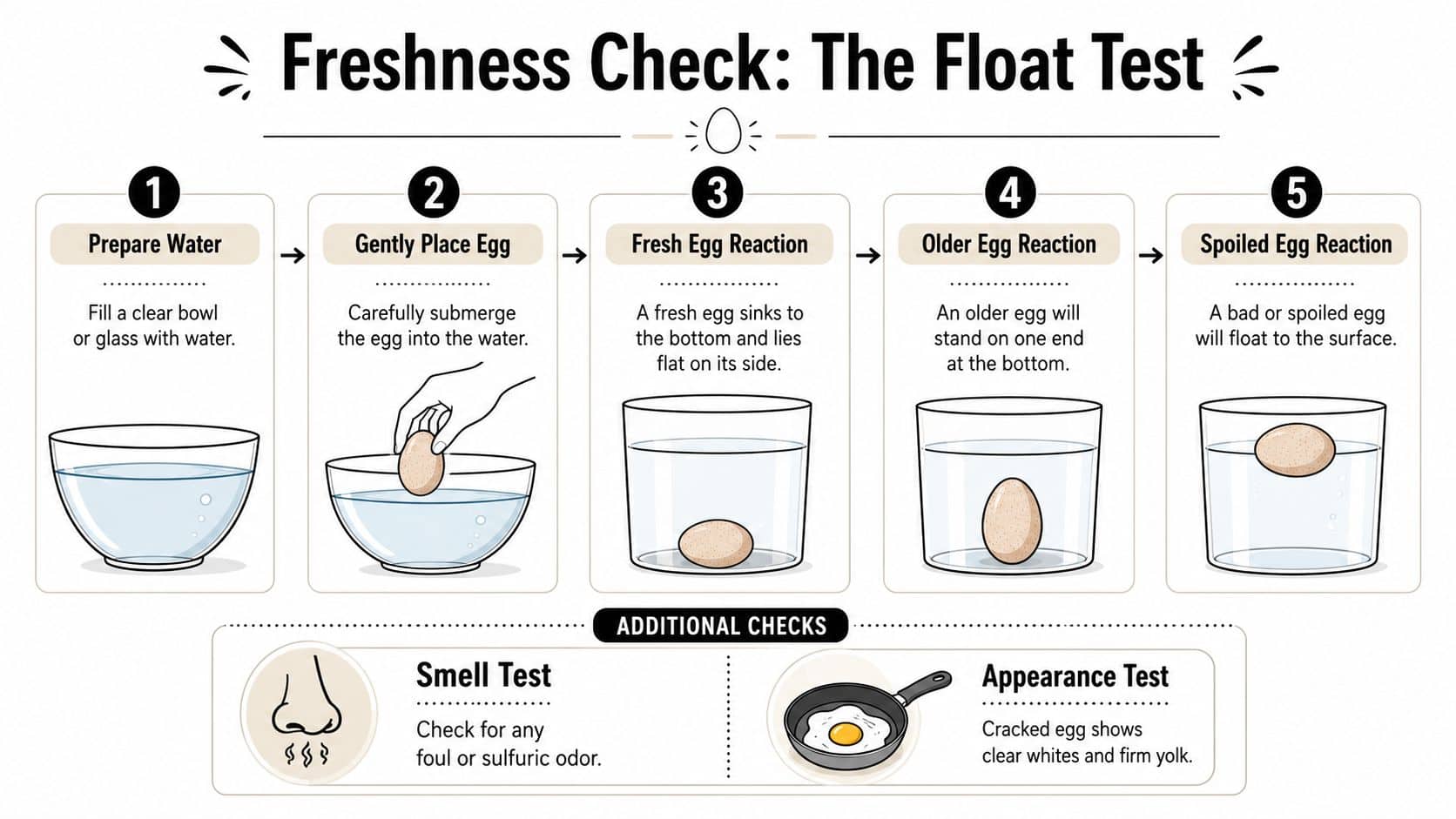
- Fill a bowl or glass with water.
- Gently lower in one egg.
- Watch how it settles.
The water test is a reliable, non-invasive freshness check. If the egg sinks and lies flat, it’s fresh. If it stands upright on the bottom, it’s still safe to eat but should be used soon. If it floats, it’s likely spoiled and should be discarded (egg float test guide).
A quick visual can make that easier to remember:
Other checks that help
The float test is useful, but it’s not the only check worth using.
- Crack into a separate bowl: This protects the rest of your ingredients if the egg is bad.
- Use your nose immediately: A foul smell after cracking is enough reason to toss it.
- Look at the structure: Fresh eggs tend to look tighter and more compact, while older eggs spread more. Older doesn’t always mean unsafe, but it does mean “use soon.”
A floating egg isn’t the moment to get optimistic. It’s the moment to discard it and move on.
This is one of those kitchen habits that gets easier the more you use it. After a while, you’ll stop second-guessing yourself.
Best Practices for Storing and Handling Eggs
Good egg storage doesn’t need to be complicated. A few steady habits do most of the work.
Simple rules for supermarket eggs
For store-bought eggs in the U.S., the key rule is timing. They must be refrigerated within 2 hours of being removed from refrigeration if the temperature is below 90°F, and within 1 hour if it’s above 90°F, because bacteria multiply quickly between 40°F and 140°F (FDA egg safety guidance).
Keep those eggs in their original carton on a main refrigerator shelf if you can. The door gets more temperature swings from opening and closing. A steady cold spot is better.
Smart habits that reduce waste
A few practical habits help you use eggs confidently instead of tossing them nervously.
- Know your egg type: Store washed supermarket eggs differently from unwashed farm eggs.
- Don’t wash unwashed eggs before storing: If the bloom is still there, leaving it intact helps protect the egg until you’re ready to use it.
- Test older eggs before baking: The float test and separate-bowl method are worth the extra few seconds.
- Cook thoroughly when in doubt: Proper cooking destroys harmful bacteria.
- Use a clear routine: If you want more detailed ways to maximize egg freshness, that guide gives a practical overview of handling habits.
If you regularly set eggs out for baking, it also helps to be intentional about timing. A quick guide to bringing eggs to room temperature for cooking and baking can help you do that safely.
The simplest answer to Do eggs go bad if not refrigerated? is yes, they can. But once you separate washed eggs from unwashed eggs, the rules stop feeling random and start feeling manageable.
If you want a simpler way to keep recipes, meal plans, and grocery lists organized around what’s in your kitchen, OrganizEat gives your recipes a tidy digital home. You can save recipes from social media and websites, plan meals, build shopping lists, and keep family favorites easy to find when it’s time to cook.