


You start dinner, reach for salt, and find five choices staring back at you. One is right for pasta water, one is better for a roast, one should only hit the food at the table, and one has been sitting in the pantry long enough that you barely remember why you bought it. That's a normal home kitchen now. The problem is not owning different salts. The problem is using them interchangeably and then wondering why the same recipe tastes different the next time.
Salt changes food in more than one way. Crystal size affects how much fits in a teaspoon. Texture affects how it clings to meat, dissolves in dough, or finishes a salad. Flavor can stay clean and direct, or bring minerality, smoke, or crunch. Those differences matter in actual cooking, especially if you follow your own notes later and expect the same result.
Consistency starts with two habits. Choose salt by job, not by color or marketing. Then record the exact salt in your recipe collection, along with whether the amount was measured by volume, weight, or a pinch by hand.
That second part saves a lot of frustration. A note like “1 tsp salt” is vague. “1 tsp Diamond Crystal kosher salt for the chicken, flaky sea salt to finish” is useful. If you store recipes digitally, tag salts the same way you tag cooking methods or prep time. Keep a short note for substitutions too, especially when switching between fine and coarse salts.
This guide covers ten salt varieties with that practical lens. The goal is better seasoning, smarter buying, and a pantry that makes sense when you cook from your own recipe archive.
Table of Contents
- 1. Sea Salt
- 2. Kosher Salt
- 3. Himalayan Pink Salt
- 4. Fleur de Sel
- 5. Black Hawaiian Salt
- 6. Maldon Sea Salt
- 7. Smoked Salt
- 8. Sel Gris Grey Salt
- 9. Pickling Salt
- 10. Chardonnay Salt
- Comparison of 10 Salt Varieties
- Stocking Your Pantry for Flavor
1. Sea Salt
Sea salt is the salt I'd call the easiest bridge between everyday cooking and better finishing. It's versatile, widely available, and sold in textures that range from very fine to pleasantly flaky. That range is exactly why it can either make cooking easier or create confusion if you don't label it clearly in your recipe notes.
Why it works in most kitchens
Sea salt usually earns space in a home kitchen because it can do two jobs. Fine sea salt dissolves cleanly into soups, sauces, vinaigrettes, and doughs. Coarser sea salts work better for roasting, crusting, and finishing when you want a little texture left on the food.
The practical catch is measurement. Healthline notes that kosher salt shouldn't be swapped in a 1 to 1 ratio, and that sea salt, flake salt, and pickling salt vary in crystal size and sodium content by volume, which is why many recipe problems come from measurement rather than ingredient quality (Healthline on salt substitutions).
Practical rule: If a recipe matters, record the salt by weight or by brand and texture, not just “sea salt.”
A few ways to organize sea salt so it stays useful instead of turning into pantry clutter:
- Label by texture: Write “fine sea salt” or “coarse sea salt” on the jar, not just “sea salt.”
- Tag by use: Save recipes under categories like “Everyday Essentials” or “Roasting” so you know which sea salt worked where.
- Keep it dry: Store it in an airtight container away from steam. Sea salt can clump if it lives beside the stove.
Mediterranean sea salts, Atlantic sea salts, and Celtic-style sea salts all have their place. For most home cooks, the smart move is simple. Keep one fine sea salt for cooking and one flakier sea salt for finishing.
2. Kosher Salt
Dinner goes sideways fast when the chicken gets the right amount of salt in the pan, then turns bland because the recipe was written for one brand and you used another. Kosher salt solves part of that problem because it is easy to pinch, easy to spread evenly, and easy to control while cooking.
This is the salt I reach for during active cooking. It lands more predictably on food than fine salt, so seasoning builds in smaller steps. That matters with roast vegetables, pan sauces, scrambled eggs, burgers, and dry-brined chicken, where a heavy hand is hard to hide.
The detail that belongs in your recipe notes
“Kosher salt” is still not specific enough if you want repeatable results. Crystal size varies by brand, so one teaspoon can season very differently from another teaspoon. In practice, that means a recipe saved as “1 tsp kosher salt” is incomplete.
Write down the brand the first time a recipe works. “Diamond Crystal kosher salt” and “Morton kosher salt” are more useful notes than a generic label, especially if you cook from a mix of cookbooks, websites, and family recipes. If the dish also uses rich fats, keeping those details together helps with consistency, the same way it helps to understand how ghee and butter compare in everyday cooking.
If you regularly adapt recipes, an ingredient substitution finder for any recipe is useful for keeping those swaps in one place instead of scribbled in margins.
A simple way to organize kosher salt in a digital recipe collection:
- Record the brand: Add “Diamond Crystal” or “Morton” in the ingredient note, not just in your head.
- Tag by technique: Use tags like “dry brine,” “weeknight skillet,” or “roasting” so you can spot where kosher salt gives you the best control.
- Note how you measured: Pinch, teaspoon, or by weight. That one detail saves a lot of guesswork later.
- Flag sensitive recipes: Baking, curing, and brining recipes deserve extra detail because salt choice changes the outcome more noticeably.
Kosher salt earns its shelf space because it is practical. It is the easiest salt to use accurately by hand, and accuracy is what makes your food taste the same good way more than once.
3. Himalayan Pink Salt
You reach for pink salt when the dish is already good and you want the finish to look more deliberate. On a tomato salad, chocolate cookies, grilled lamb chops, or a cocktail rim, the color and crystal size can add something table salt cannot.
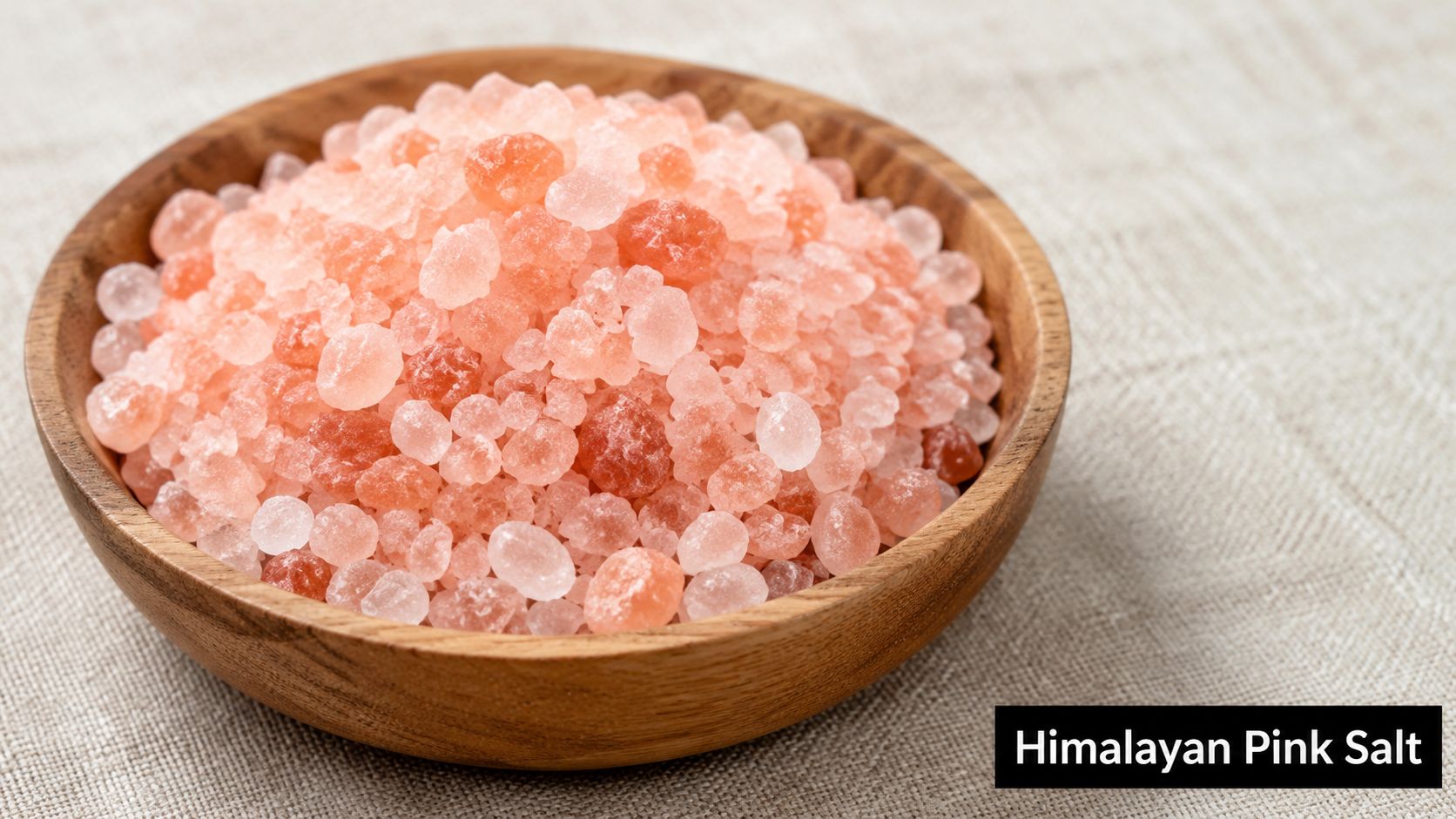
What it does well is straightforward. Fine-ground pink salt blends in easily for general seasoning. Coarse crystals give you crunch and visual contrast. Salt blocks are a separate tool and only worth buying if you plan to practice with them, because heating, cooling, and cleaning matter if you want them to last.
Pink salt is best treated as a style and texture choice. The trace minerals make for good marketing, but in everyday cooking the practical difference is how it looks, how it feels between your fingers, and whether the crystal size suits the dish.
That makes organization more useful than hype. In a digital recipe collection, pink salt deserves notes that answer real cooking questions: Did the coarse grind stay crunchy? Did the color show up once the food was plated? Did it dissolve too slowly in the marinade or dressing?
I'd track it like this:
- Label the grind size: Fine, coarse, or block. “Pink salt” alone is too vague to repeat a result.
- Tag recipes by role: Use tags like “finishing salt,” “cocktail rim,” “grill night,” or “holiday platter.”
- Save a quick plating note: Record whether the pink color added contrast or disappeared against the food.
- Note where it was wasted: Long braises, pasta water, and stock usually do not justify the higher price.
- Keep fat notes nearby: If the dish also relies on rich cooking fats, a reference like ghee vs. butter calories in everyday cooking can help you keep flavor and nutrition notes in one place.
If you buy one jar, buy it for finishing. If you buy a grinder, use it at the table where people can notice it. If you buy a block, store the care instructions inside the recipe card, not in the packaging you will throw away.
For a quick visual primer, this walkthrough is helpful before you buy the large crystals or a block:
4. Fleur de Sel
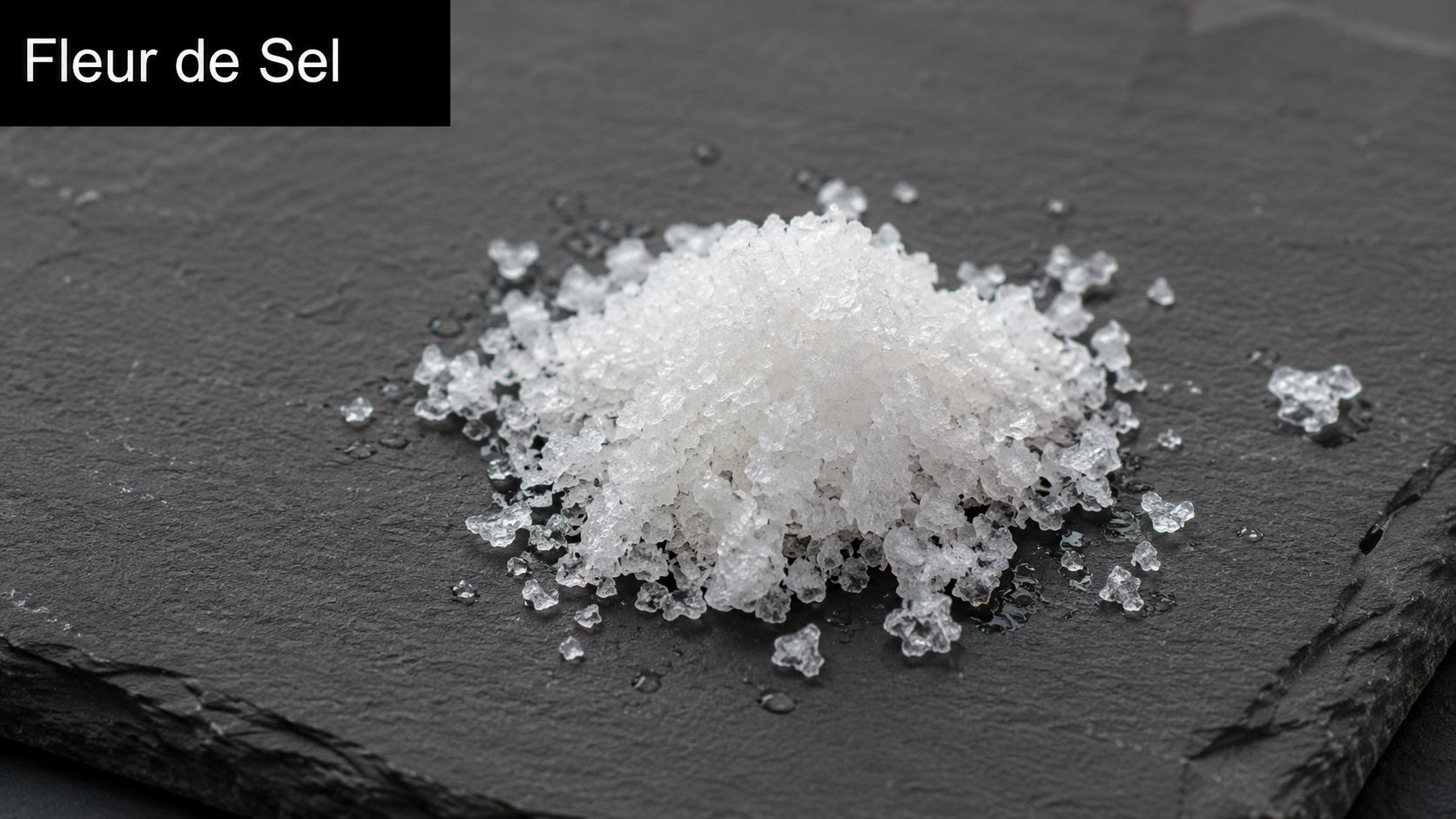
Fleur de sel is a finishing salt, not a workhorse. If you stir it into a simmering pot of soup, you lose what makes it special. Its appeal is delicate texture, clean crunch, and that last-second sparkle on food just before serving.
This is the salt I'd save for dishes that are already cooked and need a final edge. Think tomatoes, grilled fish, caramel, chocolate cookies, or a simple omelet. It's one of the few salts where restraint makes it feel more luxurious.
Where to spend and where not to
Spend on fleur de sel if you like finishing dishes at the table or plating for guests. Don't spend on it for pasta water, stock, or braises. The subtle texture disappears, and so does the point of paying for it.
Store it in an airtight container, but don't crush the crystals. Handle it gently. These salts are most useful when they stay intact enough to create contrast.
- Best on simple food: Eggs, fish, salad vegetables, shortbread, brownies.
- Not worth it in long cooking: Stews, beans, boiling water, marinades.
- Helpful to track: Save it under “Restaurant-Quality Finishes” so you remember where it improved the dish.
If you collect recipes from blogs, clipped screenshots, or magazine pages, fleur de sel is exactly the kind of ingredient note that gets lost unless you tag the dish with the finishing salt you used.
5. Black Hawaiian Salt
A plate of white fish or deviled eggs can look flat even when the seasoning is right. A small pinch of black Hawaiian salt fixes that fast. The dark crystals add contrast you can see from across the table, which is why this salt earns its place as a finishing ingredient for plated food, not as an everyday workhorse.
Its real value is visual. The flavor is still salty, with a mild earthy note from the activated charcoal, but the main reason to buy it is presentation. On dark food, heavily sauced food, or anything mixed before serving, that advantage disappears.
Best uses
Use black Hawaiian salt at the end, after the food is cooked and plated. A little goes a long way, and heavy-handed seasoning can make a dish look striking but eat too salty. I get the best results on foods with a pale surface and a clean shape, where the crystals stay visible instead of dissolving or getting buried.
Good places to use it:
- Seafood plates: Scallops, white fish, shrimp, and seared tuna.
- Appetizers: Deviled eggs, crostini, whipped ricotta, labneh, and fresh mozzarella.
- Vegetables: Cucumber slices, radishes, or roasted cauliflower.
- Cocktail rims: Best for savory drinks where the color adds to the look.
Black Hawaiian salt is also the kind of ingredient that gets lost in recipe notes unless you label it clearly. Add a tag such as “finishing salt,” “for contrast,” or “special occasion plating” in your digital recipe collection. That makes it easier to find the dishes where it mattered, and it keeps you from wasting it on recipes where regular kosher salt would do the same job for less money.
Buy it for presentation first. Use it where the plate can show it off.
6. Maldon Sea Salt
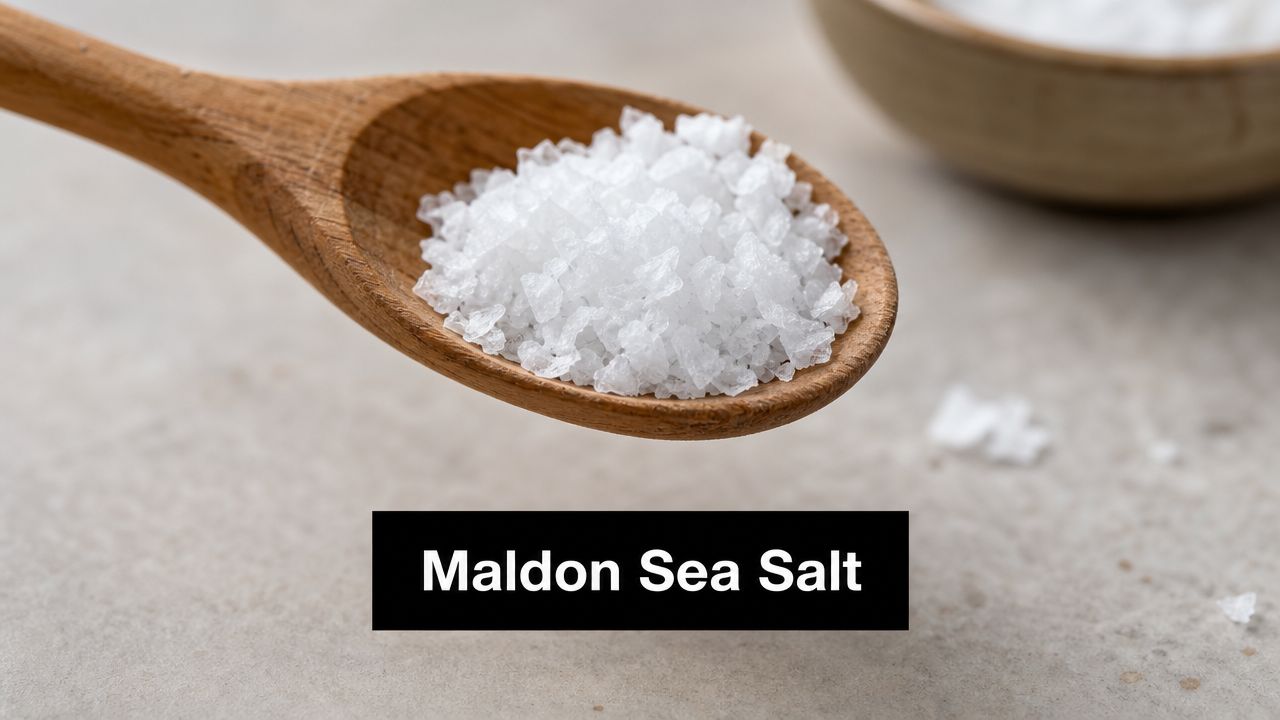
Some finishing salts feel interchangeable. Maldon doesn't. Its large, light flakes are easy to crush between your fingers and scatter evenly, which is exactly what you want when you're trying to finish a steak, tomato salad, or chocolate dessert without dropping hard pebbles of salt in one spot.
The flake structure also makes it easier to control than many coarse salts. You can see what you're adding. That matters when the final seasoning is visible.
Why cooks keep a box just for finishing
Maldon shines where texture matters. It's excellent on roast vegetables, grilled meat, avocado toast, cookies, and citrusy salads. It's less useful inside liquids, batters, or any long-cooked dish where the flakes dissolve before they can contribute texture.
A good way to think about it is as a topping ingredient. Treat it the way you treat chopped herbs, toasted nuts, or a finishing oil. It's there for the last layer.
- Store gently: Don't crush the box under heavier pantry items.
- Use at the end: Add it just before serving, not early in the cooking process.
- Create a “Finishing Touches” tag: That makes it easy to find dishes that justify opening the box.
Maldon isn't the only flaky sea salt worth using, but it's one of the most dependable. If you want one finishing salt in the pantry and don't want to overthink the category, this is a strong pick.
7. Smoked Salt
You taste the soup, the potatoes, or the grilled vegetables and something feels missing. You do not want more plain salt. You want the food to taste like it spent time over fire. Smoked salt is useful for exactly that job.
It works best as a finishing or near-finishing salt, not your default seasoning salt. The reason is simple. It adds salinity and smoke at the same time, so it gets strong fast. Keep pouring it on to chase saltiness and the dish can turn harsh, woody, or stale-tasting.
How to use it without overdoing it
Season the food first with kosher salt or sea salt, then add a small pinch of smoked salt at the end and taste again. That method gives you control. I use it this way on roasted potatoes, corn, chowders, grilled mushrooms, bean dishes, and burger patties. It can also work on caramel or dark chocolate desserts, but only in very small amounts.
The biggest trade-off is convenience versus precision. Smoked salt gives you grill-like character without a smoker, but it cannot replace good browning or actual char. If the dish lacks depth, smoked salt can support it. It cannot build the whole structure on its own.
For recipe organization, treat smoked salt like a flavor tool, not just another salt entry in your ingredient list. A few tags make it much easier to use well:
- Tag by cooking style: “BBQ,” “Grill Pan,” “Roasted Vegetables,” or “Campfire Flavors”
- Note the wood type: Hickory, applewood, and mesquite push recipes in different directions
- Add a finishing note: Write “add at the end” in the recipe so you do not oversalt early
- Link it to heat choices: If the recipe depends on hard searing, keep it with your notes on cooking oil with high smoke point so the method and flavor stay aligned
Smoked salt earns pantry space if you use it on purpose. Keep a small jar, use a light hand, and save it for recipes where smoke is part of the plan rather than a last-minute rescue.
8. Sel Gris Grey Salt
Sel gris is the salt to use when you want mineral character in the cooking itself, not just on top of the finished plate. It tends to be moist, slightly chunky, and more rustic than a refined fine salt. That texture makes it less elegant for a final sprinkle, but very useful in dishes where it dissolves.
I like it best for roasts, soups, bean dishes, braises, and brines. Those are places where a slightly damp salt doesn't get in the way and the full taste can spread through the dish.
Where its moisture helps
Moisture is part of the appeal here. Sel gris can cling well to meats and vegetables, which makes it handy in seasoning blends and early-stage salting. It also feels at home in French-style cooking where rustic ingredients do some of the work.
Store it airtight so it doesn't dry out completely. If it turns bone-dry and hard, it loses part of what makes it pleasant to handle.
Grey salt is usually better in the pot than on the plate.
For recipe organization, this is a salt worth tagging by cuisine. “French Cuisine,” “European Classics,” and “Brines” are more useful categories than filing it under “salt.” That helps you pull it out for the right recipes instead of forgetting it behind easier options.
Sel gris isn't as universal as kosher salt and not as flashy as fleur de sel. Its value is depth. If you cook a lot of savory food and like subtle ingredient variation, it earns its shelf space.
9. Pickling Salt
Pickling salt has a narrow job, which is exactly why it matters. It's the kind of pantry item that can look boring until the day you need clear brine and reliable preservation. Then it becomes the right tool instead of just another box of salt.
For canning, pickling, and some fermentation projects, this is the salt to keep separate from your finishing and everyday salts. It's built for function, not aesthetics.
The right salt for clear brines
If you're preserving cucumbers, onions, beans, or fruit, pickling salt helps keep the brine clean-looking and straightforward to work with. It isn't something I'd buy for table use. I'd buy it only if I pickle.
That makes organization especially important. Pickling recipes usually include more than ingredients. They also need jar sizes, processing notes, equipment reminders, and shopping details that ordinary dinner recipes don't.
- Build a “Preserves & Ferments” category: Keep those recipes out of the main dinner flow.
- Save equipment in the recipe card: Jars, lids, funnel, and labels matter as much as the spices.
- Tag shopping needs clearly: “Pickling salt required” helps avoid last-minute substitutions.
This is a good example of why a digital recipe collection should hold process notes, not just ingredients. If you pickle only seasonally, you won't remember every small step by memory next year.
10. Chardonnay Salt
Chardonnay salt belongs in the flavored-salt category. It's a finishing ingredient with a narrow but enjoyable purpose. Used well, it adds a subtle aromatic note that can complement seafood, chicken, corn, creamy pasta, or even a simple crostini with whipped cheese.
Used badly, it just tastes like expensive salt on food that didn't need help.
A niche salt that's best used narrowly
This isn't a base seasoning for everyday cooking. It's better as a final accent on dishes where delicate wine-like notes have room to register. Mild foods do that best. Heavy stews, aggressive spice blends, and long braises won't.
Because flavored salts are easy to forget, organization matters even more here than with a staple salt. Save Chardonnay salt recipes under “Wine & Dine,” “Date Night,” or “Gourmet Entertaining,” and attach a plated photo if the finish is part of the appeal.
A few strong candidates:
- Seafood: Scallops, shrimp, white fish.
- Vegetables: Corn, asparagus, roasted potatoes.
- Creamy dishes: Risotto, pasta with butter or cream, whipped ricotta toast.
Chardonnay salt won't become your most-used salt. It doesn't need to. It just needs a few memorable jobs so you use the jar instead of rediscovering it two years later.
Comparison of 10 Salt Varieties
| Salt | Complexity 🔄 | Resources ⚡ | Expected Outcomes 📊 | Ideal Use Cases & Tips 💡 | Key Advantages ⭐ |
|---|---|---|---|---|---|
| Sea Salt | Low, versatile and easy to use | Budget-friendly; widely available | Balanced seasoning with subtle mineral notes | Everyday cooking, baking, finishing; store airtight, use coarse for crusts | Versatile, quick-dissolving, mineral-containing |
| Kosher Salt | Low, pinchable but adjust for density | Mid-range; common in pro kitchens | Precise, even seasoning control | Seasoning meats, brining, hand-salting; note Diamond Crystal vs Morton when measuring | Large crystals for control; no additives |
| Himalayan Pink Salt | Low, mainly finishing and presentation | Premium; specialty retailers | Visual appeal with mild mineral flavor | Finishing, salt blocks, decorative use; fine grind for baking, handle blocks carefully | Distinctive color and mineral complexity |
| Fleur de Sel | Moderate, delicate harvesting, finishing only | Luxury; limited seasonal supply | Subtle, nuanced finish that elevates dishes | High-end plating, desserts; store airtight to retain moisture, use sparingly | Artisanal texture and complex, refined flavor |
| Black Hawaiian Salt (Alaea) | Low, decorative finishing, use sparingly | Premium specialty; limited sources | Dramatic visual contrast and earthy mineral notes | Garnish, seafood, cocktail rims; store in dark containers to preserve color | Striking appearance, cultural authenticity |
| Maldon Sea Salt | Low, gentle handling to preserve flakes | Premium; widely respected and available | Melt-in-mouth finish with clean briny taste | Finishing for savory and sweet; finish just before serving, handle gently | Delicate pyramidal flakes and superior texture |
| Smoked Salt | Low–Moderate, intense flavor control required | Mid–premium; various wood varieties available | Adds smoky depth and barbecue-like complexity | Grilled meats, roasted vegetables, snacks; start small and adjust | Powerful flavor enhancement with minimal effort |
| Sel Gris (Grey Salt) | Moderate, damp, coarse, needs storage care | Premium; specialty sourcing | Robust, intensely mineral-forward flavor | Salting pasta water, brines, hearty dishes; keep moisture stable, best used in cooking | Highest mineral content and deep savory profile |
| Pickling Salt | Low, straightforward but essential for canning | Budget-friendly; widely available | Clear brines and reliable preservation | Pickling, fermentation, home canning; avoid additives that cloud brines | No additives, consistent for safe preservation |
| Chardonnay Salt | Low, specialty finishing, pairing-sensitive | Premium specialty; limited availability | Subtle wine aromatics and refined novelty | Wine-paired menus, desserts, fine dining; store away from light to preserve aroma | Unique wine-infused flavor for elegant finishes |
Stocking Your Pantry for Flavor
You season a pot of soup, taste it, and it lands exactly where you want it. A week later, you make the same recipe, use a different salt from the pantry, and the balance is off. That kind of inconsistency usually comes from having too many overlapping salts and too few notes.
A useful salt pantry is small and deliberate. Keep one salt for daily cooking, one for finishing, and one or two specialty salts you reach for on purpose. That setup covers nearly everything without turning the cabinet into a collection of half-used jars.
Your everyday salt does the heavy lifting, so choose one you can use consistently. Kosher salt works well for many home cooks because it is easy to pinch and scatter evenly. Fine sea salt is a strong choice if you bake often, make pan sauces, or prefer spoon measurements that stay closer from recipe to recipe. The key is sticking with one primary salt long enough to learn its feel, volume, and strength in your own cooking.
Sodium still counts the same way across these varieties, as noted earlier. Pink, flaky, smoked, and grey salts bring different texture and flavor, but they do not solve over-salting. The practical takeaway is simple. Use specialty salts for a specific result, not because they seem healthier.
A pantry that stays useful usually looks like this:
- One everyday salt: Kosher salt or fine sea salt for most cooking
- One finishing salt: Maldon or fleur de sel for texture right before serving
- One specialty salt: Smoked salt, black Hawaiian salt, sel gris, or pickling salt based on what you cook
What makes that setup pay off is documentation.
If a roast chicken turns out best with Diamond Crystal kosher salt, note that in the recipe. If your chocolate cookies are better with a light pinch of Maldon on top, save that detail. If a pickle brine stays clear only with pickling salt, record it once so you do not have to relearn it next season. A digital recipe collection becomes vital, as salt choice affects both flavor and repeatability.
Organize recipes by function, not just by dish name. Tag recipes with labels like "everyday salt," "finishing salt," "brine," or "baking." Add a quick note when you make a substitution, especially if you switch crystal size or brand. Photos help too. A finished tomato salad with visible flakes needs a different salt choice than a smooth soup or custard.
Shopping gets easier when your notes are clear. You stop buying novelty salts that sounded interesting once and start replacing the few jars that improve dinner. That saves money, reduces clutter, and makes your results more consistent.
OrganizEat gives your recipes a practical home, especially when you're tracking ingredient details like which salt worked best in a roast, brine, or finishing sprinkle. Save recipes from social media and websites, snap photos of cookbook pages or handwritten notes, tag dishes by salt type or cooking style, and keep your grocery list synced across devices. If you want your pantry choices to lead to more consistent cooking instead of more clutter, OrganizEat makes that easy.