


You're in the store, looking at a block of butter and a jar of ghee, and the question sounds simpler than it is. They both come from milk fat. They both promise richness. They both can make dinner better.
But they don't behave the same way once they hit a hot pan, a sheet tray, or a mixing bowl.
That's where most quick explainers fall short. They stop at “ghee has a higher smoke point” and leave out the part that matters in a real kitchen: how each one tastes, what texture it gives, where it fails, and when one is clearly the better tool. A pan sauce, a fried egg, a batch of cookies, and a tray of roasted vegetables all ask for slightly different things.
If you cook often, butter and ghee aren't interchangeable in every situation. Sometimes butter's milk solids are exactly what you want. Sometimes those same solids are what ruin the pan. The useful question isn't which one is “better” in the abstract. It's which one fits the dish in front of you.
Table of Contents
- Introduction
- What Is the Fundamental Difference Between Butter and Ghee
- Nutrition and Dietary Considerations
- Cooking Performance and Smoke Point
- Flavor Texture and Ideal Culinary Uses
- How to Make Buy and Store Ghee
- Butter vs Ghee Which One Should You Use
Introduction
The impulse to compare butter vs ghee often stems from trying to solve a practical problem. Maybe butter keeps burning before the vegetables are done. Maybe you want better flavor on toast but cleaner performance in a skillet. Maybe you've heard ghee is “healthier” and want to know whether that really changes what belongs in your kitchen.
Both are dairy-derived fats, but they serve different jobs. Butter brings creaminess, softness, and the familiar flavor many dishes are built around. Ghee brings concentration, nuttiness, and much better tolerance for high heat. That sounds straightforward until you start baking, frying, finishing sauces, or trying to swap one for the other in a recipe that was written with a specific fat in mind.
The useful way to think about it is simple. Butter is a fuller, less refined ingredient. Ghee is butter with most of the water and milk solids removed. That one change affects flavor, texture, pan behavior, and who can comfortably eat it.
Kitchen reality: A good fat choice doesn't just prevent burning. It changes the finished dish.
What Is the Fundamental Difference Between Butter and Ghee
Here's the quick version first.
| Attribute | Butter | Ghee |
|---|---|---|
| Basic makeup | Butterfat plus water and milk solids | Mostly pure butterfat after clarification |
| Texture at room temperature | Soft, creamy, spreadable | Usually semi-solid or pourable depending on temperature |
| Flavor | Creamy, sweet, milky | Richer, nuttier, more toasted |
| Heat tolerance | Lower | Higher |
| Lactose and casein | Present in trace amounts | Virtually no lactose and very little casein |
| Best uses | Baking, spreading, finishing, gentle sautéing | Searing, sautéing, frying, roasting, spice blooming |
How ghee is made
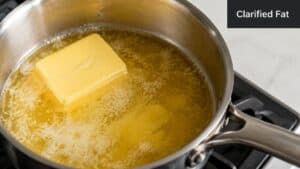
Ghee starts as butter. You heat butter gently until the water cooks off and the milk solids separate from the fat. Those solids are then removed, leaving behind clarified butterfat.
That's why people often call ghee a clarified butter product. It has a long history in South Asian cooking, where cooks have used it not just for flavor but for its practicality in the kitchen. A nutrition overview from Healthline's guide to ghee describes ghee as a traditional clarified-butter product, notes its long use in South Asian cooking, and explains that it contains virtually no lactose and very little casein.
That clarification step is the whole story. Once the water and most milk solids are gone, the fat behaves differently.
Why that process changes everything
Butter contains parts that are delicious but fragile. The milk solids help butter brown beautifully and give it that rounded dairy flavor. They also scorch faster.
Ghee strips out most of what burns first. That makes it cleaner in the pan and more stable for aggressive cooking. It also changes the taste. Good ghee doesn't taste neutral. It tastes deeper and slightly toasted.
A few practical differences follow from that:
- For pan heat: Ghee handles stronger heat better because it doesn't carry the same load of milk solids.
- For texture: Butter feels creamier because it still contains nonfat components and water.
- For dairy sensitivity: Ghee is often the easier option because it contains virtually no lactose and very little casein.
- For flavor direction: Butter tastes fresher and milkier. Ghee tastes more concentrated and nutty.
If a recipe depends on butter's softness, moisture, or dairy solids, ghee won't produce the same result. If a recipe depends on clean high-heat fat, butter is usually the one that struggles.
Butter vs ghee in plain kitchen terms
When people ask for the “real” difference, this is usually what they mean.
Butter is what I reach for when I want tenderness, classic butter flavor, or a glossy finish on food that isn't being pushed hard over heat. Ghee is what I use when I want control in the pan and don't want to babysit the fat every second.
That doesn't make ghee automatically superior. It makes it more specialized. In butter vs ghee, the better choice depends on whether the dish needs creaminess and browning from milk solids, or pure fat performance with a toastier flavor.
Nutrition and Dietary Considerations
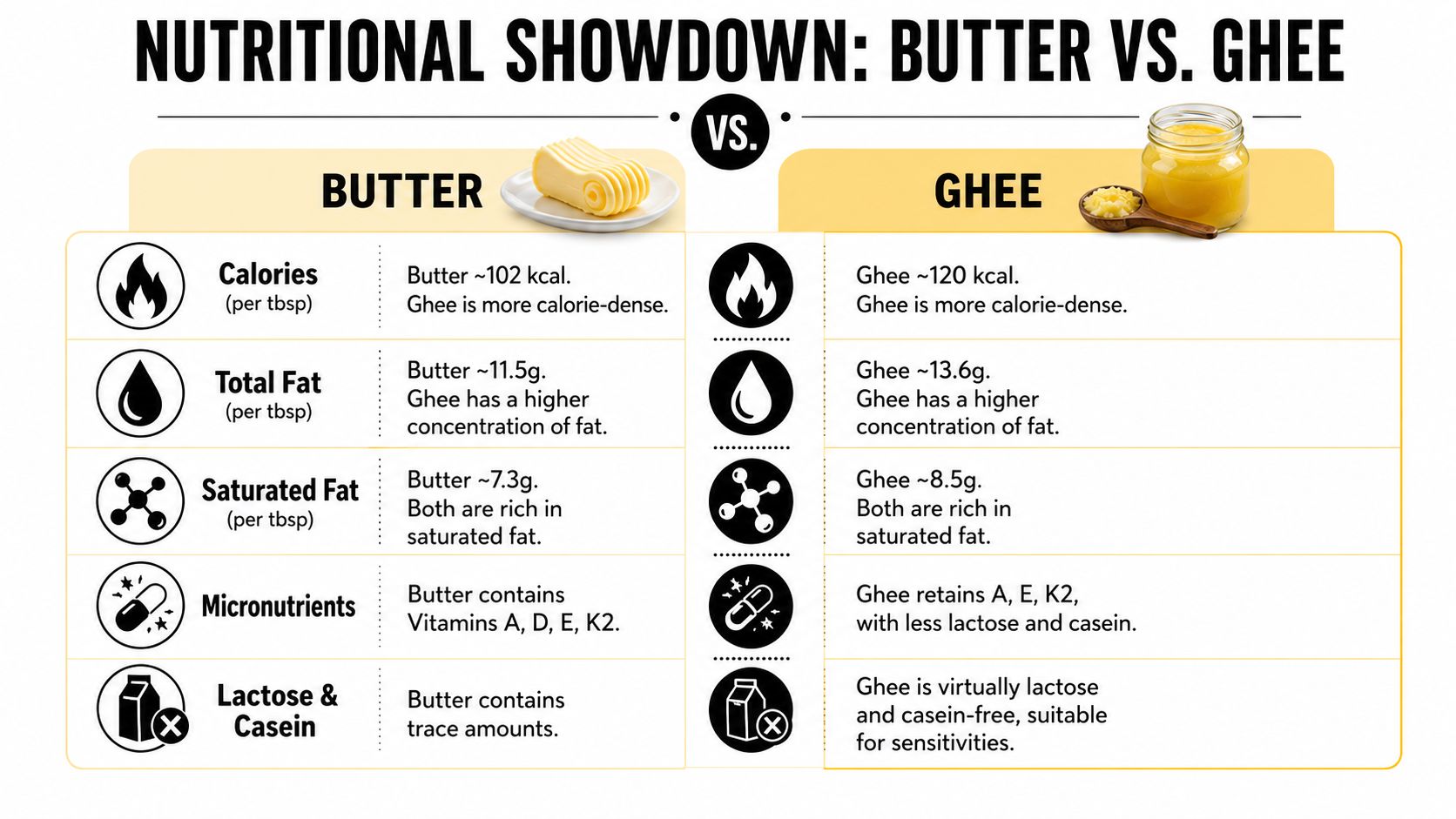
The health conversation around butter vs ghee gets noisy fast. The cleanest way to look at it is this: they're nutritionally close, but ghee is more concentrated.
According to Health.com's comparison of butter and ghee, ghee is 99.3% fat while butter is about 80% fat. The same comparison lists 123 calories per tablespoon for ghee and 102 calories per tablespoon for butter, and notes that a tablespoon of ghee provides 13% of daily vitamin A needs versus 10% for butter.
Why ghee has more calories per spoonful
This part is simple. Butter still contains water and milk solids. Ghee doesn't contain much of either. So when you measure by the tablespoon, ghee packs in more actual fat.
That matters if you cook by habit rather than by intention. A casual spoonful of ghee delivers more concentrated richness than the same spoonful of butter. Sometimes that's useful. Sometimes it means the dish gets heavier faster than you expected.
For a closer practical breakdown of serving differences, this calories in ghee vs butter guide is a helpful companion when you're adjusting portions in everyday cooking.
What this means for everyday eating
Neither one is a free-pass health food. They're both rich fats. Ghee doesn't become automatically better just because it's more processed and more heat-stable.
What it does offer is a different nutritional shape:
- More concentrated fat: You get more fat and calories in the same volume.
- Slightly more vitamin A per tablespoon: Useful, but not a reason by itself to choose it.
- Less lactose and casein: This is often the most meaningful dietary difference in real life.
If you're choosing based on nutrition alone, portion size matters more than hype. A small amount of either can fit into a balanced diet. A heavy hand with either can make a dish much richer than intended.
The dairy sensitivity question
A key advantage of ghee is its low lactose and casein content. Since the clarification process removes most milk solids, ghee contains virtually no lactose and very little casein. For people who tolerate butter poorly but still want a dairy-derived cooking fat, ghee is often the more workable option.
That doesn't mean everyone with a dairy issue will respond the same way. It means ghee is often the better candidate to test carefully if butter causes trouble.
Choose ghee for sensitivity reasons because of what was removed from it, not because it was marketed as a wellness upgrade.
What nutrition doesn't tell you
A nutrition panel won't tell you whether your roast potatoes crisp better, whether your eggs taste rounder, or whether your sauce breaks. That's why nutrition matters, but only as one part of the choice.
In practice, I treat butter as the ingredient for dishes where flavor and texture are the point, and ghee as the ingredient for dishes where concentration and cooking performance matter just as much as flavor.
Cooking Performance and Smoke Point
If you care most about what happens in the pan, this is the section that decides butter vs ghee for you.
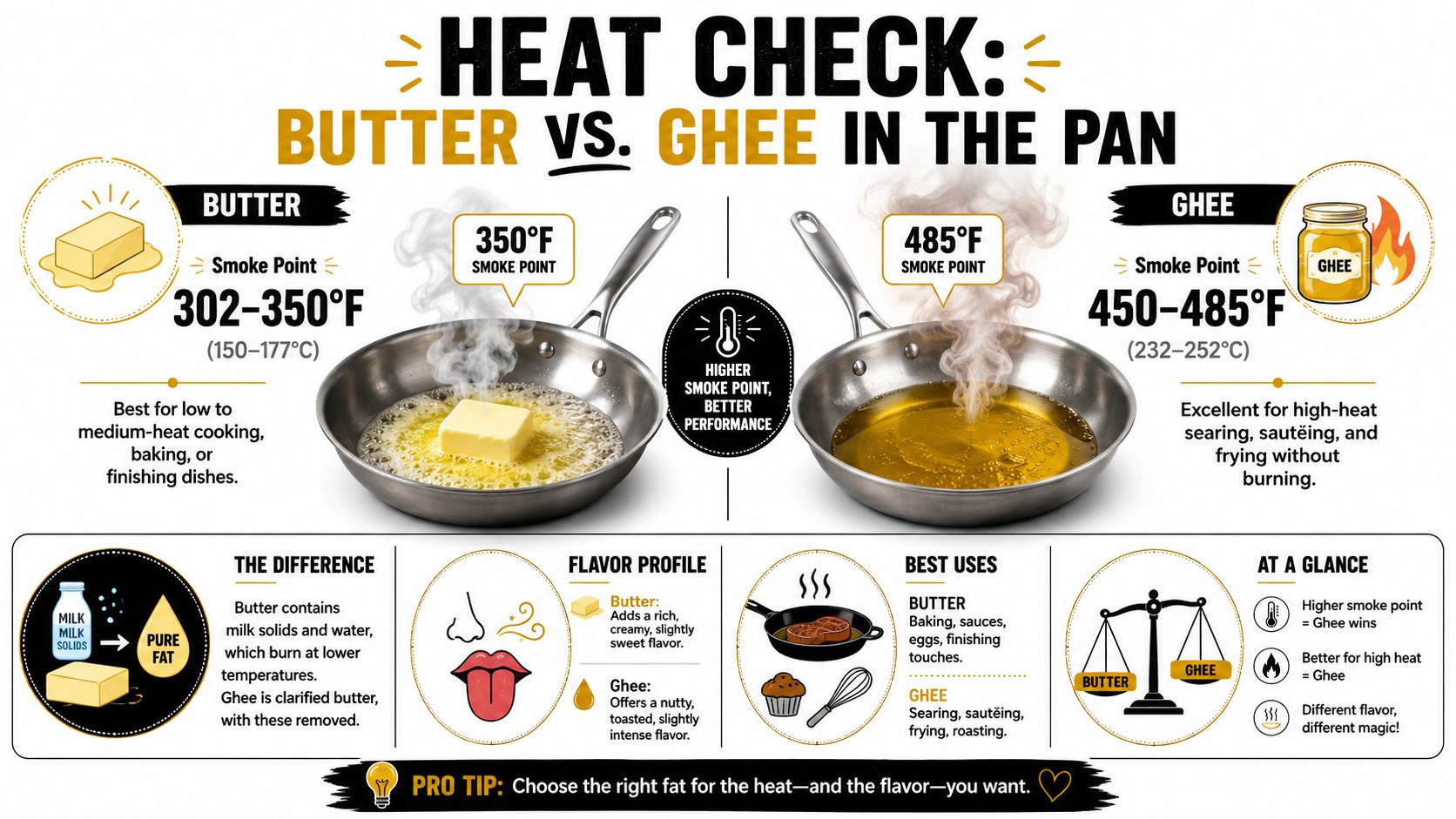
A cooking comparison from Organic Valley's butter, margarine, and ghee article puts butter's smoke point at about 350°F (177°C) and ghee's at about 485°F (252°C). That's a 135°F gap. In the kitchen, that's not a small technical distinction. It changes what you can cook without scorching the fat.
What that temperature gap means in real cooking
Butter starts tasting bitter when the milk solids go too far. You'll smell it before long. The pan goes from nutty and pleasant to dark and harsh very quickly.
Ghee gives you more room. You can preheat the pan with less anxiety, move food around longer, and finish cooking before the fat crosses into burnt flavor. If you regularly cook in stainless steel or cast iron, this difference is especially noticeable.
For cooks comparing fats for searing and frying, this guide to cooking oil with high smoke point helps put ghee in the broader context of heat-stable kitchen fats.
Where ghee clearly works better
Use ghee when the pan needs to stay hot and steady.
- For sautéing vegetables: Ghee lets you cook longer before the fat darkens too much.
- For frying eggs with crisp edges: You get rich flavor without butter's quick burn risk.
- For searing meat or fish: Ghee tolerates the initial blast of heat more comfortably.
- For blooming spices: It carries aromatics well and doesn't get in the way with scorched dairy notes.
Where butter still wins
Butter shines when its milk solids are an asset, not a liability.
A few examples:
- Gentle scrambled eggs.
- Pan sauces finished off heat.
- Toast, pancakes, waffles, and warm bread.
- Cookies, cakes, pie dough, and pastries where butter flavor is part of the identity.
Butter is excellent at lower heat and terrible at pretending to be a high-heat frying fat.
This quick video gives a useful visual sense of how these fats differ in practice.
The biggest substitution mistake
People often swap butter for ghee one-for-one and expect identical results. In a skillet, that can work well. In baking or sauce work, it often changes more than expected.
Butter contributes moisture and milk solids. Ghee contributes mostly fat. If you're roasting carrots or pan-frying chicken, that swap is usually straightforward. If you're baking shortbread or building a beurre blanc style sauce, it's not.
When I'm testing recipes, I think of butter as a flavor-and-structure ingredient, and ghee as a flavor-and-performance ingredient. That distinction saves a lot of disappointment.
Flavor Texture and Ideal Culinary Uses
The easiest way to choose between butter and ghee is to stop thinking in labels and start thinking in dishes.
Butter tastes round, creamy, and familiar. It softens sharp edges in food. It makes mashed potatoes feel lush, gives cookies their classic aroma, and turns a piece of toast into something that feels finished. Its texture also matters. Butter melts with a softer, more cushioned richness because it isn't just pure fat.
Ghee tastes more focused. The best jars have a nutty, lightly toasted aroma and a cleaner finish. It still reads as dairy fat, but in a more concentrated way. You notice it immediately in rice, roasted vegetables, fried eggs, and lentils.
Dishes that want butter
Butter is usually the right answer when you want comfort, softness, or classic pastry flavor.
A few places where butter earns its keep:
- On bread and breakfast food: Ghee can be delicious on toast, but butter delivers the desired softer melt.
- In baking: Cookies, cakes, biscuits, pie dough, and buttercream rely on butter's flavor and physical behavior.
- In finishing sauces: A knob of cold butter whisked into a pan sauce adds body and gloss in a way ghee doesn't quite replicate.
- With mild foods: Butter flatters delicate ingredients such as sweet corn, peas, potatoes, and simple pasta.
Dishes that want ghee
Ghee works best when you want both flavor and sturdiness.
Think about:
- Roasted vegetables: Ghee coats well and adds a toasted note that works especially well with carrots, cauliflower, squash, and potatoes.
- Rice and grain dishes: A spoonful of ghee gives lift and aroma without making the dish feel watery.
- Spice-driven cooking: For blooming cumin, mustard seeds, garlic, ginger, or chilies, ghee feels at home.
- Skillet cooking: It handles repetitive weekday cooking better when the burner tends to run hot.
Some dishes don't want “better.” They want “more specific.” Butter gives creamy richness. Ghee gives concentrated richness.
What doesn't work well
There are a few common disappointments.
Using ghee in a butter-forward cookie usually produces a different texture and a less familiar flavor. Some people like that. It isn't the same cookie. Using butter for a hot stir-fry or aggressive sear often leads to scorched solids before the food is properly cooked.
One more useful distinction: butter supports subtlety. Ghee brings character faster. In a delicate lemon sauce or a lightly sweet cake, ghee can feel too assertive. In roasted vegetables, dal, or a fried egg with crispy edges, that assertiveness is often exactly right.
A simple flavor test
If you're unsure, try this at home with one ingredient.
Cook two batches of potatoes. Roast one with butter added late, and roast one with ghee from the start. The butter batch will taste softer and milkier. The ghee batch will taste deeper and more savory. Neither is wrong, but the difference becomes obvious fast.
That's the core butter vs ghee question. Not which one is superior, but which version of richness the dish needs.
How to Make Buy and Store Ghee
Making ghee at home is straightforward. You don't need special equipment, just patience and a pan that lets you see what's happening.
How to make ghee from butter
Start with unsalted butter if you want the cleanest result.
- Melt it gently: Put the butter in a small heavy pan over low heat.
- Let it separate: The butter will foam as water cooks off.
- Watch the solids: Milk solids will settle and start to turn golden.
- Stop before bitterness: Once the fat looks clear and smells nutty, take it off the heat.
- Strain it: Pour through a fine strainer or cheesecloth into a clean jar.
The key is restraint. If the solids go too dark, the batch can taste bitter instead of pleasantly toasted.
How to buy a good jar
If you'd rather buy it, read the label like a cook, not like a marketer.
Look for:
- Short ingredient list: Ideally, it should be ghee or clarified butter, nothing else.
- Flavor fit: Some brands taste mild, others with a prominent toasted flavor. Pick based on how you cook.
- Packaging that protects freshness: A tightly sealed jar matters more than fancy copy on the label.
Skip products with distracting add-ins unless you specifically want them. Plain ghee is more versatile.
How to store butter and ghee
Butter needs colder storage and more protection from odors. Ghee is easier to keep because the water and most milk solids are gone.
Good habits matter more than fancy containers:
- Use a clean spoon: Don't introduce crumbs or moisture into the jar.
- Keep lids tight: Oxygen and kitchen odors dull flavor over time.
- Store in practical containers: If you're moving homemade ghee into another vessel, these plastic vs stainless steel food storage key differences are worth considering before you choose a container for long-term use.
A workable home routine
I like keeping one butter option and one high-heat fat on hand. For many cooks, that means butter in the refrigerator and a jar of ghee in the pantry or another cool spot your kitchen setup supports.
If you make your own ghee regularly, save the method in one place where it won't get lost. A recipe app such as OrganizEat can store handwritten notes, imported recipes, and quick adjustments like “strain earlier for a milder batch” or “use for roasted potatoes, not cookies.” That's useful when your kitchen habits are split between family recipes, screenshots, and bookmarked links.
Butter vs Ghee Which One Should You Use
If you want the shortest answer, use butter for classic flavor and texture, and use ghee for heat and control.
A broader health take from GoodRx's comparison of ghee and butter notes that ghee is about 99.5% fat and has about 123 calories per tablespoon versus 102 for butter, that both are high in saturated fat, and that a comparative analysis found transfatty acids in butter and ghee at 2.43 ± 0.09 and 3.60 ± 0.29, respectively. That's a useful reminder that neither one deserves a health halo.
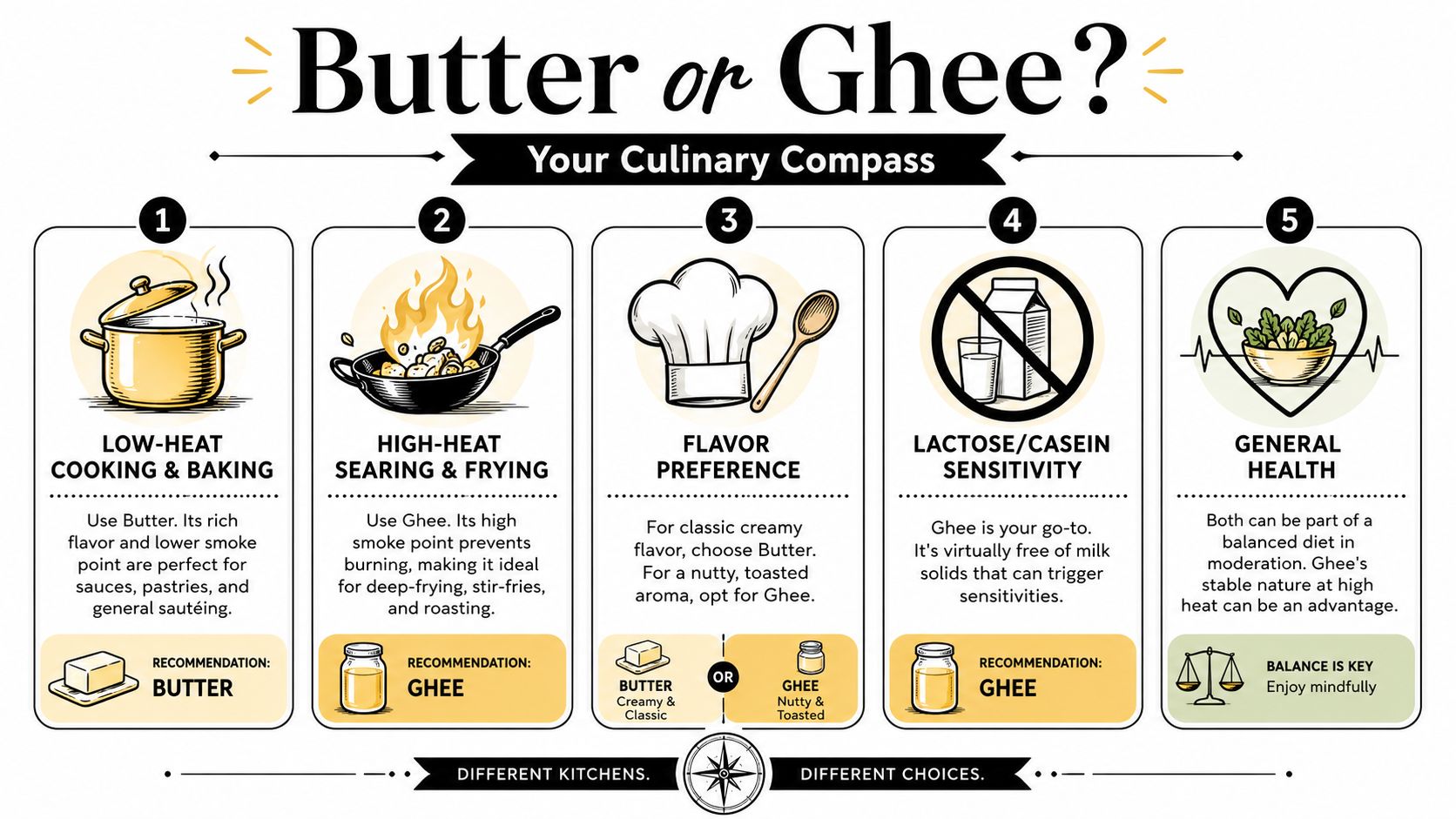
Here's the decision framework I'd use in a home kitchen:
- Choose butter when you're baking, spreading, finishing sauces, or cooking something delicate where creamy flavor matters more than heat tolerance.
- Choose ghee when you're searing, frying, roasting, or cooking in a pan that runs hot and tends to scorch butter.
- Choose ghee when dairy sensitivity matters because it contains virtually no lactose and very little casein, as covered earlier.
- Choose based on flavor if the technique allows either one. Butter tastes soft and familiar. Ghee tastes nuttier and more concentrated.
If you keep butter in quantity, storage matters too. This practical resource from Everblog, Everblog's butter freezing guide, is useful when you buy extra and want to avoid waste.
The best home cooks usually don't pick a side. They keep both and use them with intention. That's the definitive answer to butter vs ghee.
If you want one place to keep your butter-heavy bakes, ghee-based weeknight dinners, handwritten family notes, and saved social recipes organized, OrganizEat helps you store recipes, build grocery lists, and pull them up while you cook.