



Meal planning sounds simple in theory: decide what you’re going to eat, buy the ingredients, and cook. In reality, the hardest part is often deciding what to make when you’re already tired, busy, or hungry.
OrganizEat user Hannah Byrnes came up with a practical meal-planning framework designed around real life – not the imaginary week where you have endless time and energy. Her system starts with one important principle: build your plan around meals you already know and love.
Step 1: Build your go-to recipe collection
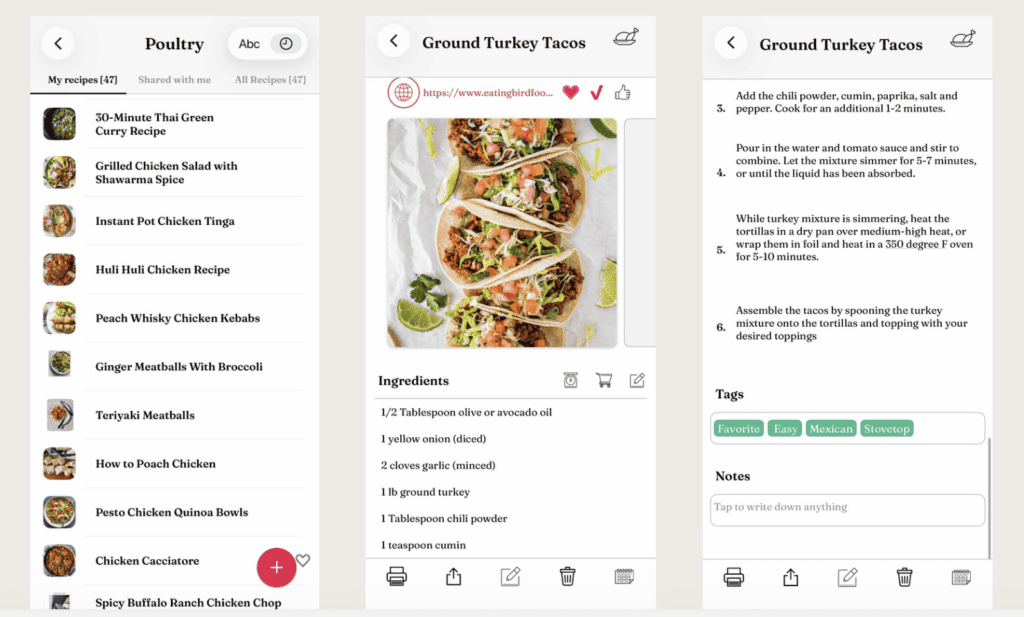
Start by making a list of your favorite meals – the recipes you already enjoy and know how to make. You can keep links, printed recipes, or, of course, organize them inside OrganizEat. The idea is to keep a list of 10-15 favorite, well-known recipes that you already know how to cook. They are the system’s go-to staples that make it practical.
Then sort those recipes into useful categories. You might organize by recipe type – soups, salads, pasta, chicken, vegetarian – or add tags for cuisine, such as Italian, Mexican, Mediterranean, or Indian. Cooking-method tags like “sheet pan,” “Instant Pot,” “stovetop,” or “no cook” can make choosing dinner even easier.
Think about how long each meal actually takes to prepare: under 15 minutes, 15–30 minutes, 30–60 minutes, or more than an hour. Meals under 30 minutes are usually good weekday choices, while longer recipes can be saved for weekends or special occasions.
Step 2: Build your “I can’t even” fallback options
These are meals that take less than 15 minutes, use ingredients you usually have around, and require basically zero emotional investment. Things like:
- eggs and toast
- pasta with jarred sauce
- rotisserie chicken with bagged salad
- frozen meals
- prepared chicken burgers
We all have these kinds of days, when we “can’t even”. Having a list of options prepared in advance helps you stay on track on your busiest days.
Step 3: Plan for your actual week
Before choosing meals, look at your schedule.
Which days have late meetings, kids’ activities, or simply tend to leave you exhausted? Which days give you a little more breathing room?
Instead of planning seven ambitious dinners, deliberately assign easy meals to difficult days: plan for reality, not the ideal.
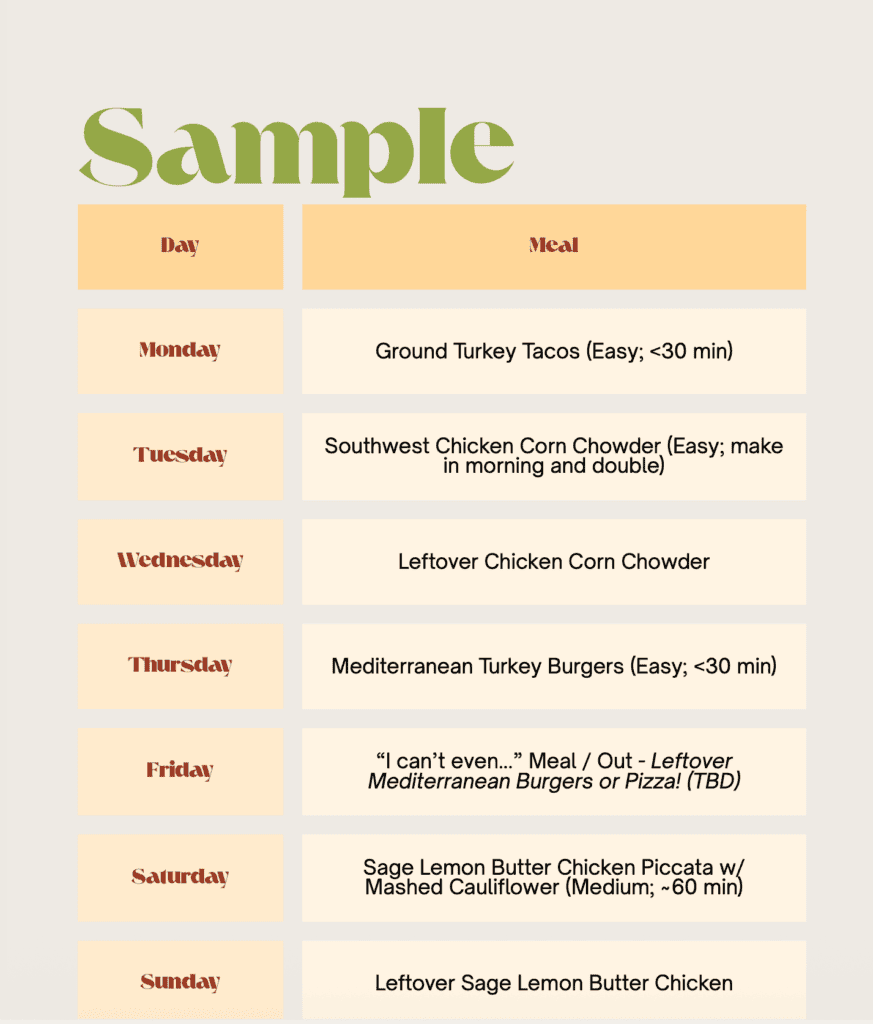
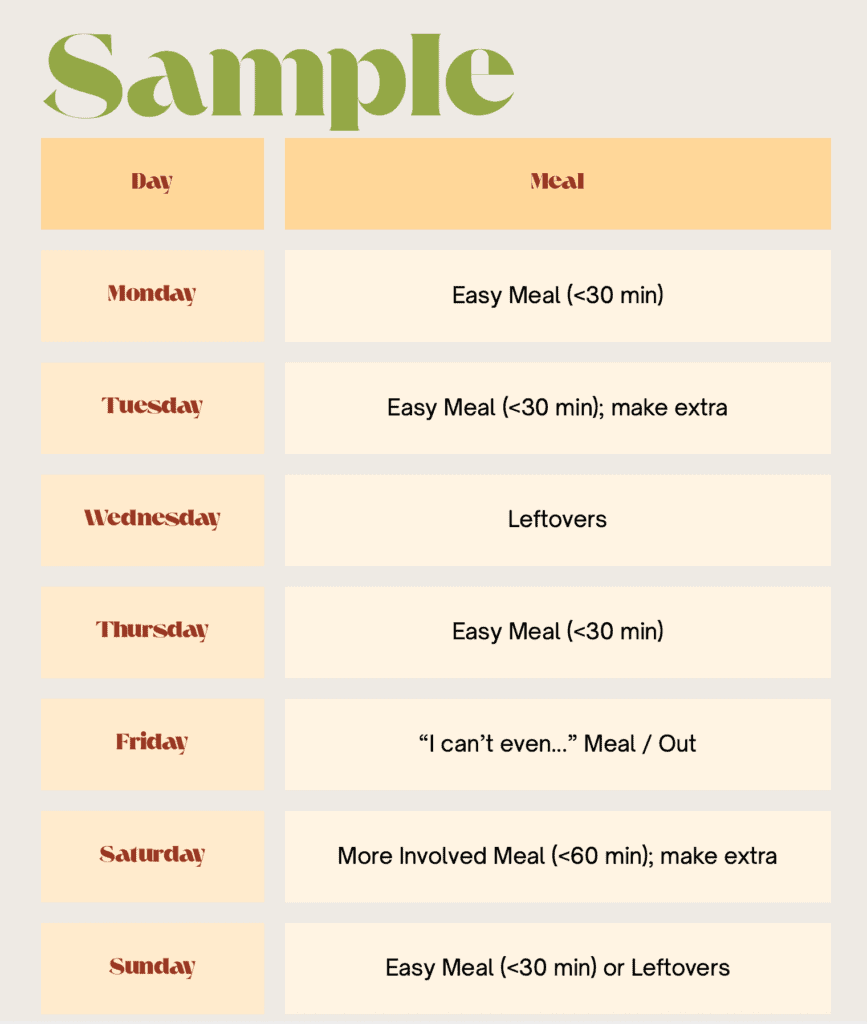
A week might include quick dinners on Monday and Tuesday, leftovers on Wednesday, another easy meal Thursday, an “I can’t even” dinner or takeout on Friday, and a slightly more involved recipe on Saturday. Making extra portions also means one cooking session can cover another night.
Step 4: Pick one planning day
Choose a consistent day each week to plan, ideally just before the day you grocery shop. Browse your organized recipe collection, look at the week ahead, and assign meals accordingly.
Finally, turn those chosen recipes into your grocery list and check whether anything needs to be prepared ahead of time, such as thawing meat or chopping ingredients.
The goal isn’t to create the perfect meal plan. It’s to make the question “What are we having for dinner?” much easier to answer – and to make sure the recipes you’ve saved actually make it onto the table.
Credit and a special thank you 🙂
A big thank you to OrganizEat user Hannah Byrnes for creating this thoughtful meal-planning framework, sharing it with us, and for generously allowing us to share her ideas with the OrganizEat community. And rather than introduce her ourselves, I’ll let Hannah tell you a little about herself in her own words:
I’m Hannah Byrnes, a mom of three and founder of The Adventure Lens (Instagram), a family photography business built around capturing the adventures—big and small—that make family life memorable. As our family has gotten busier, I’ve found that some of the best adventures actually start with good systems at home. I created this meal-planning approach anchored on OrganizEat as a simple way to take the mental load out of deciding what to eat, make grocery shopping easier, and give our family more time and energy for the things we actually want to be doing together. I’m excited to share the system with the OrganizEat community and hope it helps other families spend a little less time figuring out dinner and a little more time making memories.
Thank you, Hannah, for sharing your system with the OrganizEat community!
We love seeing the creative ways people use OrganizEat in their everyday lives, and Hannah’s approach is a wonderful example of how a little organization can make weekly meal planning feel much more manageable.
Happy Cooking! 🧡