


A crowded knife drawer slows dinner down fast. One dull, all-purpose blade might get you through a tomato, an onion, and a loaf of bread, but the cuts are messy, prep takes longer, and simple recipes start to feel like extra work.
A better setup is smaller than many home cooks expect. For daily cooking, a starter set usually covers almost everything: a chef's knife, a paring knife, and a serrated bread knife. From there, extra knives should earn their place based on how you cook, not how a knife block looks on the counter.
That is the point of this guide. It focuses on the jobs each knife handles well, where overlap starts, and which blades make sense for a practical starter set versus an enthusiast set. If you want a clearer sense of the blade that carries the most weight in any kitchen, this breakdown of common chef's knife uses is a useful place to start.
The goal is simple. Choose knives that match your recipes, speed up prep, and make your cooking workflow easier to manage.
Table of Contents
- 1. Chef's Knife
- 2. Paring Knife
- 3. Serrated Bread Knife
- 4. Utility Knife
- 5. Boning Knife
- 6. Fillet Knife
- 7. Santoku Knife
- 8. Nakiri Knife
- 9. Carving Knife
- 10. Cleaver
- Comparison of 10 Kitchen Knife Types
- Your Essential Knife Kit What Every Home Cook Needs
1. Chef's Knife
Dinner prep gets easier fast when one knife can handle the bulk of the board work. For most home cooks, that knife is the chef's knife. It is the first blade I recommend buying well, because it covers the jobs that show up in recipe after recipe: dicing onions, slicing carrots, chopping herbs, cutting cabbage, trimming boneless meat, and breaking down larger produce.
An 8-inch chef's knife is the safest starting point for most kitchens. It gives enough blade length for watermelon, squash, and big piles of vegetables, but it still feels manageable for weekday cooking. If you cook in a tight space or have smaller hands, a 6-inch model can feel more comfortable. The trade-off is less reach and less efficiency on bigger ingredients.
Why it earns the top spot
A chef's knife earns its place by doing many jobs well. The curved edge supports rocking cuts for herbs and garlic, while the longer blade also handles straight slices through onions, peppers, and proteins. If you are building a starter set, this is the required first piece. In an enthusiast set, it still stays at the center, even if you later add a santoku, nakiri, or boning knife for more specialized prep.
Brand matters less than fit. A Wüsthof Pro, Victorinox Fibrox, Shun Premier, or Zwilling J.A. Henckels chef's knife can all serve a home cook well. The useful differences are practical ones: weight, handle shape, blade profile, and steel hardness. Heavier German-style knives feel planted and forgiving. Thinner Japanese-leaning options move faster through vegetables but can be less tolerant of rough use.
For grip, pinch the blade just in front of the handle instead of wrapping your whole hand around the handle alone. That change improves control right away. For a clearer sense of where this knife saves time across daily prep, this guide to common chef knife uses is worth reading.
Practical rule: If you own several knives but reach for none of them with confidence, start by fixing the chef's knife.
A few habits matter more than buying a premium brand:
- Match the motion to the blade: Use a rocking chop for herbs and garlic, and cleaner forward cuts for onions, carrots, and proteins.
- Wash it by hand: Heat, detergent, and jostling in a dishwasher shorten edge life and can damage the handle.
- Store it with edge protection: A magnetic strip, blade guard, or block keeps the edge from getting knocked around.
Starter set status: required.
Enthusiast set status: still the anchor.
2. Paring Knife
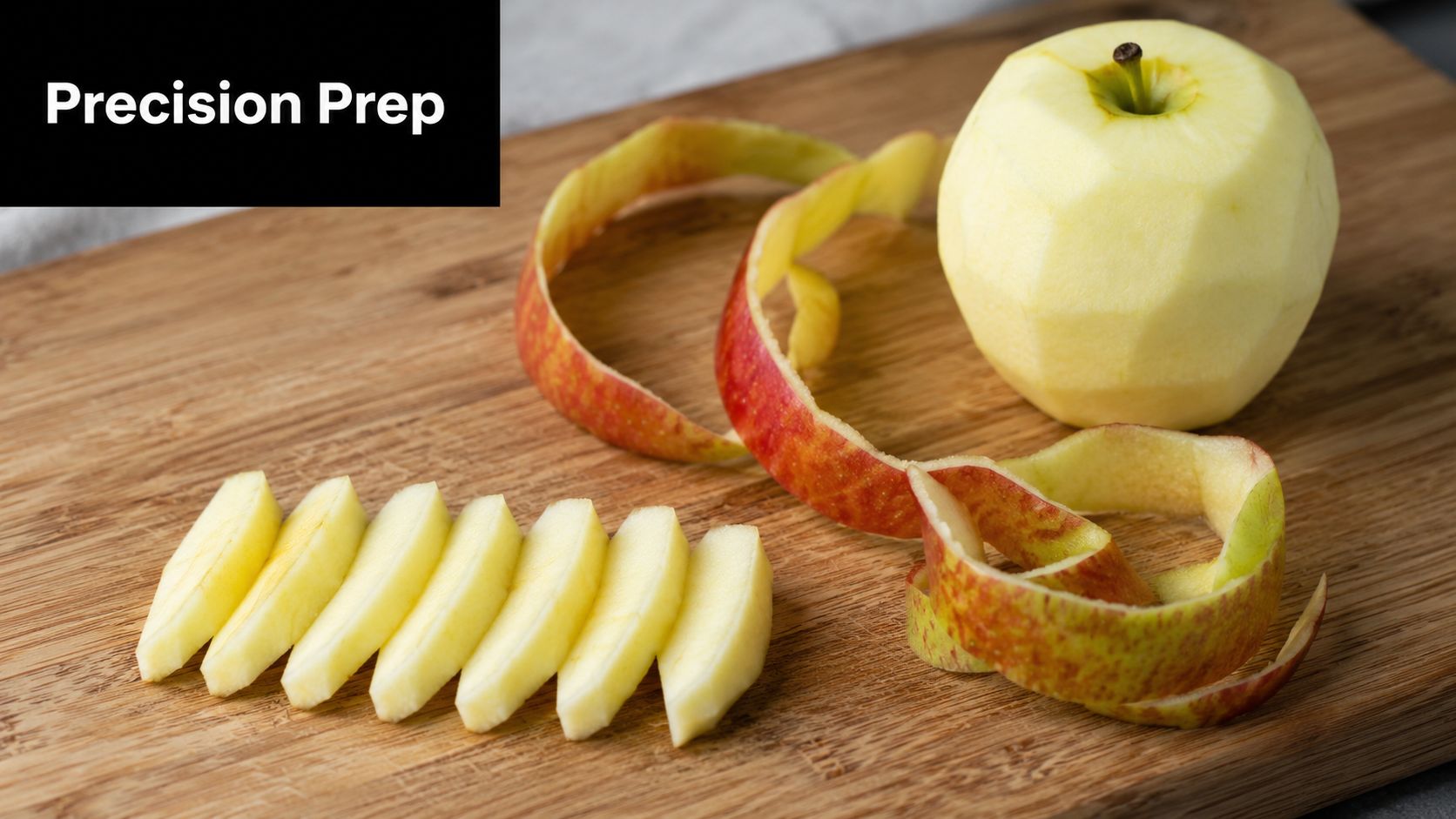
A paring knife handles the jobs that feel clumsy with a chef's knife. Peeling an apple over the sink, trimming strawberry tops, hulling a tomato, or cutting out potato eyes all go faster when the blade is short enough to track exactly where your hand wants it to go.
Most paring knives have a blade in the 2 to 4 inch range. That size is the point. You get fingertip-level control, which matters more here than reach or chopping power.
Where it earns its place
Use a paring knife for work done close to the ingredient: peeling citrus, trimming mushrooms, segmenting fruit, deveining shrimp, or cleaning up small bits of fat and membrane from meat. It also helps with recipe flow. If dinner prep includes a few detail tasks before the main chopping starts, keeping a paring knife nearby saves time and keeps you from switching awkwardly between oversized blades.
That matters for kit building. In a starter set, the paring knife usually makes the cut before a utility knife, boning knife, or santoku because it covers a type of prep no larger knife does as neatly. In an enthusiast set, it still stays in rotation because precision work never goes away.
Victorinox Fibrox, Wüsthof Gourmet, Shun Classic, and Opinel all make solid paring knives. The primary differences are practical ones: handle comfort, how stiff the blade feels, and whether you prefer a straight edge or a slightly curved profile.
A good paring knife should feel controlled in a pinch grip and stable when you peel in the hand.
A few trade-offs are worth knowing:
- Best for detail work: It handles short, careful cuts better than any larger knife.
- Poor choice for volume prep: Mincing herbs or dicing onions with a paring knife is slower and harder on the hand.
- Sharpness matters more than people expect: Small knives get used close to the fingers, so a dull edge is less forgiving.
Starter set status: required.
Enthusiast set status: still indispensable.
3. Serrated Bread Knife
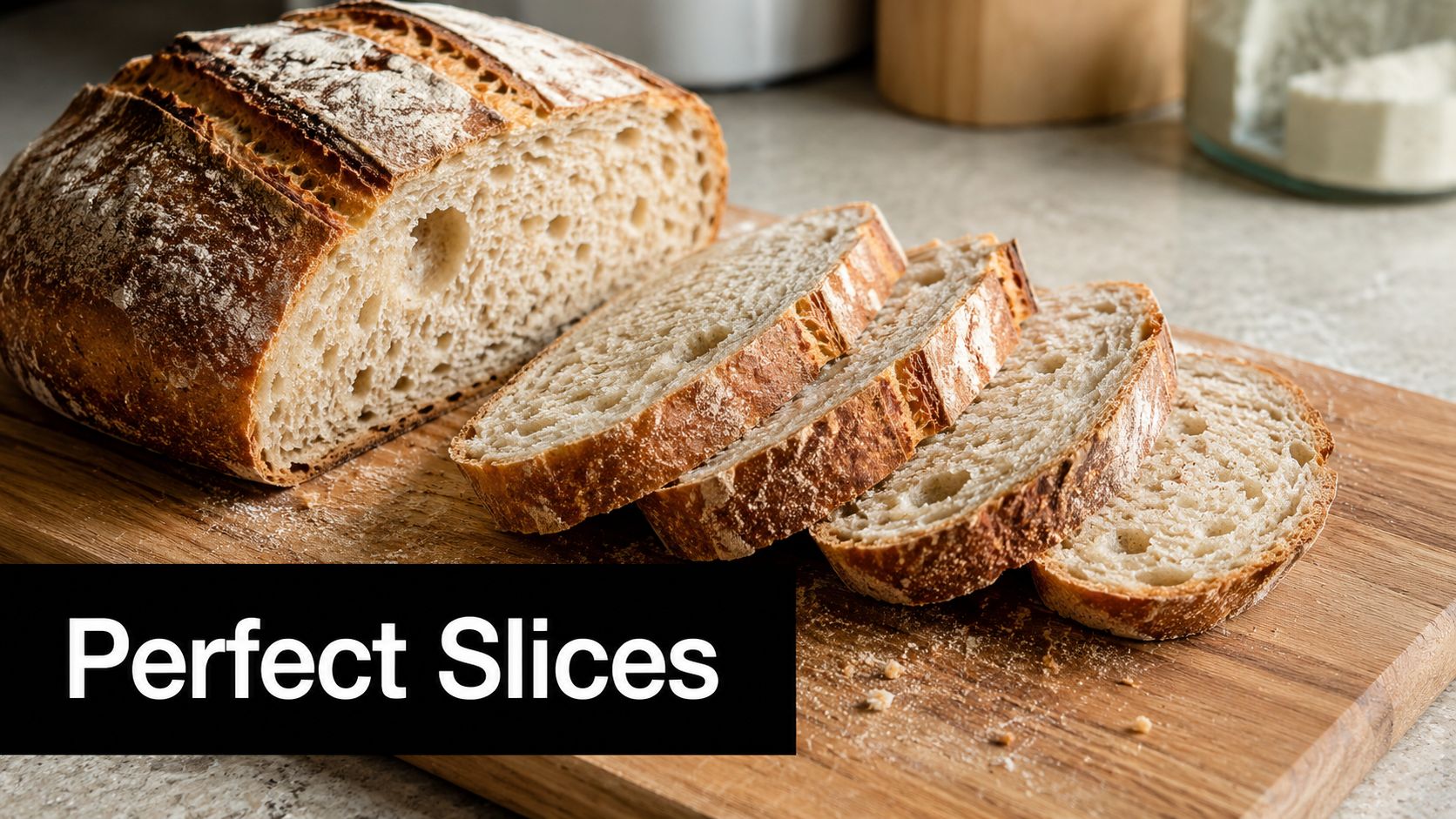
You notice the value of a bread knife at the cutting board, usually when dinner includes a crusty loaf, a layer cake, or ripe tomatoes for sandwiches. A straight edge can crush or drag through those foods. A serrated edge grips the surface and cuts cleanly with less pressure.
Bread knives are usually long, which helps on wide loaves and large cakes. The length matters almost as much as the teeth. A short serrated knife can work on rolls or tomatoes, but it tends to saw awkwardly through sourdough or sandwich bread because you run out of blade before the slice is finished.
When the offset version is worth it
An offset bread knife earns its place if you bake often or slice full loaves at the table. The raised handle gives your knuckles more clearance, so the last cuts near the board feel less cramped. For occasional use, a standard straight bread knife is usually enough.
This knife does more than bread. It is one of the best tools in the kitchen for tomatoes, citrus rounds, sponge cakes, and flaky pastries. If you batch-cook, label, and freeze baked goods, having one knife that handles loaves and delicate textures cleanly can make prep and portioning easier, especially if you are also trying to keep kitchen tools from turning into clutter.
Victorinox Fibrox, Wüsthof, Shun, Mercer Millennia, OXO Good Grips, and Opinel all make dependable options. The practical differences are blade length, how aggressive the serrations feel, and whether the handle stays comfortable during longer slicing jobs.
Use a light sawing motion. Let the teeth bite. Pressing down is what crushes bread and tears soft cakes.
A few trade-offs matter here:
- Best for crusts and delicate interiors: It slices sourdough, baguettes, brioche, and layer cakes without compressing them as much.
- More useful than many starter kits admit: It also handles tomatoes and some pastries better than a chef's knife.
- Harder to maintain at home: Serrated edges are slower to sharpen and often worth sending out when they finally dull.
Starter set status: required for most home cooks.
Enthusiast set status: one good one is enough.
4. Utility Knife
Dinner is half-prepped, the board is crowded, and pulling out a full chef's knife feels like more blade than the job needs. That is where a utility knife earns its spot.
Most utility knives land in the middle size range, usually long enough for clean slicing but short enough to feel quick and controlled. I recommend them to home cooks who do a lot of small, in-between tasks: quartering apples, slicing cucumbers, cutting cheese, trimming a sandwich, or halving a few potatoes without clearing extra space for a larger knife.
Where it actually helps
A utility knife works best for cooks who want one lighter blade for everyday odds and ends. If your hands are smaller, your board is compact, or you cook in short bursts instead of doing big weekend prep sessions, this size can feel easier to manage. It also takes up less room in a drawer or knife block, which helps if you are trying to keep kitchen tools from taking over your counters and drawers.
It does have limits. For dense vegetables, long herb chopping, or big piles of prep, a chef's knife is still faster. For peeling and detail work, a paring knife still gives better control.
That trade-off is the whole point.
Victorinox Fibrox, Wüsthof, Shun Sora, and MAC all make solid utility knives. The primary differences are blade shape, handle comfort, and whether you prefer a little more length for slicing or a slightly shorter blade for tighter control.
A utility knife makes sense in two cases:
- Starter set: optional, especially if a chef's knife already feels comfortable in your hand
- Enthusiast set: a smart add-on if you cook often and want a quicker second knife for small prep
If you follow recipes closely, this knife can also speed up the repetitive little jobs that slow dinner down. It is not a must-buy for every kitchen, but in the right setup, it gets used far more than people expect.
5. Boning Knife
A boning knife is specialized, and that's exactly why it matters. If you rarely buy whole chickens, large cuts of meat, or bone-in proteins, you may never miss it. If you do, the difference is immediate.
In market segmentation, bread, boning, and paring knives show up as task-specific additions rather than primary workhorses, while general-purpose chef's knives lead everyday use, according to Technavio's kitchen knife market analysis. That lines up with real kitchen behavior. Boning knives solve a specific problem well, but they don't replace your main prep blade.
Who actually needs one
The thin, pointed profile helps you work along bones, joints, and connective tissue without hacking away at the meat. It gives you cleaner chicken breakdown, better trimming on roasts, and more control when removing fat or silverskin.
Victorinox Fibrox boning knife, Wüsthof boning knife, Shun boning knife, and Mercer Genesis boning knife are common examples. A slightly flexible blade works well for poultry and fish-adjacent trimming, while a stiffer blade can feel better for red meat.
Use short cuts, not sweeping ones. Boning is about following structure, not forcing through it.
- Worth buying if: You regularly break down poultry or trim whole cuts.
- Skip for now if: You mostly cook boneless meat from the grocery store.
- Keep it very sharp: Detailed meat work gets slippery fast with a dull edge.
Starter set status: optional.
Enthusiast set status: strong add-on for meat-focused cooks.
6. Fillet Knife
A fillet knife earns its drawer space only if fish shows up in your kitchen often. This is a narrow, flexible blade built to follow the shape of a fish, slip under skin, and remove fillets with less tearing and less waste.
Unlike a boning knife, which deals with joints, connective tissue, and denser cuts, a fillet knife is working on delicate flesh. That extra flex is the whole point. On salmon, trout, branzino, or snapper, it helps you ride the bones instead of sawing across them. You get cleaner portions and a better yield, especially if you buy whole fish to save money or to cook from a recipe that starts with one.
For home cooks, that is the dividing line. If your recipe collection and meal plan mostly rely on pre-cut fillets, this knife will sit unused. If you regularly roast whole fish, break down sides of salmon, or portion fish yourself, it makes prep faster and much less frustrating.
Victorinox Fibrox fillet knife, Wüsthof fillet knife, Shun fillet knife, and Mercer fillet knife are all common options. A little flex is helpful. Too much can feel sloppy, especially for beginners, so most home cooks do better with a blade that bends but still feels controlled in the hand.
A visual demonstration helps more than description alone:
Use long, smooth strokes. Let the sharp edge do the work. Pressing down usually bruises the flesh and leaves ragged cuts, which matters if you're trying to follow a recipe cleanly and portion fish evenly for later meals.
Starter set status: skip unless you prep whole fish.
Enthusiast set status: worthwhile for seafood-heavy cooking or for cooks who buy whole fish and portion it themselves.
7. Santoku Knife
Halfway through dinner prep, the difference shows up fast. If you're slicing onions, trimming boneless chicken, and cutting cucumbers for a salad, a santoku often feels quicker and easier to control than a larger chef's knife.
A santoku is a compact Japanese all-purpose knife with a flatter edge and a shorter blade than the Western chef's knife most home cooks start with. In practice, that means less tip travel, less weight in the hand, and a more direct chopping motion. Many cooks like it for weeknight prep because it handles mixed recipe work well without feeling bulky.
How it differs from a chef's knife
The main trade-off is motion. A chef's knife favors a rocking cut. A santoku favors straight down cuts and short forward slices. If your usual recipes involve a lot of vegetables, boneless proteins, herbs, and tofu, that flatter profile can feel more accurate and less tiring. If you mince large piles of herbs with a rocking rhythm or break down bigger produce like winter squash, a chef's knife still has the advantage.
Blade feel matters too. Santokus are often thinner behind the edge, so they pass through onions, peppers, and carrots cleanly. They can also feel less forgiving if you are rough on your knives or use hard twisting motions on the board. Good technique matters more with a thin blade.
Shun Santoku, Wüsthof Santoku, MAC Santoku, and Victorinox Santoku are all common starting points. Some models have granton edges to help reduce sticking, but food release still depends heavily on how thin the blade is and how you cut. If you're trying to get more consistent prep for stir-fries, grain bowls, and sheet-pan meals, practicing a few common vegetable cuts for everyday cooking will do as much for speed as buying a new knife.
The santoku earns its place more often in an enthusiast set than in a starter set. Most home cooks do not need both a chef's knife and a santoku right away. But if your recipe rotation is heavy on vegetables and quick weekday meals, this is one of the few extra knives that can change how prep feels.
Starter set status: optional. Choose it instead of a chef's knife if you prefer a lighter, flatter blade.
Enthusiast set status: a strong upgrade for vegetable-heavy cooking and faster weeknight prep.
8. Nakiri Knife
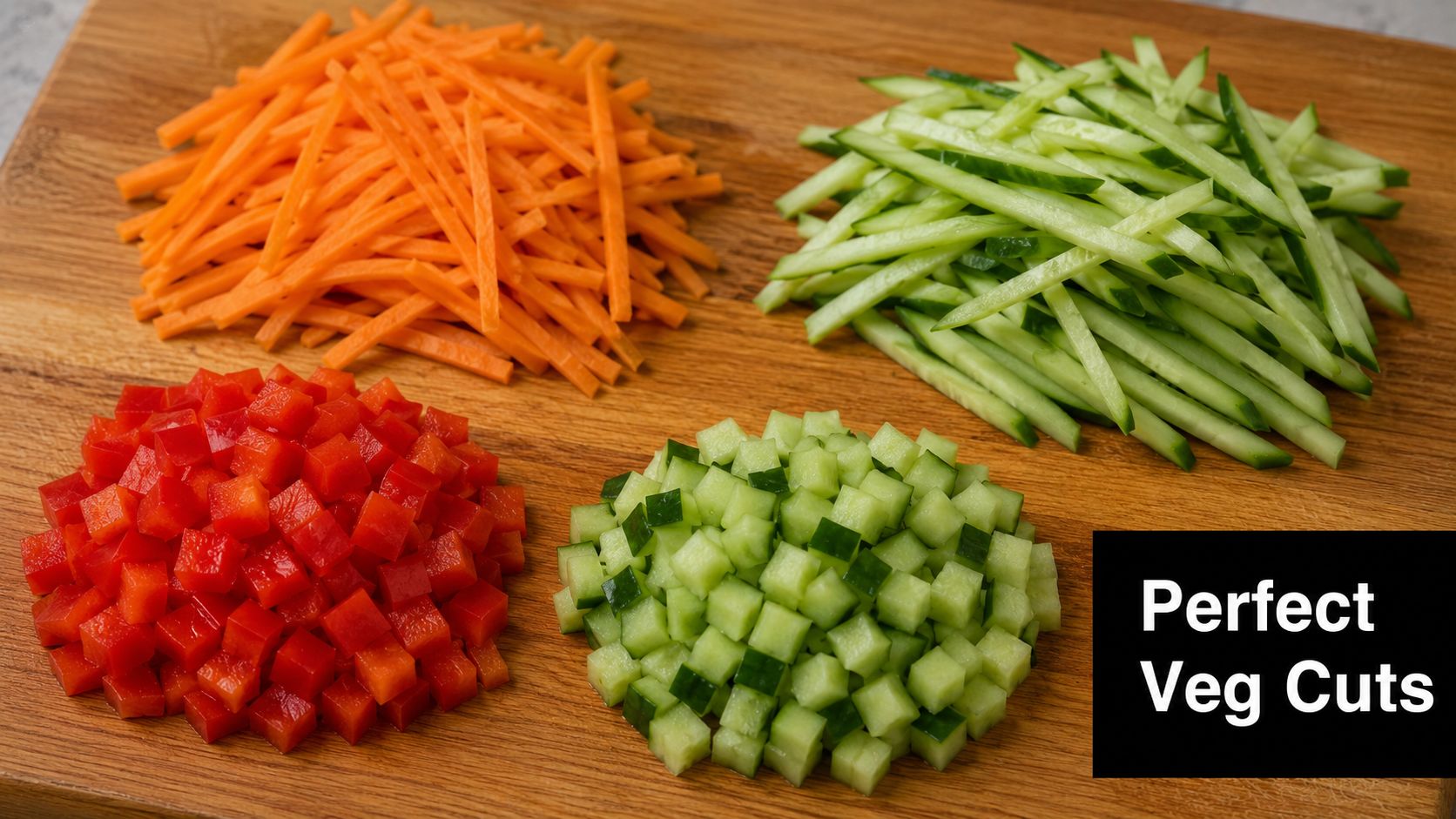
The nakiri is the knife for cooks who spend more time with cabbage, carrots, onions, greens, and sweet potatoes than with roasts. It isn't trying to be universal. It's trying to make vegetable prep faster, straighter, and more consistent.
That matters because vegetable-specific knives are often underexplained in mainstream guides, even though sources note that blades like the nakiri are designed specifically for vegetables and can be more relevant in plant-forward or Asian-influenced kitchens, as discussed in Caraway's overview of kitchen knife types. If you cook that way, a nakiri can make more sense than a carving knife or cleaver.
A better choice for vegetable-heavy cooking
Its flat edge makes full contact with the board, which helps when you want clean cuts through long vegetables and herbs without accordion strands left attached. It also excels when you're working toward consistent shapes for stir-fries, salads, and meal prep. If you're trying to improve your knife work, understanding types of vegetable cuts makes a nakiri even more useful.
MAC Nakiri, Shun Nakiri, Wüsthof Nakiri, and Victorinox Santoku-style Nakiri are all realistic options. The main limit is obvious. This isn't the knife for bones, dense squash abuse, or all-purpose rough work.
Use a straight up-and-down chop or gentle push-cut. Don't rock it like a chef's knife.
Starter set status: optional.
Enthusiast set status: excellent for vegetable-first cooks.
9. Carving Knife
The carving knife earns its space at the moment a roast hits the board and everyone is waiting for clean slices. A chef's knife can manage in a pinch, but on turkey, ham, pork loin, or brisket, the longer, narrower blade gives you better control and less tearing.
Length is the whole point here. A carving knife lets you finish a slice in one or two long passes instead of sawing through the meat. That keeps the cut surface smoother and helps juices stay where they belong.
Built for the table, not the cutting board
This knife comes out after the cooking is done. It is for portioning and serving, not everyday prep. If your weeknight cooking is mostly vegetables, chicken breasts, and quick skillet meals, a carving knife will spend most of its life in a drawer. If you host holidays, cook larger roasts, or care about presentation, it starts to make sense fast.
Victorinox Fibrox carving knife, Wüsthof carving knife, Shun carving knife, and Mercer carving knife are all common options. The primary trade-off is frequency of use. For many home cooks, this is a specialty purchase, not a starter buy.
Use long, smooth strokes and cut across the grain. A carving fork helps steady the roast, but the knife does the primary work.
- Best for: Turkey, prime rib, ham, pork loin, and brisket
- Skip it if: You rarely cook large roasts or serve meat at the table
- Good substitute: A long chef's knife for occasional carving
Starter set status: optional.
Enthusiast set status: useful for roast-heavy cooks and frequent hosts.
10. Cleaver
The cleaver is one of the most misunderstood types of knives in the kitchen. Some people picture a heavy butcher's tool for splitting bones. Others think of a thinner Chinese-style cleaver used for slicing vegetables, meat, and aromatics. Those are not the same experience.
Commercially, cleavers remain one of the consistently important product families in the global kitchen-knife market, which several reports place in the multi-billion-dollar range, including one estimate of USD 2.11 billion in 2025 with a projection to USD 3.73 billion by 2034, and another estimate of USD 1.76 billion in 2022 rising to USD 4.12 billion by 2030, as summarized by Fortune Business Insights' kitchen knife market overview. In practice, though, many home cooks buy the wrong cleaver for the job they do.
Useful, but often misunderstood
A heavy meat cleaver is for force. It can handle tough poultry joints and rough butchery on an appropriate board. A lighter Chinese chef's knife, despite the shape, often behaves more like a broad all-purpose prep knife than a bone chopper.
Victorinox Fibrox cleaver, Wüsthof cleaver, Shun Cleaver, and traditional Chinese cleavers each serve different users. Before buying one, decide whether you need power or versatility.
Buy a cleaver only if your cooking actually asks for it. Otherwise, it becomes the heaviest unused tool in the drawer.
A few practical notes:
- Use the right board: Heavy chopping can damage both blade and surface.
- Keep your off-hand far clear: Cleavers punish sloppy positioning.
- Don't confuse styles: Bone cleavers and thin Chinese-style cleavers solve different problems.
Starter set status: no.
Enthusiast set status: yes, but only for the right cooking style.
Comparison of 10 Kitchen Knife Types
| Item | 🔄 Complexity | ⚡ Resources & Efficiency | 📊 Expected Outcomes / ⭐ Quality | Ideal Use Cases | 💡 Tip |
|---|---|---|---|---|---|
| Chef's Knife | Moderate, rocking & pinch grip | Moderate maintenance; regular sharpening (2–3 months); versatile | High, consistent, all-purpose cuts for most tasks | General prep: chopping, slicing, mincing | Pinch grip; rock blade; hand-wash and store safely |
| Paring Knife | Low–Moderate, fine motor control for detail | Low resource needs but frequent sharpening | High precision for small tasks; delicate control | Peeling, deveining, garnishes, small trims | Use claw grip; short controlled strokes; use whetstone |
| Serrated Bread Knife (incl. Offset) | Low, sawing motion; offset needs practice | Low sharpening frequency but professional service recommended; efficient for crusty foods | High, clean slices without crushing; preserves texture ⭐ | Bread, tomatoes, pastries, frozen items | Saw gently; let teeth do work; use offset to protect knuckles |
| Utility Knife | Low, simple, hybrid technique | Moderate upkeep; space-efficient and versatile | Good, balanced reach and precision between chef and paring | Deli meats, smaller veg, one-handed tasks | Use for tasks too big for paring and too small for chef's |
| Boning Knife | High, specialized butchery technique | High maintenance; requires sharp, flexible blade | High precision; minimizes waste and improves yield ⭐ | Deboning poultry/fish, trimming fat, butchery | Small controlled motions; follow bone contours; keep sharp |
| Fillet Knife | High, smooth, controlled strokes; fish-specific | High maintenance; very flexible blade; specialized use | Excellent, minimal waste fillets; clean skinning ⭐ | Filleting fish, removing pin bones, sashimi prep | Use smooth strokes along backbone; practice on small fish |
| Santoku Knife | Moderate, different from Western rocking | Good edge retention; lighter and fast for precision work | High, clean cuts with less crushing; great for veg and boneless proteins ⭐ | Slicing vegetables, fish, boneless meats, fine prep | Use up-and-down motion; dimples reduce sticking; whetstone sharpen |
| Nakiri Knife | Moderate, vertical chopping technique | Efficient for bulk veg; blade-heavy for power | Excellent, uniform vegetable cuts; fast batch processing ⭐ | Vegetable-centric prep, julienne, large chopping jobs | Use straight vertical chops; wide blade scoops produce |
| Carving Knife | Moderate, long, smooth slicing strokes | Moderate upkeep; long blade needs careful storage | High, uniform, elegant slices for presentation ⭐ | Carving roasts, turkey, ham for serving | Use long strokes, slice against the grain; use a carving fork |
| Cleaver | High, heavy-chop technique and safety skills | Robust but demanding (sturdy board, secure storage); less frequent sharpening | High, breaks bones and tough cuts efficiently; heavy-duty results ⭐ | Breaking down whole animals, chopping bones, Asian butchery | Let the weight do the work; use reinforced board and secure storage |
Your Essential Knife Kit What Every Home Cook Needs
You don’t need all ten knives to cook well. Most home cooks do best with a compact kit built around three blades: a chef’s knife, a paring knife, and a serrated bread knife. That’s the starter set I recommend most often because it covers nearly every daily recipe without wasting space or money on tools that sit untouched.
That advice also matches the broader pattern in buying guides. Many articles list a long lineup of knives, but they still end up admitting that a small core set is sufficient for many home cooks. One practical roundup says the must-have knives are a chef’s knife, utility or petty knife, santoku, and kitchen shears, while a chef from America’s Test Kitchen is cited as recommending a practical core of paring knife, chef’s knife, serrated knife, boning knife, and peeler in Oishya’s guide to different kitchen knives. The exact list varies, but the pattern is clear. Start small and add based on how you cook.
For a starter set, I’d build it this way:
- Chef’s knife: Your main prep tool for board work.
- Paring knife: Precision work, peeling, trimming, and small fruit.
- Serrated bread knife: Bread, tomatoes, cakes, and anything with a firm outside and soft inside.
If you want an enthusiast set, add only what solves a repeat problem in your kitchen.
- Add a santoku: If you want a lighter all-purpose knife with a flatter profile.
- Add a nakiri: If your meals are vegetable-heavy and you value clean, straight chopping.
- Add a boning knife: If you buy whole chickens or trim meat regularly.
- Add a fillet knife: If you prep whole fish.
- Add a carving knife: If you cook roasts often.
- Add a cleaver: Only if your cooking calls for heavy chopping or a Chinese-style broad blade.
Material matters too. Stainless steel is identified as the dominant blade material in market reporting, and that’s not surprising. It resists corrosion, asks less of you day to day, and fits busy home kitchens better than fussier options. For many home cooks, a stainless-steel chef’s knife is the best place to spend significant money.
The smartest knife collection isn’t the biggest one. It’s the one that matches your recipes, your hand size, your storage, and the foods you cook every week. If you keep recipes organized by cuisine, prep style, or recurring meal plans, it’s easier to see which knives you use. That’s where a recipe organizer like OrganizEat can fit naturally. It helps you keep the recipes you return to in one place, which makes it easier to spot whether your cooking leans toward bread baking, fish prep, weeknight vegetable chopping, or roast-heavy entertaining.
If you’re building a knife kit around the meals you cook, OrganizEat can help you keep those recipes organized, searchable, and easy to use while you prep. Save recipes from social media and websites, store handwritten family favorites, and pull them up in Cooking Mode so your ingredients, steps, and knife work stay in sync.